






If you’ve ever searched for pilates cadillac reformer, you’ve probably noticed that both machines appear frequently in professional studios, rehab clinics, and high-end home gyms—but they’re rarely explained side by side. Many beginners assume the Cadillac is “harder” because it looks more complex, while others believe the reformer is tougher because it moves constantly under your body.
The reality is more nuanced: neither machine is inherently harder in all situations. Each challenges your body in different ways—through stability, resistance, and movement patterns. Your experience will depend on your goals, fitness level, mobility, and even the style of teaching you receive.
In this article, we’ll compare Cadillac Pilates and Reformer Pilates honestly, looking at how they work, who they suit best, and how to choose between them. We’ll also reference industry perspectives from organizations such as the Pilates Method Alliance (PMA) and findings from movement science to ground this comparison in credible expertise rather than studio marketing.
What Is Cadillac Pilates and How Does It Work?
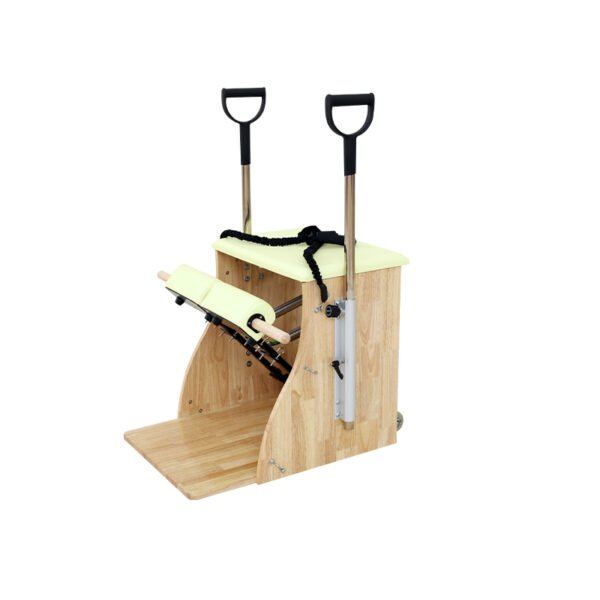
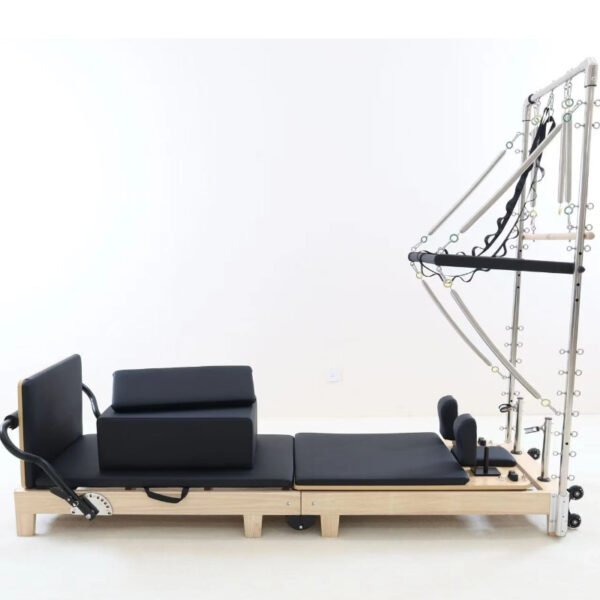
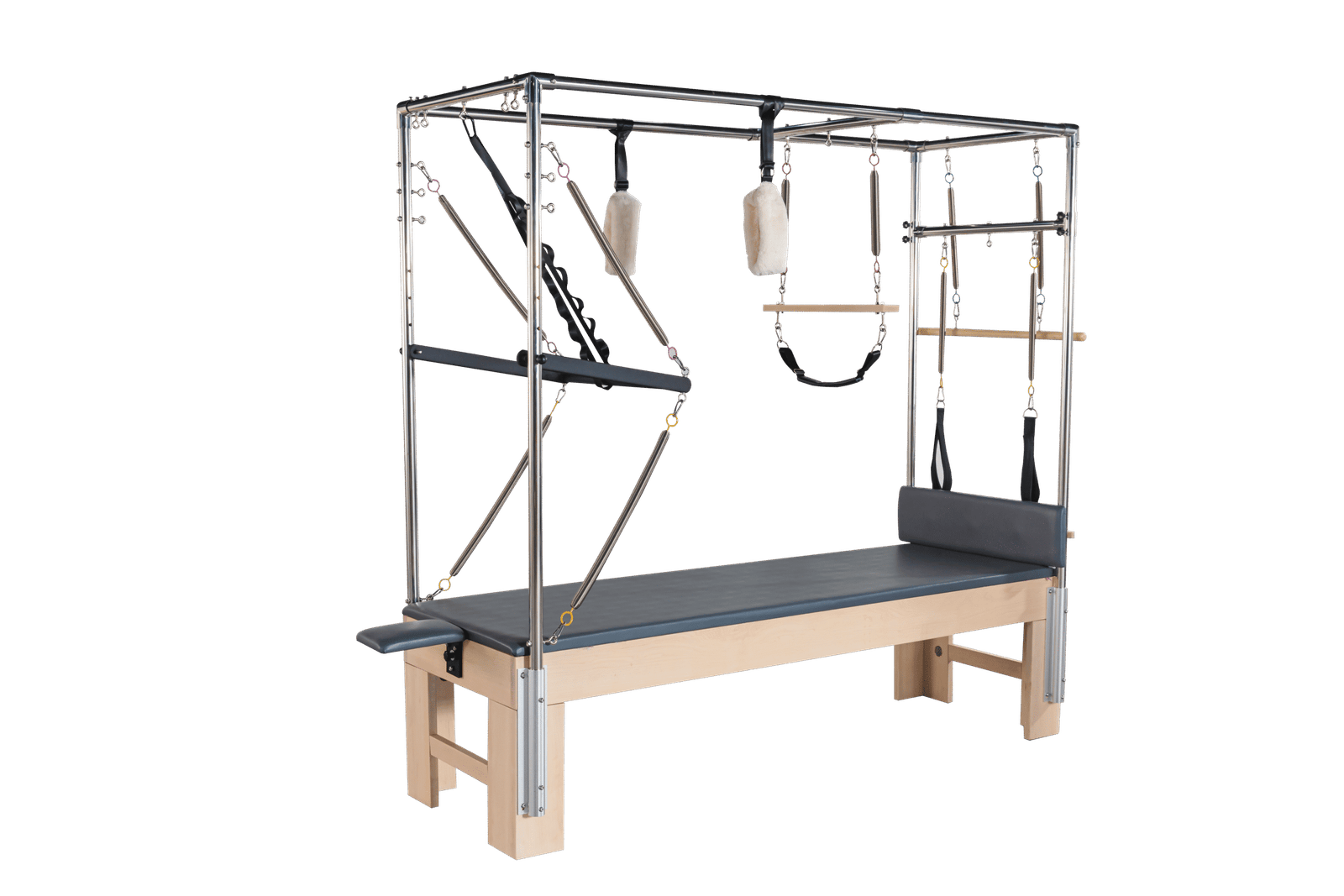
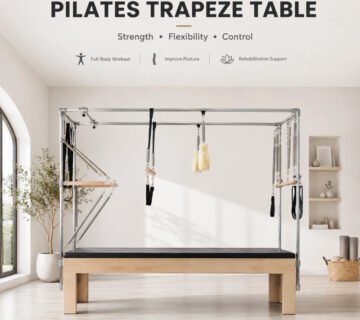
Cadillac Pilates—also known as the Trapeze Table—is one of the original apparatuses designed by Joseph Pilates. It consists of a raised frame above a padded table, equipped with spring-loaded bars, straps, loops, and hanging attachments. Unlike the reformer, most Cadillac work begins in a stable, supported position (lying down, kneeling, or sitting), with movement coming from your body against the springs rather than from a moving carriage beneath you.
Cadillac Pilates centers around a stable, low-profile table paired with a four-post metal frame, which comes fitted with trapeze straps, push-through bars, and adjustable resistance springs. Unlike the Reformer’s primarily horizontal movement, the Cadillac enables a wide range of vertical, rotational, and suspended exercises—such as trapeze pull-ups, hanging leg raises, and spring-assisted backbends—that engage both deep core stabilizers and large muscle groups simultaneously. The springs can be easily adjusted to increase or decrease tension, making the Cadillac versatile enough for rehabilitation, mobility work, and advanced strength training. Importantly, it demands precise muscle control to avoid over-reliance on spring support, which hones both physical strength and mental focus on proper movement form.
What Is Reformer Pilates and Why Is It So Popular?
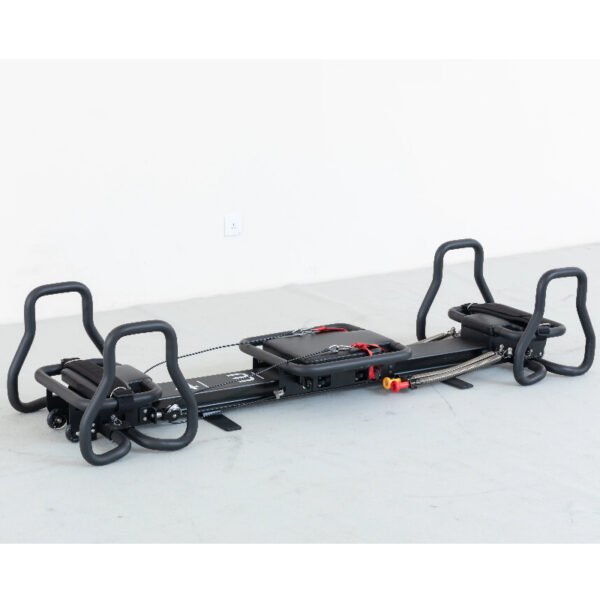
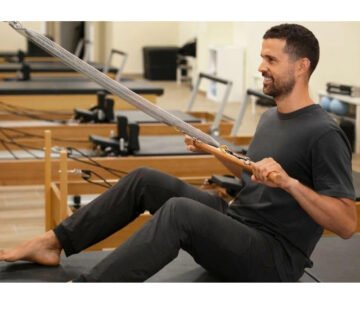
Reformer Pilates uses a sliding carriage attached to springs and guided by rails. Your body sits, kneels, lies, or stands on this moving platform, creating a constant demand for balance and control. This is why many people perceive the reformer as more “athletic” than the Cadillac.
The reformer’s popularity comes from three main factors:
Dynamic resistance: The carriage moves with you, forcing your core to stabilize throughout every repetition.
Scalability: By adjusting spring tension, you can train anywhere from gentle mobility to high-intensity strength.
Flow-based programming: Many studios structure reformer classes like a full-body workout, which appeals to fitness-minded clients.
Research sponsored by the American Council on Exercise (ACE) suggests that reformer-based Pilates can meaningfully improve muscular endurance, core stability, and posture over time when performed consistently. This helps explain why reformer Pilates has become mainstream in boutique studios and group fitness environments.
In practice, exercises such as Footwork, Long Stretch, or Short Spine Massage combine strength, coordination, and breathing in a continuous sequence. The instability of the moving carriage makes even simple movements feel more demanding than they look.
However, the reformer is not automatically “better”—it’s simply different. It emphasizes dynamic control, while the Cadillac emphasizes precision and alignment under varied resistance patterns. Many advanced practitioners use both as complementary tools.
Is Cadillac Pilates Harder Than Reformer for Strength and Control?
When it comes to strength and fine motor control, Cadillac Pilates is generally more challenging than Reformer Pilates, though the nature of the challenge varies greatly. The key difference lies in their movement planes: the Reformer’s sliding carriage provides a guided, stable horizontal path, while the Cadillac’s vertical frame and suspended accessories require unwavering core and stabilizer strength to control the body across multiple planes—vertical, rotational, and lateral—with spring support that acts as both a helper and a challenge. The Cadillac’s vertical and inverted exercises, such as hanging leg raises and trapeze push-ups, engage the upper body, core, and glutes with greater intensity, as the body must work against both gravity and spring resistance. It also demands more full-body integration, while the Reformer’s carriage often supports the torso, allowing for easier muscle isolation. While the Reformer still tests control, the Cadillac’s unstructured, multi-plane movement makes it more demanding for building functional strength.
Which Is More Challenging for Beginners vs Advanced Practitioners?
The difficulty of Cadillac vs. Reformer Pilates is entirely dependent on one’s skill level, with the two machines presenting opposite challenges for beginners and advanced practitioners.
- For absolute beginners, the Reformer is far more accessible: its structured sliding carriage guides movement, isolates muscle groups, and prevents overcompensation, which is critical for building the core strength and body awareness that Pilates requires. In contrast, the Cadillac’s unguided, multi-plane movements and suspended accessories can feel overwhelming for newbies, making it the more challenging option.
- For advanced practitioners, the tables turn: the Cadillac becomes the more dynamic, challenging choice, as its versatility allows for inverted movements, high-resistance exercises, and complex full-body flows that push the boundaries of what is possible on the Reformer. Even intermediate practitioners will find the Cadillac a step up, as it demands the integration of all the foundational skills built through Reformer practice.
How Should You Choose Between Cadillac and Reformer Pilates?
Choosing between Cadillac and Reformer Pilates ultimately comes down to your current skill level, fitness goals, and the type of challenge you want from your practice. For beginners or those new to equipment-based Pilates, the Reformer is the clear starting point—it builds the foundational core strength, body awareness, and proper form needed to eventually tackle the Cadillac. For intermediate or advanced practitioners, opt for the Cadillac if you want to build full-body functional strength, improve mobility, or add dynamic variation to your routine; Other factors to consider include studio availability (Cadillacs are less common, as they are larger and more expensive) and instruction (Cadillac practice requires a certified instructor to ensure safety). Many practitioners use both machines for a balanced, well-rounded Pilates routine.
Conclusion
Cadillac Pilates is not universally “harder” than Reformer Pilates—its difficulty is contextual, tied directly to your skill level, fitness goals, and familiarity with Pilates’ core principles. For beginners, the Reformer serves as a gentle, structured introduction to equipment-based Pilates, helping build the foundational strength and body awareness needed to eventually navigate the Cadillac’s unguided movements. For intermediate and advanced practitioners, the Cadillac emerges as the more challenging option, demanding full-body integration, fine motor control, and functional strength in multi-plane movements that the Reformer’s horizontal frame cannot replicate. Ultimately, the best choice is the one that aligns with your current skill and long-term goals, or a mix of both for consistency and challenge.
FAQs
Is Cadillac Pilates suitable for beginners?
Yes. Many beginners actually find the Cadillac easier to start with because of its support and assistive springs, especially for mobility or rehab-focused work.
Can Cadillac Pilates help build more strength than reformer Pilates?
It can build significant strength—particularly in the upper body and core—when programmed progressively. Reformer may feel harder for legs and balance, but strength outcomes depend more on training design than the machine itself.
Do professional studios usually offer both?
Most comprehensive Pilates studios offer both, though reformer classes are more common in la.


No comment