






For B-end clients such as fitness studios, rehabilitation institutions, and high-end clubs, choosing a high-quality Pilates chair can not only enrich the curriculum system, improve customer experience, but also enhance the core competitiveness of the institution. This article will provide comprehensive references for B-end purchasers from the dimensions of basic cognition, core advantages, training methods, and purchasing skills of Pilates chairs, and combine professional suppliers and core products to help institutions select models accurately.
What Is a Pilates Chair and How Does It Work?
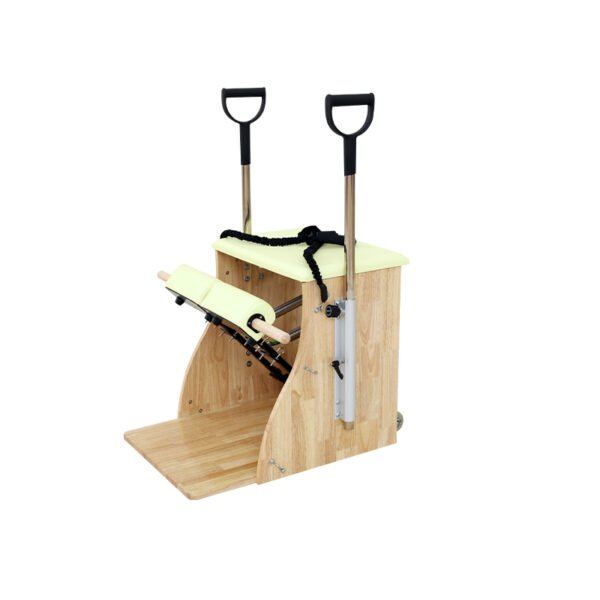
A Pilates chair is a compact and multi-functional professional training equipment. Its core design revolves around an adjustable spring resistance system. Through the linkage between the pedal and the spring, it provides bidirectional controllable resistance for training, adapting to different training intensity needs. Its compact size design also takes into account full-body position training, enabling sitting, standing, kneeling, lying and other postures to help users accurately control muscle exertion and strengthen core stability. Among them, Wunda Chairs as a classic style, with its stable structure and flexible resistance adjustment, has become a popular choice for B-end institutions, and the professional supplier CoreFlow can provide customized Pilates chair solutions that meet B-end needs.
What Are the Key Benefits of Using a Pilates Chair?
For B-end institutions, the core advantages of Pilates chair focus on curriculum adaptability, customer coverage and operational cost-effectiveness. First, it is suitable for a wide range of people, meeting the training needs of beginners, advanced learners and rehabilitation groups, which can enrich the institution’s curriculum categories and improve customer retention. Second, its low-impact and high-precision training characteristics can reduce the risk of sports injuries, which is consistent with the professional positioning of rehabilitation institutions and high-end clubs. Third, it is compact in size, saving venue space, and can be put into use without large-scale renovation, reducing the operational cost of the institution. In addition, high-quality Pilates chairs (such as those supplied by CoreFlow) are durable and easy to maintain, which can reduce the cost of equipment replacement and maintenance in the later period. At the same time, the classic design of Wunda Chairs can improve the professionalism of the institution’s courses and enhance customer trust.
What Exercises Can You Do on a Pilates Chair?
Pilates chairs have extremely strong training compatibility. According to the institution’s curriculum positioning, a variety of training contents can be designed, covering core strengthening, posture correction, muscle shaping, rehabilitation training and other scenarios, adapting to the diverse curriculum needs of B-end institutions. Whether it is a shaping course for ordinary fitness customers or a recovery training for rehabilitation groups, it can be accurately adapted by adjusting the spring resistance. Its training actions can be divided into beginner and intermediate-advanced levels, which can not only meet the basic training needs of novice customers, but also provide high-intensity challenges for advanced customers, helping institutions build a hierarchical curriculum system and attract customers with different needs. At the same time, the Pilates chairs provided by CoreFlow can be matched with professional training guidance programs to help institutions quickly launch relevant courses and improve teaching efficiency.
Beginner-Friendly Pilates Chair Exercises
Beginner training focuses on basic exertion perception, core activation and joint adaptation. The movements are simple and easy to operate, without complex skills, which is suitable for institutions to carry out as entry courses. It is recommended to do sitting pedal pressing, kneeling arm stretching, standing leg extension and other movements. Through light resistance setting, it helps students find the sense of core exertion, correct bad posture, reduce the sports threshold, improve the experience and participation of novice customers, and accumulate a base of customers for the institution.
Intermediate and Advanced Chair Workouts
Intermediate and advanced training focuses on improving muscle strength, core control and balance ability. The movements are more difficult and can be used as advanced courses and characteristic courses of the institution. It is recommended to do single-leg pedal training, side-lying core rotation, prone back extension and other movements. By adjusting the spring resistance to increase the training intensity, it can accurately exercise deep muscles and meet the training needs of advanced customers. The flexible design of Wunda Chairs can better adapt to such high-intensity training, helping institutions create differentiated curriculum advantages.
How to Choose the Right Pilates Chair for Your Needs?
When choosing a Pilates chair, B-end purchasers need to comprehensively consider the institution’s positioning, curriculum needs and operational costs to avoid blind selection. First, clarify the core needs, whether it is for ordinary fitness courses, rehabilitation training or high-end customized courses, so as to determine the functions and configurations of the equipment. Second, pay attention to product quality and durability, and give priority to products with excellent materials and stable structure to reduce later maintenance costs. In addition, the supplier’s service capability is also crucial. For example, CoreFlow can provide OEM/ODM customization, batch supply and after-sales guarantee, which is more in line with the purchasing needs of B-end institutions. At the same time, combined with the venue size and customer group positioning, choose the appropriate size and function-adapted style to ensure that the equipment can maximize its value and help the institution improve its competitiveness.
What Features Should You Look For?
B-end purchasers need to focus on the core functions of the Pilates chair to ensure that it adapts to the institution’s curriculum and long-term operational needs. First of all, pay attention to the spring resistance adjustment function, which needs to support multi-level adjustment to adapt to different training intensities and groups of people; second, look at the structural stability, the frame material needs to be strong and durable, and the load-bearing capacity meets the needs of the institution’s customers; finally, pay attention to the detailed design, such as non-slip pedals and comfortable cushions, to improve customer experience. At the same time, give priority to customizable and easy-to-maintain styles, such as those supplied by CoreFlow, which are more in line with B-end operational needs.
Is a Pilates Chair Suitable for Home or Studio Use?
Pilates chairs are suitable for both home and studio use, but when purchasing for B-end institutions, priority should be given to commercial-grade products. Commercial models (such asWunda Chairs) have a more stable structure and stronger durability, which can withstand high-frequency use and adapt to the high-intensity operational needs of studios and rehabilitation institutions; at the same time, they are compact in size, saving venue space, and can be put into use without large-scale renovation, making them the best choice for B-end institutions.
How Does a Pilates Chair Compare to Other Pilates Equipment?
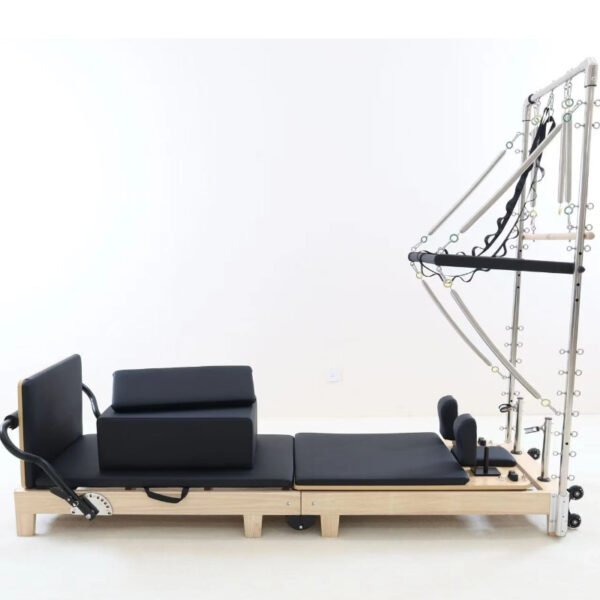
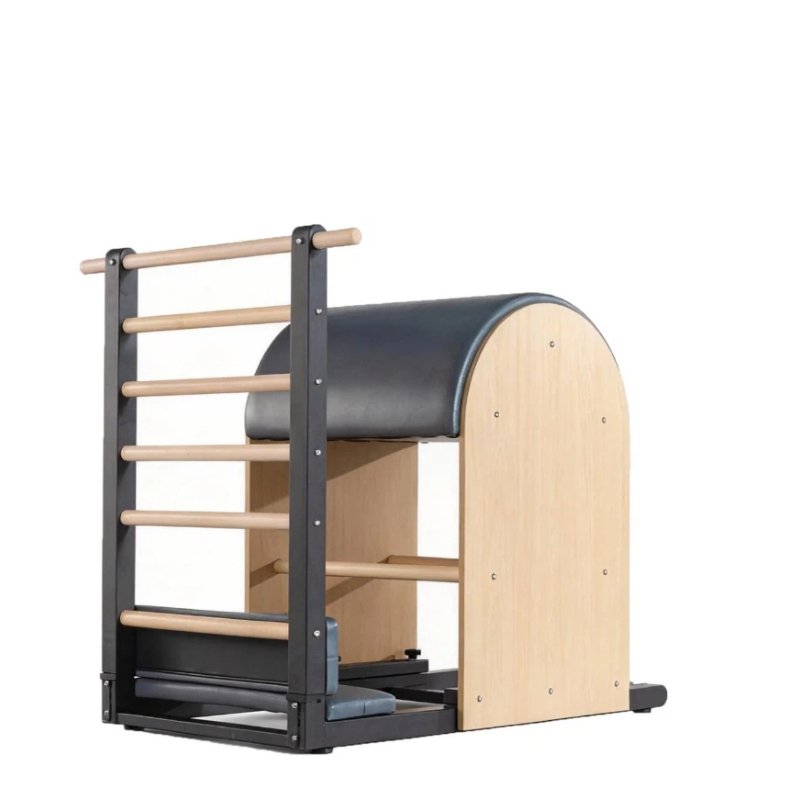
Compared with other Pilates equipment such as Pilates reformer and ladder barrels, the core advantage of Pilates chairs lies in their compactness, flexibility and high cost-effectiveness, which are more suitable for B-end institutions to save venue costs and enrich the curriculum system. Compared with the bulky Pilates reformers, Pilates chairs occupy less space, can be placed flexibly, and are suitable for small and medium-sized studios; compared with the single-function ladder barrels, they have a wider range of training scenarios and can cover full-body training. In addition, Pilates chairs have more advantageous prices. When purchasing in bulk (such as choosing CoreFlow as the supplier), you can get a more preferential quotation, and at the same time, they are both professional and practical, which can help institutions quickly expand courses and improve market competitiveness.
Conclusion
For B-end institutions, choosing the right Pilates chair is the key to improving course quality and enhancing core competitiveness. It is necessary to focus on product quality, function adaptability and supplier service capability in combination with the institution’s positioning, curriculum needs and operational costs. As a professional supplier, CoreFlow can provide high-quality and customized Pilates chair solutions, while Wunda Chairs as a classic style can adapt to the curriculum needs of most B-end institutions. Reasonable model selection can help institutions enrich the curriculum system, improve customer experience and achieve long-term stable development.
FAQs
Is a Pilates chair good for beginners?
Yes. Pilates chairs can adapt to the training needs of beginners by adjusting the spring resistance. The entry movements are simple and easy to operate, which can help beginners quickly find the sense of core exertion and reduce the sports threshold. For B-end institutions, they can attract novice customers and build a hierarchical curriculum system with the help of Pilates chair entry training.
How often should you use a Pilates chair?
Combined with the curriculum setting of B-end institutions, it is recommended to arrange 2-3 Pilates chair courses per week, which can not only ensure the training effect, but also avoid excessive fatigue of customers. For rehabilitation groups, the frequency can be adjusted according to professional guidance to ensure the safety and effectiveness of training and improve customer satisfaction.
What muscles does a Pilates chair target?
Pilates chairs mainly target the core muscles (such as transverse abdominis and erector spinae), and can also accurately exercise the legs, shoulders, back and other muscle groups to achieve full-body shaping and strength improvement. Its low-impact training characteristics can also be used for muscle rehabilitation training, adapting to the diverse customer needs of B-end institutions.

No comment