
For Pilates studio owners, muscle strength and body shaping are among the core demands of clients. Many studio operators wonder: Can Pilates Reformer really build muscle effectively? How can it help clients achieve a tight, stable, and strong posture? This article clarifies the muscle-building logic of Reformer training from the perspectives of professional training principles, equipment value, and studio operations, helping you build a more competitive curriculum system.
What Is Reformer Pilates?
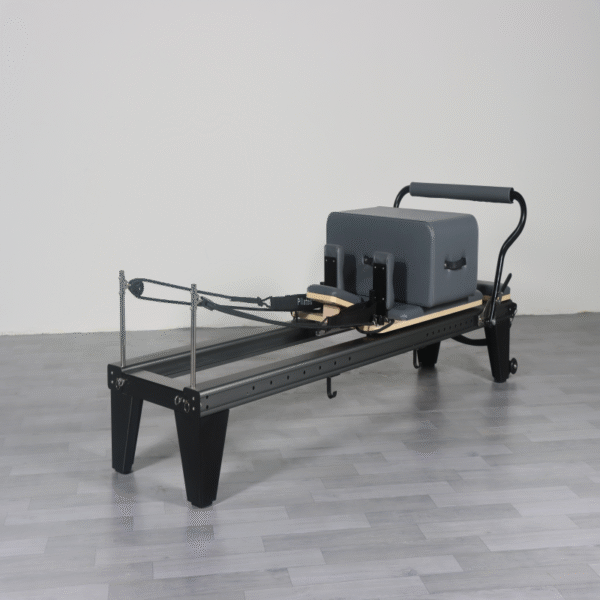
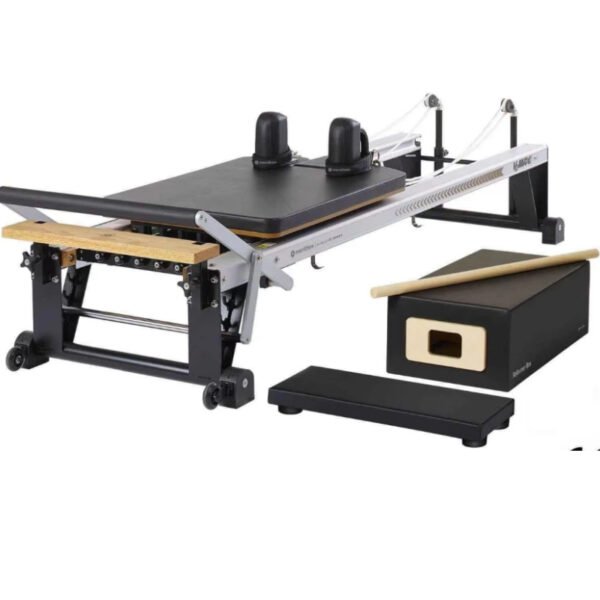
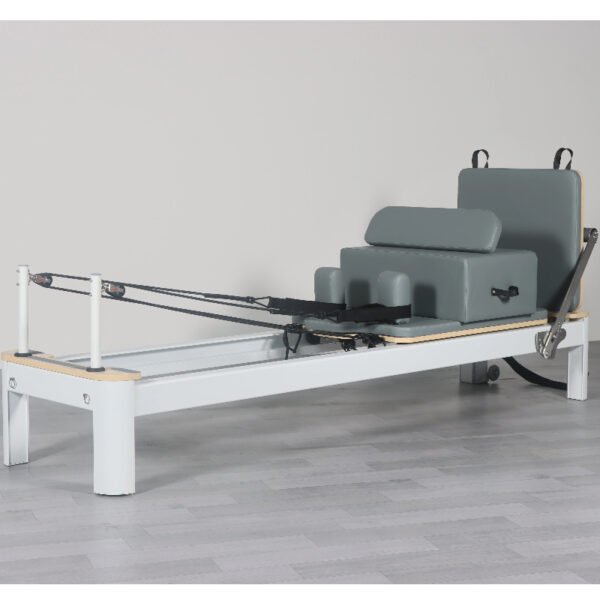
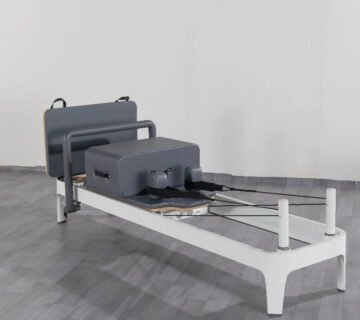
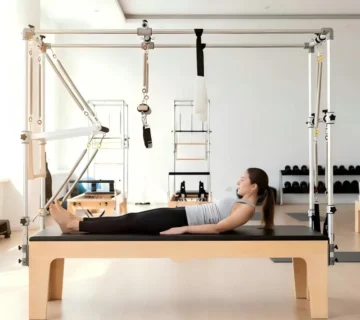
Pilates Reformer, also known as the Pilates core bed, is the most classic and widely used professional equipment in the Pilates system. Centered on a sliding carriage, adjustable spring resistance, and multi-functional accessories, it allows practitioners to complete full-body training in a low-impact, highly controlled environment. Different from traditional weight-bearing training, the core bed emphasizes core dominance, muscle control, and posture alignment. It provides progressive resistance through springs, balancing strength, flexibility, balance, and coordination. Suitable for beginners to advanced learners, it is also a standard equipment in commercial Pilates studios, supporting group classes, private coaching, rehabilitation, and other course forms.
How Does Reformer Pilates Work Your Muscles?
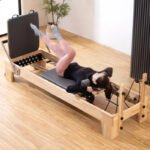
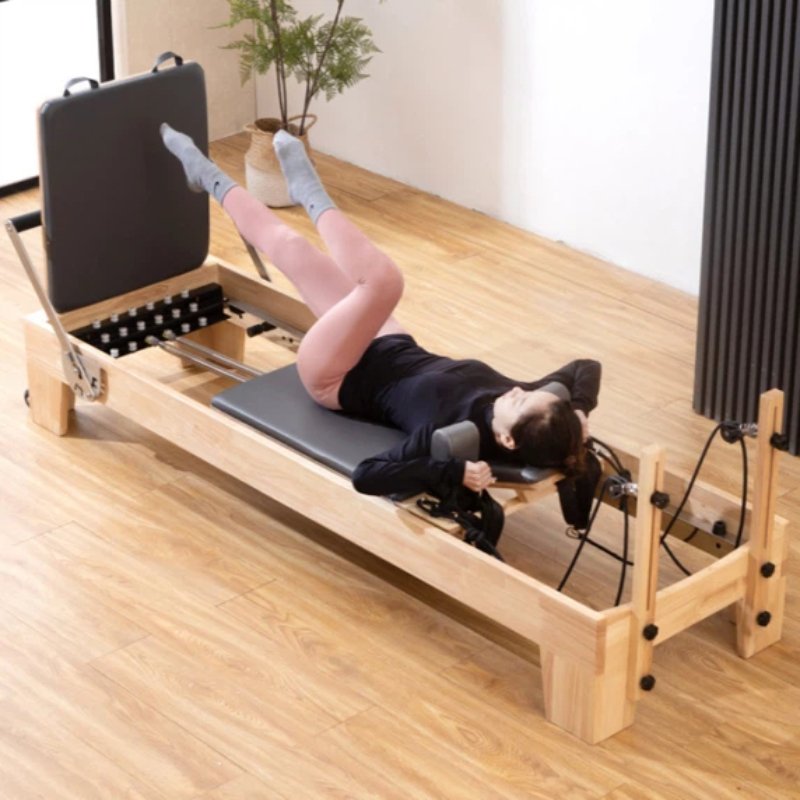
Pilates Reformer works through the dual mechanism of sliding instability and spring resistance. Every slide forces the core to contract throughout the process, activating deep stabilizer muscles such as the transverse abdominis, pelvic floor muscles, and lower back muscles. At the same time, spring resistance allows the limbs to exert force against resistance during pushing, pulling, stretching, and bending, accurately stimulating superficial and deep muscles such as the shoulders, back, chest, glutes, and legs. Training emphasizes slow control, breathing, and precise force exertion, reducing inertia and compensation, so that muscles can fully contract and extend during full-range movements. This model not only strengthens strength but also improves muscle control and neural connection, making strength more “practical” and posture more upright.
Can Reformer Pilates Help Build Muscle Mass?
Pilates Reformer can effectively shape tight and slender muscles, improving muscle strength, endurance, and density, rather than the large circumference growth of traditional fitness. Characterized by low impact and high control, it achieves functional muscle building through progressive resistance, repeated control, and multi-angle training: strengthening the core, sculpting lines, improving posture, and protecting joints. For studio clients, this “lean and strong” effect is more in line with public aesthetic and health needs. With consistent regular training, muscle strength is significantly improved, the waist and abdomen are tightened, the glutes and legs are shaped, the shoulders and back are stretched, and the risk of sports injuries is reduced. It is not a pure muscle-building tool, but an excellent strength shaping and posture optimization program, suitable for the mainstream customer group of most venues.
How CoreFlow Reformer Equipment Supports Muscle Strength in Your Studio
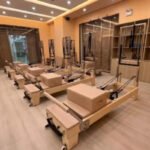
CoreFlow, as a professional Pilates equipment supplier, provides reliable support for muscle strength training in venues with its stable, smooth, and durable design. CoreFlow’s equipment adopts a precise spring resistance system and silent slide rails, allowing coaches to safely adjust the intensity to adapt to clients of different levels, helping muscles get stimulation step by step. Its Foldable Pilates Reformer combines commercial durability and space efficiency, allowing small venues to easily arrange multiple equipment and improve course capacity. The stable bed body, comfortable support, and precise resistance make clients more focused on muscle exertion, improve training effects, and make venue courses more professional and safe.
What Are the Key Benefits of Muscle Strength Through Pilates?
Muscle strength built through Pilates has three major advantages: practical, healthy, and aesthetic. First, it strengthens the core and deep stabilizer muscles, protects joints such as the lumbar spine and knees, and reduces daily and sports injuries. Second, it shapes uniform and slender muscle lines, improving postural problems such as hunchback, round shoulders, and anterior pelvic tilt. Third, it improves body control, balance, and coordination, making daily movements easier and more efficient. Fourth, it is low-impact and friendly, suitable for women, post-partum groups, office workers, and rehabilitation groups, expanding the coverage of venue customers. The simultaneous improvement of strength and flexibility makes clients’ posture and temperament improve synchronously, and repurchase and referral rates will naturally be higher.
How to Maximize Muscle Gain with Reformer Pilates?
To maximize muscle shaping effects on the Reformer, you can follow three points: first, gradually increase resistance, and gradually increase spring intensity on the premise of standard movements to give muscles continuous new stimulation; second, emphasize slow control and full range of motion, avoid rapid swinging, and let muscles be strengthened during peak contraction and full extension; third, match systematic courses, combining core, upper limbs, lower limbs, and stretching cycle training to ensure balanced development. For venues, matching CoreFlow professional equipment can more accurately achieve resistance adjustment and movement stability, helping clients efficiently achieve strength and shaping goals, and improving course reputation and renewal rate.
Conclusion
Pilates Reformer can safely and efficiently create a tight, strong, and slender muscle shape, which is a core competitive project for Pilates studios. With the characteristics of low impact and high returns, it covers a wide range of customer groups. Combined with professional equipment and scientific courses, it can significantly improve client effects and satisfaction. Choosing reliable equipment and building systematic training can make your venue more competitive in shaping, rehabilitation, posture management and other tracks, achieving dual improvement of course value and operational efficiency.
FAQs
Can beginners build significant muscle with reformer Pilates?
Yes. Through standard movements, basic resistance, and regular practice, beginners can quickly activate the core, awaken dormant muscles, and improve muscle strength and control. Although there is little change in circumference in the early stage, the tightening of posture, stability of the core, and improvement of strength are very obvious, and clear effects can be seen after 4–8 weeks of persistence.
How often should clients practice reformer Pilates to see muscle growth?
It is recommended to practice 2–3 times a week, 45–60 minutes each time, to give muscles enough stimulation and recovery time. Interval training is safer and more effective than single high-intensity training. After 8–12 weeks of persistence, significant improvements in muscle strength, lines, and posture will appear, which is suitable as the basis for designing long-term course packages in venues.
Is reformer Pilates enough, or should it be combined with other strength training in a studio setting?
For most clients, Pilates Reformer is enough to meet daily strength and shaping needs. If you pursue higher intensity, you can match light weight-bearing, resistance bands, or small equipment training. In a studio setting, focusing on the core bed and supplemented by a small amount of auxiliary training can not only ensure the effect but also simplify class scheduling, reduce equipment investment, and improve operational efficiency.


No comment