

As the global Pilates market continues to expand — studio owners and fitness professionals face a critical question: how frequently should clients practice to achieve meaningful results? This guide explores the science behind Pilates frequency, helping you educate clients on realistic expectations while positioning your studio for long-term success with professional-grade equipment from CoreFlow.
What Is Pilates and How Does It Benefit Your Body and Mind?
Pilates is a mind-body exercise method developed by Joseph Pilates, focusing on core strength, spinal alignment, and controlled movement patterns. Whether practiced on a mat or using specialized equipment like the Pilates Reformer, the method builds what Joseph Pilates called the body’s “powerhouse”—the deep stabilizing muscles of the abdomen, lower back, and pelvis.
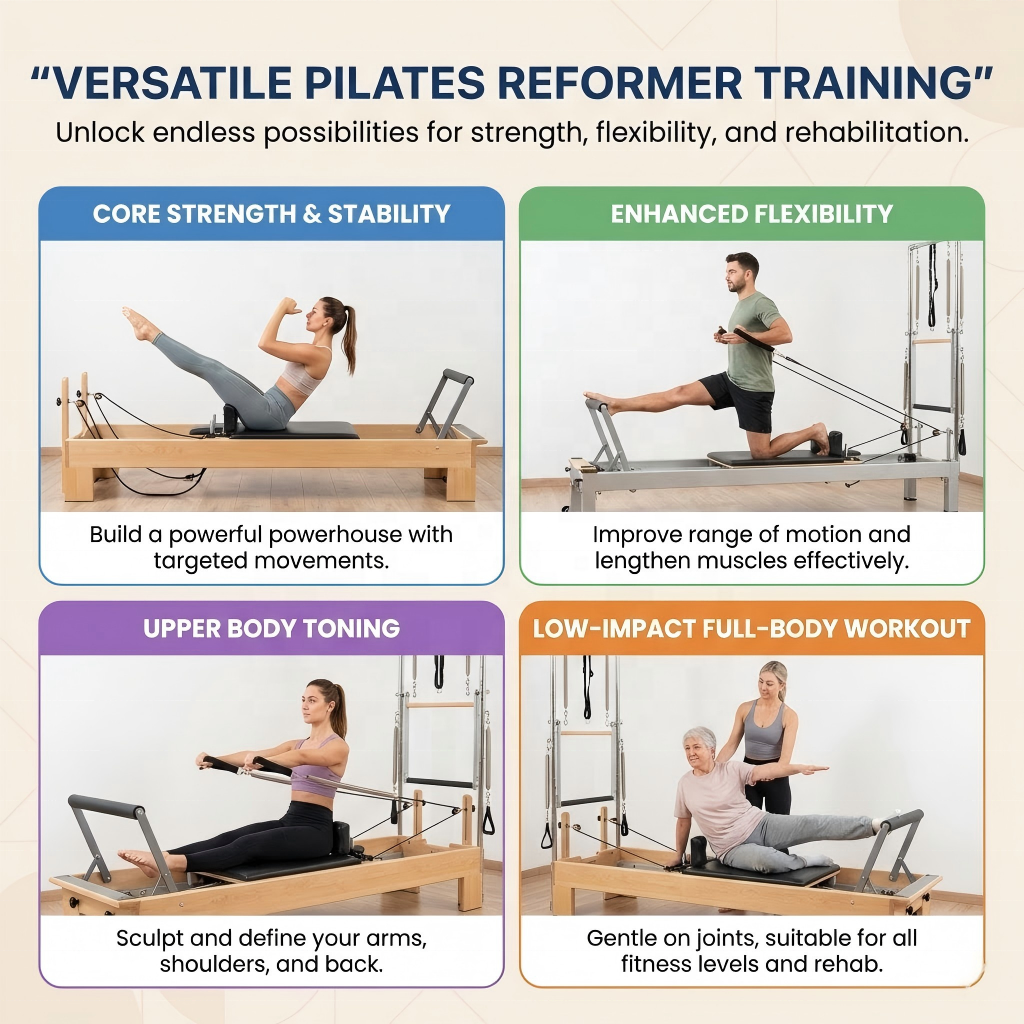
For studio owners, understanding Pilates’ comprehensive benefits is essential for client education. Regular practice delivers measurable physical outcomes: improved flexibility through dynamic stretching, enhanced muscular endurance, better posture correction, and reduced injury risk. The reformer’s spring-based resistance system allows precise muscle engagement without joint compression, making it accessible for diverse populations from rehabilitation clients to elite athletes.
Equally significant are the mental benefits. Pilates demands focused concentration on breath work and precise movement, creating a meditative state that reduces cortisol levels and enhances mind-body awareness. Clients often report improved mental clarity and reduced stress after consistent practice.
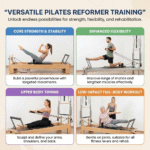
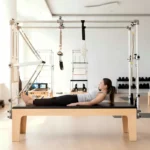
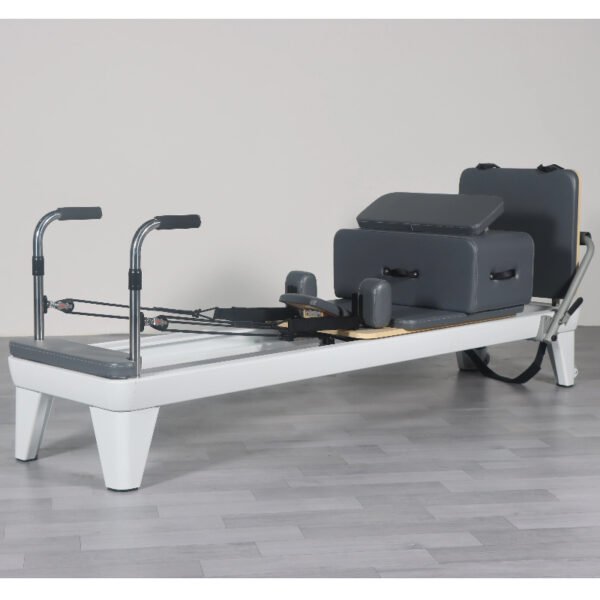
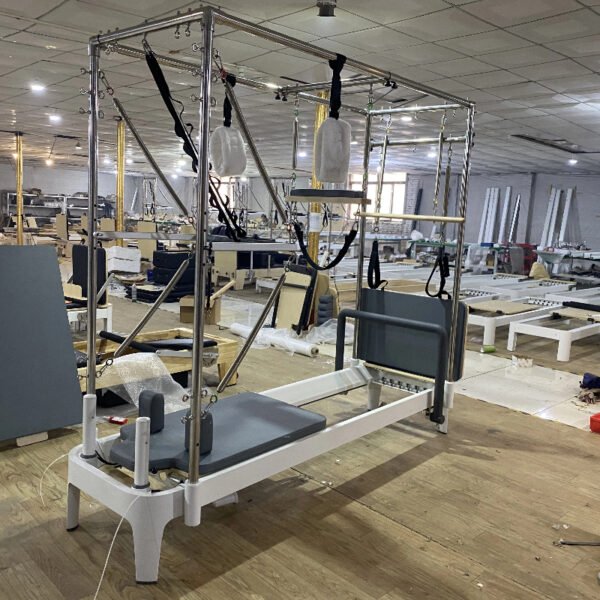
For studios seeking to maximize client outcomes, equipment versatility matters. CoreFlow’s Pilates Reformer With Tower expands exercise possibilities exponentially, integrating over 100 additional movements that challenge clients at every level while maintaining the foundational principles of control and precision.
Is Pilates Once a Week Enough to See Results?
The short answer: once a week can maintain existing fitness but is rarely sufficient for significant progress. According to physiotherapist and Pilates expert Claire Mills, “Research suggests there are benefits to doing Pilates just once a week. However, I would recommend doing it two or three times weekly—you will notice and feel the strength and flexibility change more quickly.”
This recommendation is grounded in the physiology of motor learning. When we practice a new skill, neural pathways form in the brain. Infrequent practice allows these pathways to weaken between sessions. One Pilates session per week forces the body to essentially restart each time rather than building progressively on previous work. As noted in IDEA Fitness Journal, “If new clients allow their bodies to regress for an entire week between sessions, they may regress into old patterns and return to nearly the same state as before the previous week’s session.”
For studios, this presents both a challenge and an opportunity. Clients who practice only weekly may become frustrated with slow progress and discontinue membership. Conversely, clients who commit to 2-3 sessions weekly experience faster results, higher satisfaction, and stronger retention.
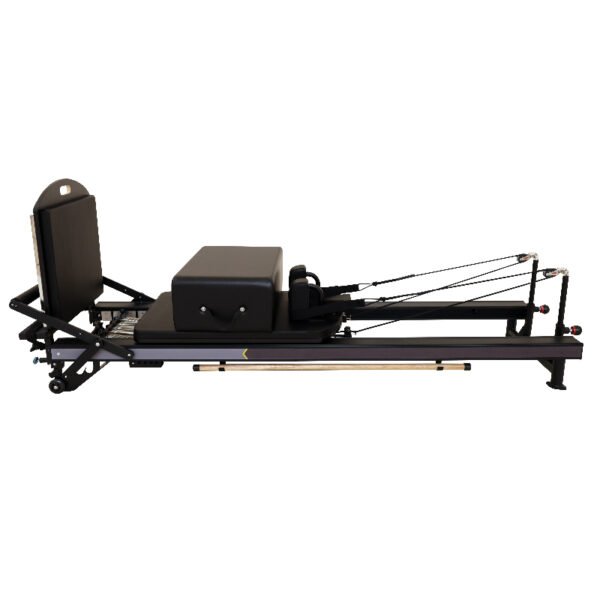
The equipment itself can influence outcomes. CoreFlow’s Pilates Reformer is engineered with commercial-grade durability and precision spring tension that provides consistent resistance session after session. This consistency is crucial for motor learning—when equipment performs reliably, clients can focus entirely on movement patterns rather than compensating for mechanical inconsistencies.
For beginners, once weekly might be an appropriate starting point, particularly when combined with other exercise forms. However, studio owners should guide clients toward increased frequency as they progress, explaining that Joseph Pilates’ famous observation—”In 10 sessions you’ll feel the difference, in 20 sessions you’ll see the difference, and in 30 sessions you’ll have a whole new body”—implicitly assumes consistent, frequent practice.
What Results Can You Expect from Doing Pilates Once a Week?
Clients practicing once weekly can expect modest but meaningful outcomes, particularly if they’re new to exercise or combining Pilates with other activities. According to Pilates instructor Eloise Skinner, “For those starting to combine Pilates with a full, existing workout or sports routine, once a week might be a good starting point.”
Within the first month of weekly practice, clients typically report:
- Improved body awareness: Greater understanding of posture and alignment in daily activities.
- Initial flexibility gains: Particularly in hamstrings, hips, and spine.
- Core activation awareness: Ability to engage deep abdominal muscles consciously.
- Stress reduction: The focused breathing and concentration provide mental reset.
However, weekly-only practice has limitations. Strength gains progress slowly because muscles require more frequent stimulation for hypertrophy. Flexibility improvements plateau without regular stretching sessions. Most significantly, movement patterns don’t become automatic—clients must consciously think about form rather than moving intuitively.
For studios, managing these expectations is crucial. Equipment quality also influences outcomes. A precision-engineered Pilates Reformer like those manufactured by CoreFlow provides consistent resistance that helps clients maximize each session’s effectiveness. The smooth carriage movement and adjustable spring tension allow clients to work at appropriate challenge levels, extracting maximum benefit from limited practice time.
The APPI Clinics note that only 10% of their clients achieve once-weekly practice, suggesting that frequency recommendations must balance ideal science with practical reality. The key is helping clients understand that while once weekly provides benefits, increased frequency accelerates results.
How Often Should You Do Pilates for Optimal Strength, Flexibility, and Core Stability?
For optimal results across strength, flexibility, and core stability, industry experts consistently recommend 2-3 sessions per week. The APPI Clinics state directly: “Once a week is a minimum, twice a week is ideal, and no one needs to do it more than three times a week in studio as you should be doing other exercise forms also.”
This recommendation aligns with general exercise science. The American College of Sports Medicine suggests adults engage in strength training 2-3 days weekly, combined with 150 minutes of moderate-intensity activity. Pilates fulfills both strength and flexibility components within this framework.
Two sessions weekly provides the minimum effective dose for measurable progress. This frequency allows neuromuscular adaptation between sessions without significant regression. Clients notice improved control, increased range of motion, and enhanced core engagement within 4-6 weeks.
Three sessions weekly accelerates results dramatically. At this frequency, motor learning transfers from short-term to long-term memory, meaning movement patterns become automatic. Clients experience what Joseph Pilates described: after 30 sessions (10 weeks at three weekly), “you’ll have a whole new body.”
For studios, offering diverse class formats maximizes client engagement. Some facilities successfully implement 85 classes weekly, demonstrating that high-frequency scheduling meets member demand. Equipment versatility matters here—CoreFlow’s Pilates Reformer With Tower enables studios to offer everything from foundational classes to advanced workshops on the same apparatus, maximizing return on investment.
The “3-2-1 method” popular in fitness circles—three strength days, two Pilates days, one cardio day—provides balanced programming that many clients find sustainable. Studios can support this by offering flexible class packages and educating clients on complementary scheduling.
Equipment quality directly impacts results at any frequency. CoreFlow reformers feature precision-engineered spring systems that maintain consistent tension across thousands of sessions, ensuring clients receive reliable resistance that challenges muscles appropriately. The smooth carriage movement reduces compensation patterns, allowing proper muscle activation.
What Factors Determine Whether Once-a-Week Pilates Is Enough for You?
The adequacy of weekly Pilates depends on multiple individual factors that studio owners should assess during client intake:
Client goals fundamentally determine required frequency. Clients seeking general wellness, stress reduction, or gentle movement maintenance may thrive with weekly sessions. Those pursuing significant strength gains, posture correction, or athletic performance enhancement require 2-3 sessions weekly.
Current fitness level matters significantly. Beginners often progress adequately with weekly sessions initially because their bodies respond dramatically to any novel stimulus. However, as adaptation occurs, frequency must increase to continue progress.
Other physical activities influence Pilates frequency needs. Clients engaged in strength training, running, or sports benefit from Pilates 1-2 times weekly as complementary cross-training. For these individuals, Pilates provides mobility work, core stability, and injury prevention that enhances primary activities.
Specific health conditions may dictate frequency. Rehabilitation clients often require 2-3 weekly sessions initially to retrain movement patterns and build stabilizing strength. The controlled resistance of equipment like CoreFlow’s Pilates Reformer With Tower makes it ideal for clinical applications, supporting gradual progression.
Equipment access affects practical frequency. Studio-based practice requires scheduling and travel, while in-home equipment enables more frequent shorter sessions. For studios, investing in versatile equipment maximizes client options. CoreFlow’s commercial-grade reformers are designed for daily use in busy environments, with durable construction that withstands high-volume traffic.
Studio owners should help clients assess these factors during consultation. Using assessment tools to track progress objectively — range of motion measurements, core endurance tests, postural assessments—provides data for frequency recommendations. When clients see documented improvement from increased frequency, they’re motivated to commit.
How to Maximize Results If You Only Do Pilates Once a Week?
For clients constrained to weekly practice, strategic approaches can enhance outcomes:
Quality over quantity becomes paramount. Each session must maximize neuromuscular engagement. Instructors should emphasize precise form, controlled transitions, and full range of motion. Equipment that provides consistent resistance supports this focus—CoreFlow’s Pilates Reformer features smooth carriage movement and reliable spring tension that allows clients to concentrate entirely on movement quality.
Homework assignments bridge the gap between sessions. Simple mat exercises—toe taps, shoulder bridges, the hundred—can be practiced at home for 10-15 minutes on non-studio days. This maintains neural pathways and prevents complete regression between weekly sessions. Provide clients with written or video resources demonstrating safe home practice.
Strategic class selection matters. Rather than random attendance, clients should follow a progressive curriculum. Foundational classes build basics, followed by increasingly challenging formats. Studios with multiple equipment types can rotate clients between mat and reformer work for variety. CoreFlow’s diverse product line supports this progression across all experience levels.
Combined modalities within single sessions maximize efficiency. Using a Pilates Reformer With Tower, instructors can incorporate upper body pulling work, lower body strengthening, and core stabilization in one 50-minute session—delivering comprehensive training that weekly practice alone might otherwise miss.
Mindfulness practice extends benefits. Teaching clients to apply Pilates principles—neutral spine, breath coordination, core engagement—during daily activities transforms ordinary moments into movement practice. Standing in line becomes an opportunity to practice alignment; sitting at a desk becomes core engagement practice.
Conclusion
The question “Is Pilates once a week enough?” has no single answer—it depends on goals, current fitness, and commitment level. For general wellness and maintenance, weekly practice provides meaningful benefits. For significant strength gains, flexibility improvements, and true transformation, 2-3 sessions weekly deliver optimal results.
Studio owners play a crucial role in educating clients about realistic expectations and guiding them toward appropriate frequency. By investing in versatile, durable equipment like CoreFlow’s Pilates Reformer and Pilates Reformer With Tower, studios can support clients at every level—from beginners exploring the method to advanced practitioners seeking continuous challenge.
The Pilates market continues expanding as consumers discover this effective, low-impact training method. Studios positioned to offer high-quality instruction on professional-grade equipment will capture this growing demand while building loyal client relationships based on real results.
Remember Joseph Pilates’ wisdom: “Physical fitness can neither be achieved by wishful thinking nor outright purchase.” It requires consistent practice—and studios equipped to support that consistency will thrive.
FAQs
Is doing Pilates once a week enough for beginners?
Yes, once weekly is an appropriate starting point for beginners, particularly those new to exercise or with busy schedules. As they gain familiarity with the practice, encourage adding a second weekly session to accelerate progress and prevent frustration from slow results. Studios can support this progression by offering beginner-focused classes on quality equipment like CoreFlow reformers, which provide consistent resistance that builds confidence.
How long does it take to see results from Pilates once a week?
With weekly practice, clients typically notice initial changes within 4-6 weeks—improved posture awareness, modest flexibility gains, and better mind-body connection. However, significant strength and visible body changes develop much more slowly at this frequency due to the body’s tendency to regress between sessions. Equipment quality influences outcomes—CoreFlow’s precision-engineered reformers ensure each session delivers maximum benefit.
Is it better to do Pilates once a week or shorter sessions multiple times per week?
Multiple shorter sessions weekly are superior for skill development and physiological adaptation. The motor learning principle is clear: frequent practice builds lasting neural pathways, while widely spaced sessions prevent progression. Even 20-minute sessions two to three times weekly outperform one 60-minute session. Studios can accommodate this by offering varied class lengths and formats, potentially using space-efficient CoreFlow equipment that maximizes scheduling flexibility.


No comment