
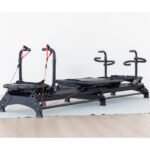
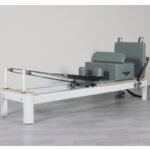
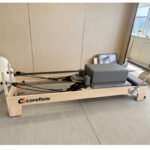
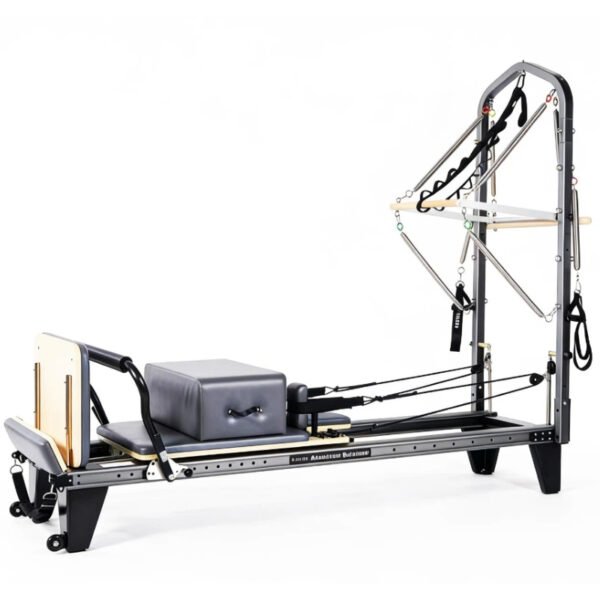
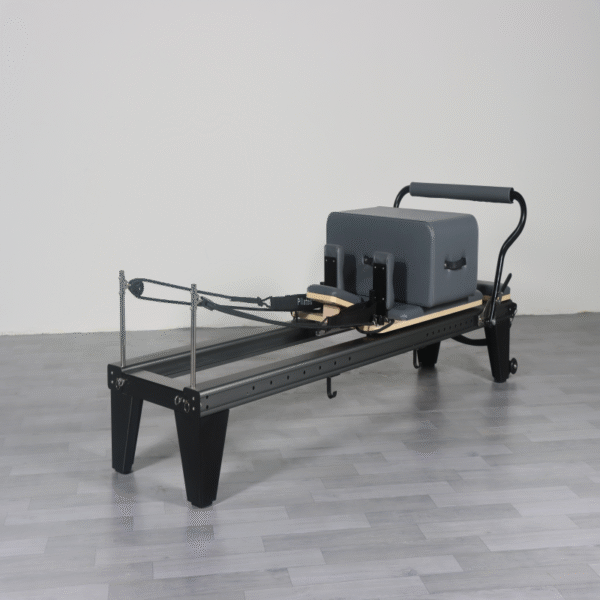
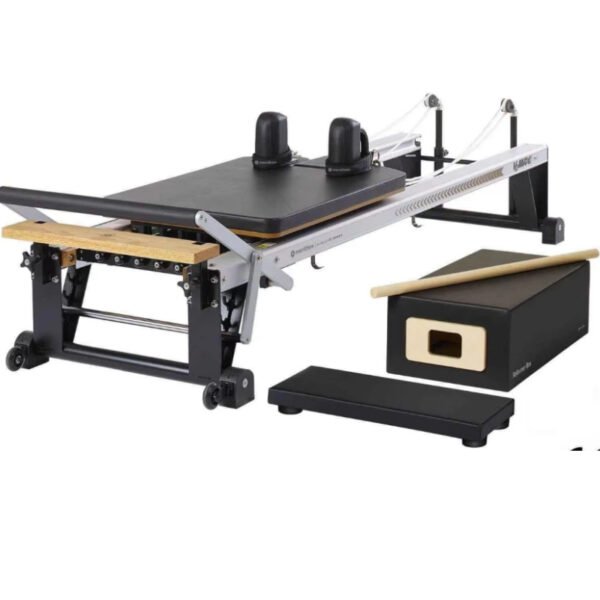
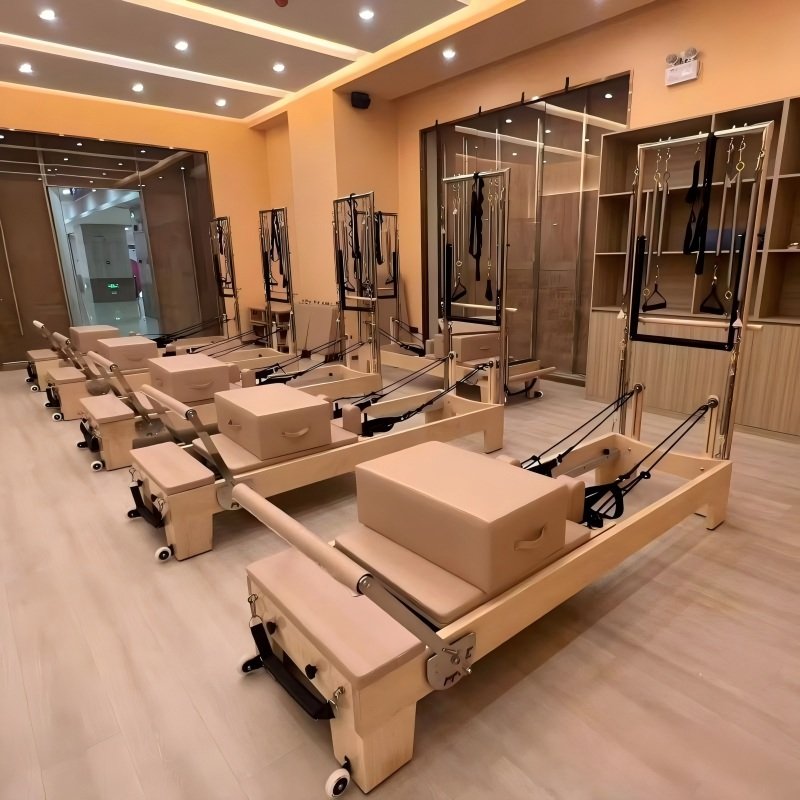

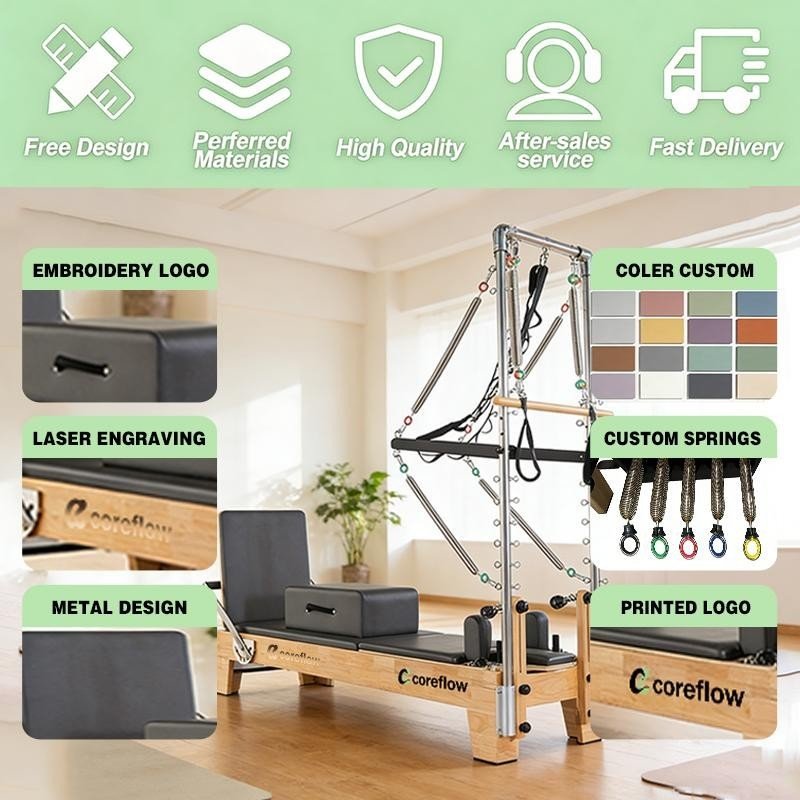


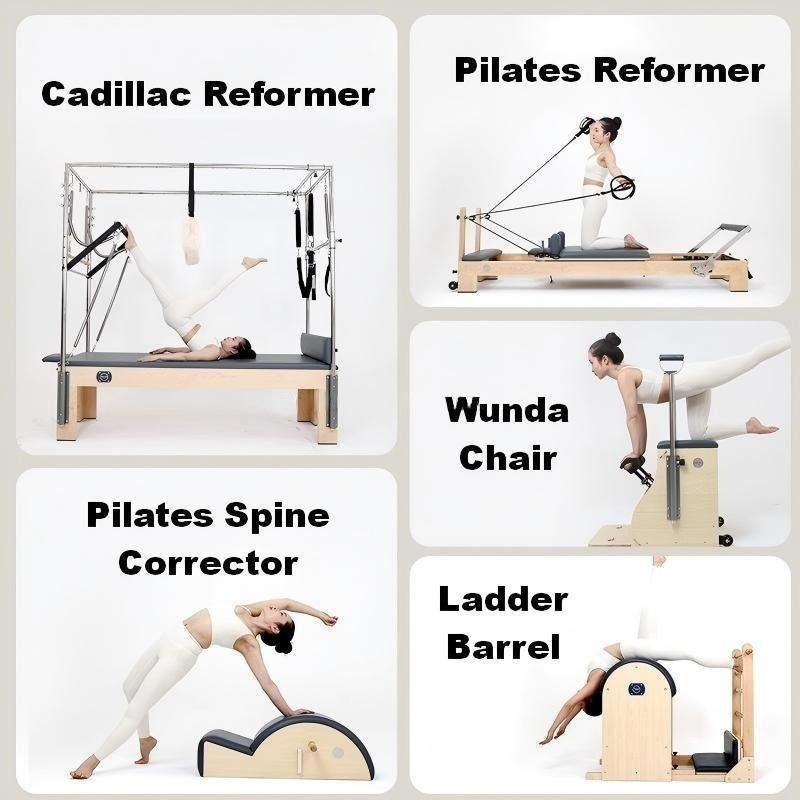

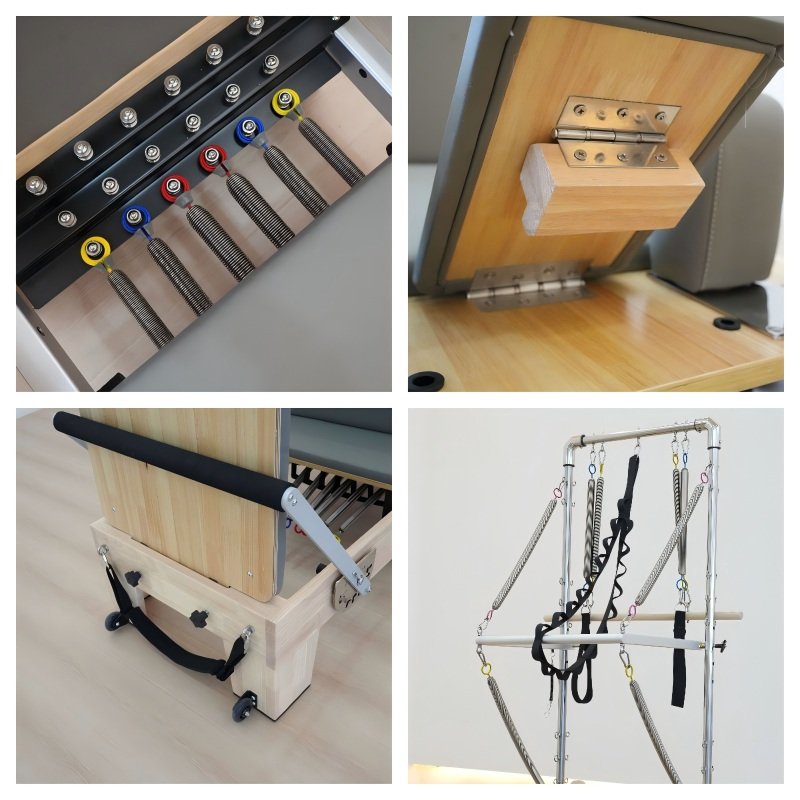
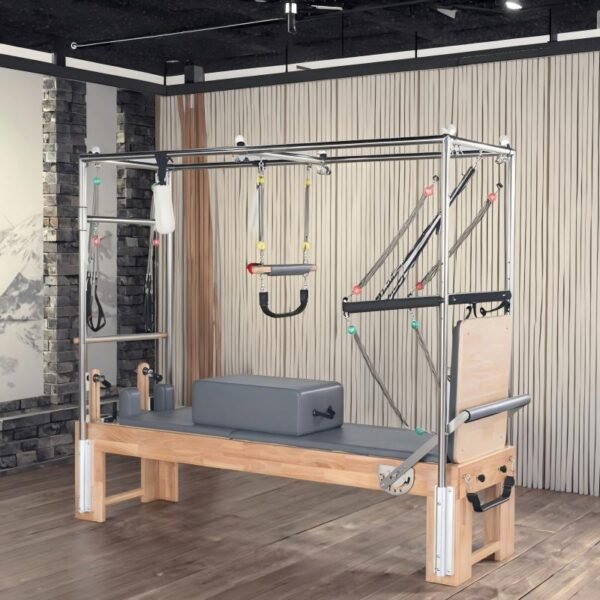
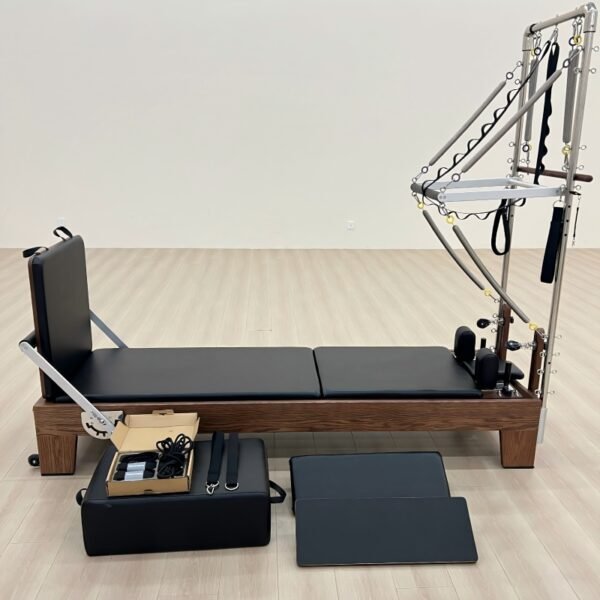
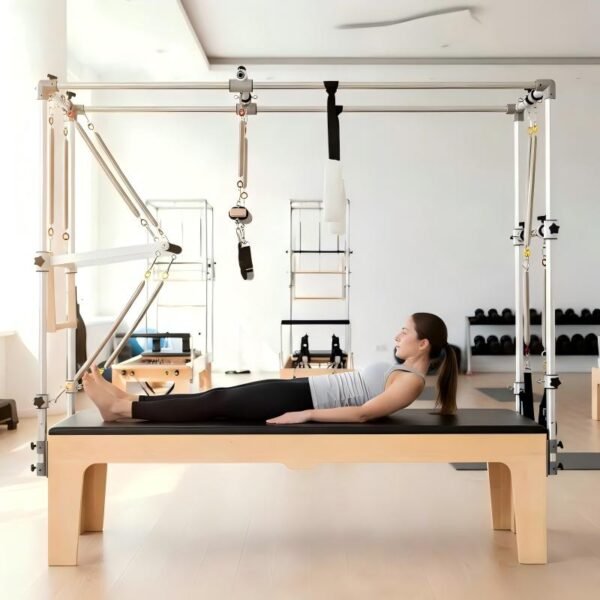
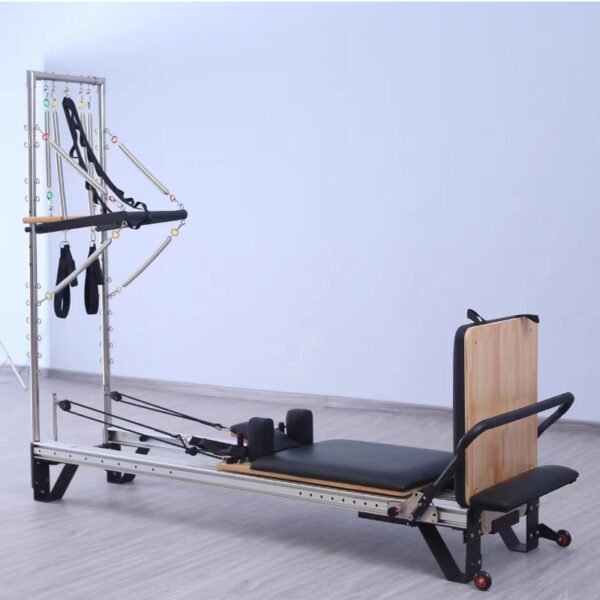
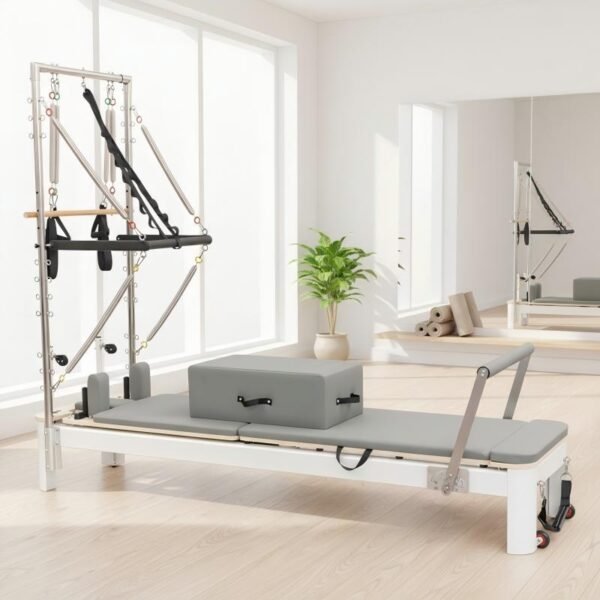
For professional studio owners and serious practitioners, the selection of apparatus is a critical decision that directly impacts client satisfaction, training outcomes, and business efficiency. In an industry where space optimization and functional versatility are paramount, finding the right Pilates Equipment that meets all these requirements can be challenging. The integrated Oak Wood Reformer with Tower represents a revolutionary solution in professional Pilates Equipment design, combining the foundational benefits of a traditional reformer with the comprehensive functionality of a vertical tower system. This remarkable apparatus solves the perennial studio dilemma of maximizing training options while minimizing spatial footprint, making it an indispensable investment for modern fitness facilities.
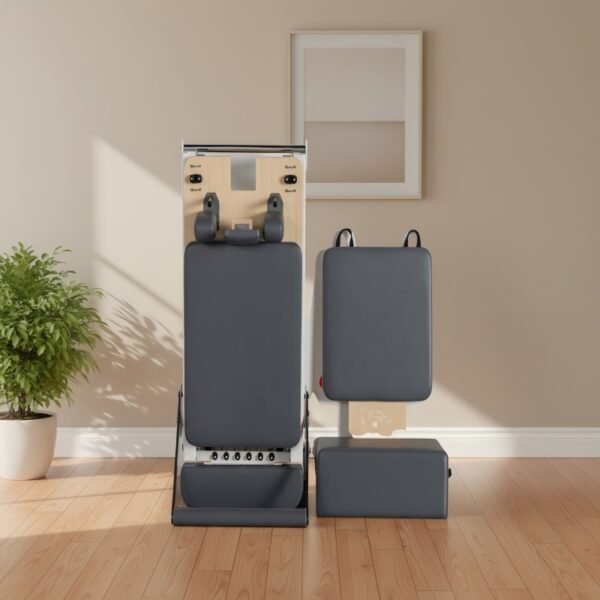
The evolution of studio design has increasingly emphasized multi-functional solutions that deliver exceptional value without compromising performance. Traditional studio layouts often require separate stations for different apparatus, creating spatial inefficiencies that limit client capacity and service flexibility. This integrated approach to Pilates Equipment design represents a significant advancement, offering practitioners and instructors the ability to conduct complete training sessions from a single station. The seamless transition between horizontal and vertical exercise modalities enhances training continuity while conserving approximately 35% of the space required by conventional multi-station setups.
The Foundation of Professional Training: Material Excellence
The quality of any professional Pilates Equipment begins with its material composition and construction methodology. The Oak Wood Reformer with Tower utilizes Thailand oak as its primary structural material, selected for its exceptional durability and aesthetic appeal. Oak possesses natural properties that make it ideal for high-traffic studio environments, including superior density that minimizes vibration during dynamic movements and inherent resistance to the wear patterns associated with daily professional use. This material choice ensures that the apparatus maintains its structural integrity and performance characteristics throughout years of continuous operation.
Beyond its functional attributes, the oak construction contributes significantly to studio ambiance and client perception. The warm, natural aesthetic of solid wood creates an environment of professional sophistication that enhances the overall training experience. This apparatus further extends its visual appeal through comprehensive customization options, allowing studio owners to select finishes that align perfectly with their brand identity. The ability to reference standardized color systems ensures precise visual coordination, transforming functional Pilates Equipment into integrated design elements that reinforce studio branding and create a cohesive aesthetic environment.
Dual-System Engineering: Comprehensive Training Capabilities
The innovative design of this apparatus lies in its integration of two complete training systems, each engineered to professional performance standards.
H3: Horizontal Training System Performance
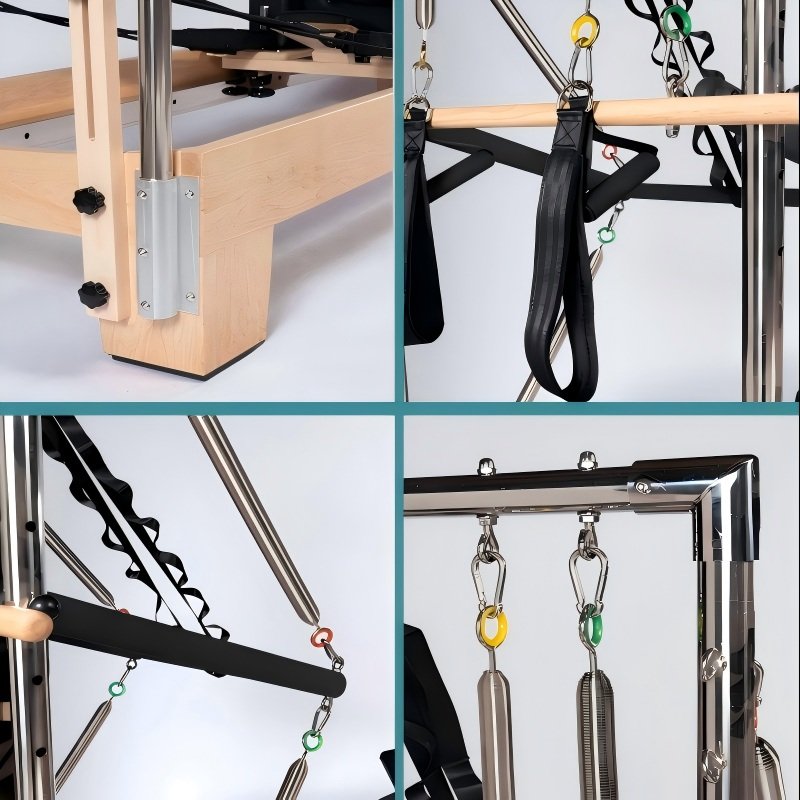
Functioning as a fully-capable traditional apparatus, the horizontal component features precision-engineered guidance systems manufactured from durable aluminum alloy. These systems interface with specialized polymer components designed for silent, friction-minimized operation that maintains fluid motion throughout the complete exercise range. Resistance mechanisms incorporate calibrated spring systems sourced from manufacturers with established reputations for tension consistency and durability. User interface points feature multi-layer leather surfaces treated for enhanced grip properties and textile components selected for optimal comfort and hygiene maintenance.
H3: Vertical Exercise System Integration
The integrated tower structure expands exercise possibilities beyond conventional horizontal training. This system incorporates adjustable positioning mechanisms, multiple resistance attachment points, and versatile support components that enable comprehensive movement training across all anatomical planes. The engineering maintains consistent quality standards throughout, with structural hardware manufactured from corrosion-resistant alloys and load-bearing components designed to withstand repeated stress cycles without performance degradation. This vertical integration allows for seamless transitions between exercise modalities, supporting sophisticated training protocols that would traditionally require multiple separate apparatus stations.
Strategic Implementation Across Professional Environments
The integrated design philosophy delivers distinct advantages across various operational contexts. For commercial fitness facilities, this apparatus maximizes service diversity and client throughput within spatial limitations while presenting premium aesthetics that support higher service valuation. Professional residential studios benefit from comprehensive training protocols in space-constrained environments without compromising exercise variety or equipment quality. Educational institutions find value in these systems as effective demonstration platforms for integrated training methodologies within instructor certification programs. Therapeutic practice settings utilize the adaptable exercise configurations to support diverse rehabilitation protocols within limited clinical spaces.
The practical benefits extend to operational efficiency and client experience. Studio owners report significant improvements in session flow and instructor productivity when utilizing integrated systems. The ability to conduct comprehensive assessments and progressive training from a single station reduces transition time between exercises and maintains client focus throughout sessions. This operational efficiency translates directly to improved client outcomes and enhanced studio profitability through better space utilization and increased service capacity.
Long-Term Investment Considerations
When evaluating integrated Pilates Equipment for professional implementation, decision-makers should consider both immediate spatial efficiencies and long-term operational benefits. Assessment criteria should include material durability metrics, maintenance requirement profiles, adaptability to specific training methodologies, and compatibility with existing facility systems. The initial investment in premium integrated equipment often yields significant returns through reduced spatial requirements, lower long-term maintenance costs, and enhanced client retention rates due to improved training experiences.
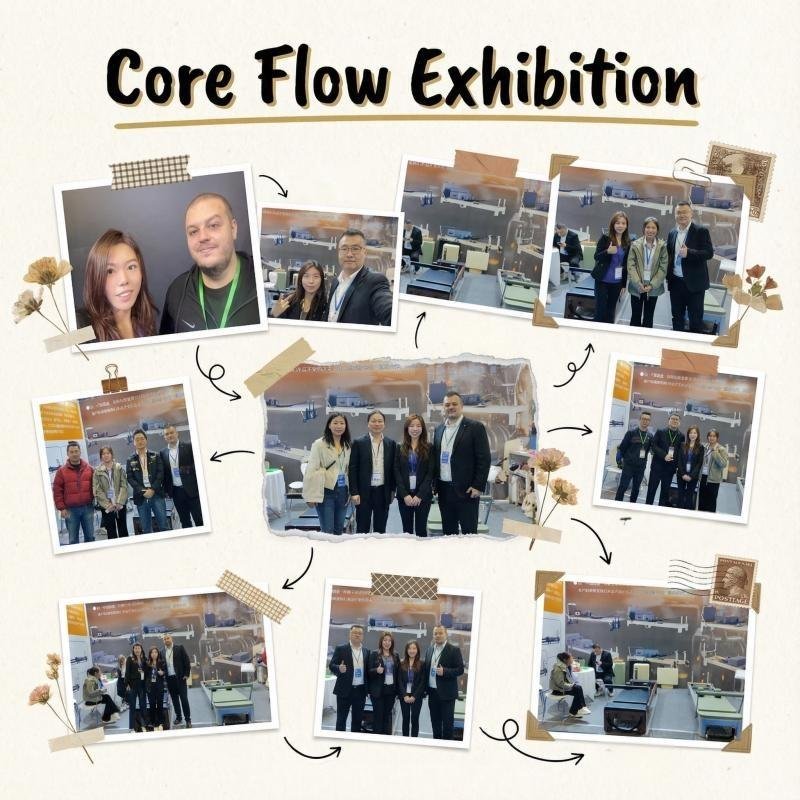
Professional purchasers should conduct thorough research before making investment decisions. Comprehensive resources are available through the Core Flow official website, providing detailed technical specifications, customization options, and implementation guidelines. Additionally, utilizing research platforms like Google can provide valuable comparative data, professional user testimonials, and industry analysis to inform strategic purchasing decisions aligned with specific operational objectives.
Ready to transform your studio’s capabilities while optimizing spatial resources? Discover how the integrated engineering and premium construction of professional Pilates Equipment can enhance your service offerings and operational efficiency. This sophisticated training solution represents a strategic investment in both space optimization and professional training versatility, delivering exceptional value for forward-thinking studio owners and fitness professionals.

Reviews
There are no reviews yet.