
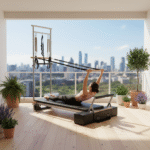

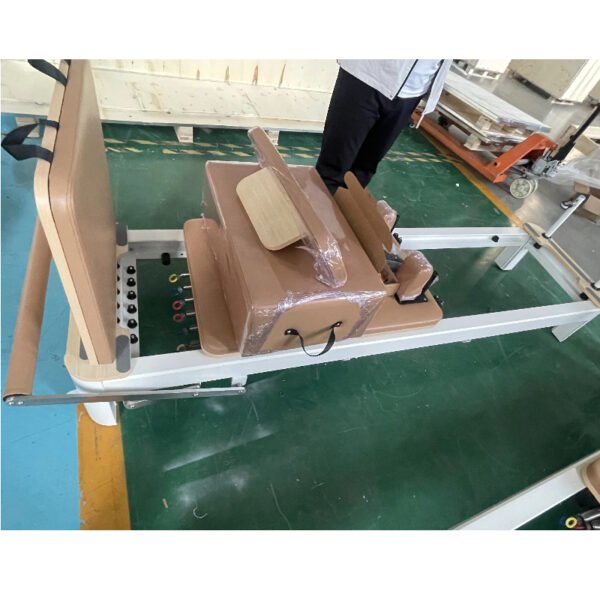
Driven by the fast-paced modern lifestyle, Pilates has transitioned from specialized rehabilitation to mainstream fitness. Wall Pilates, in particular, is gaining traction in both home gyms and commercial studios due to its efficient use of vertical space, focus on control, and postural correction. For B2B clients, understanding the market potential, product logic, and safety standards of wall pilates equipment is key to capitalizing on this growing trend.
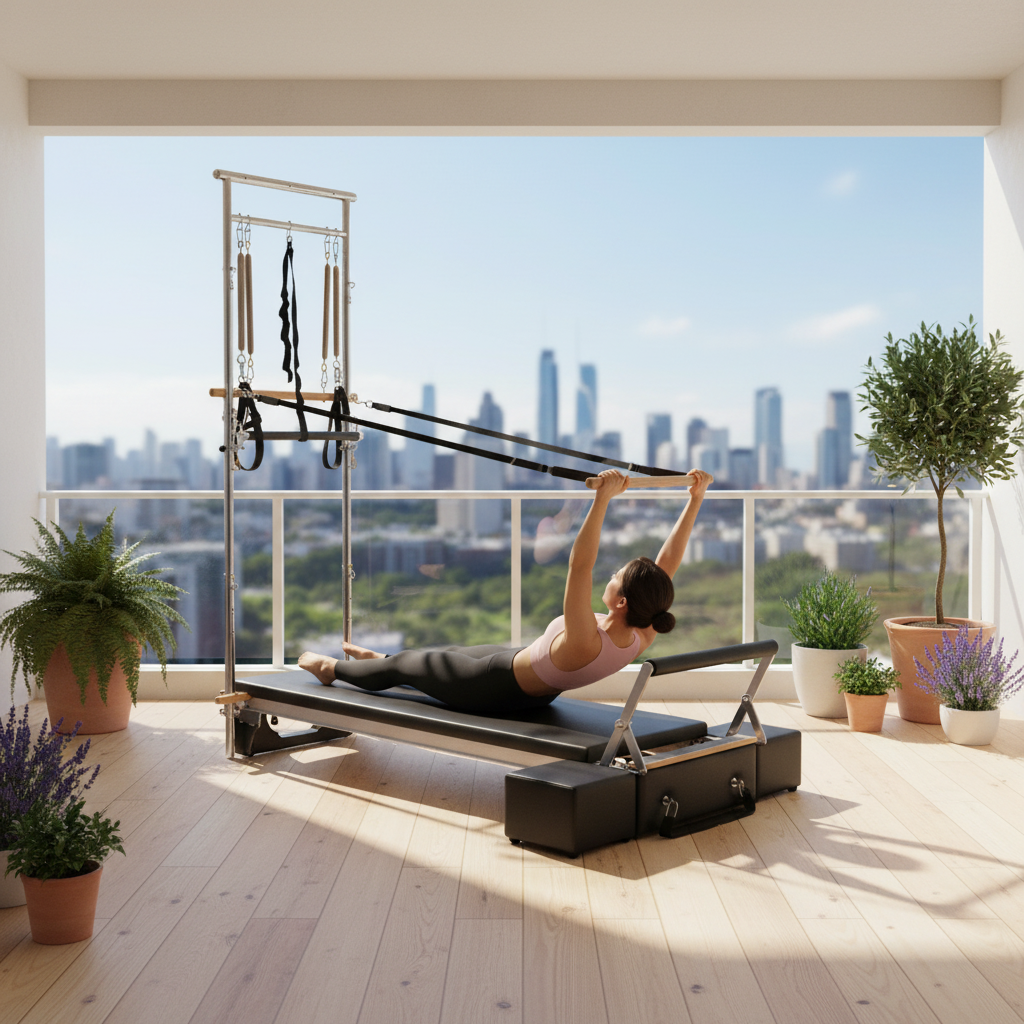
What Is Wall Pilates Equipment
Wall Pilates Equipment refers to a suite of tools designed to assist Pilates movements using the wall as a support point. It breaks the limitations of traditional mat Pilates by utilizing the vertical plane to provide resistance, balance assistance, and alignment feedback. These tools typically include wall-mounted pulley systems, door-frame anchor straps, wall charts, and multi-functional wall racks. The core value lies in the wall acting as a “silent instructor,” allowing users to intuitively sense if their posture is misaligned, thus forcing the body to maintain a neutral spine. For B2B clients, this translates to higher space utilization and broader client adaptability.
How Does Wall Pilates Equipment Improve Your Workout
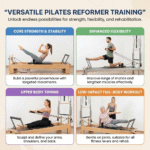
Wall pilates equipment significantly enhances training quality through physical feedback. The wall acts as an “instructor,” allowing users to perceive if they are leaning too far forward or if their spine is collapsing, thereby enforcing spinal neutrality and pelvic stability. Furthermore, through pulleys or resistance bands, the equipment can simulate the resistance environment of professional machinery, enabling full-body strength training. This training method is not only suitable for body shaping but also highly effective for post-surgical rehabilitation, elderly balance training, and posture correction for office workers, greatly expanding a studio’s service offerings.
What Are the Different Types of Wall Pilates Equipment
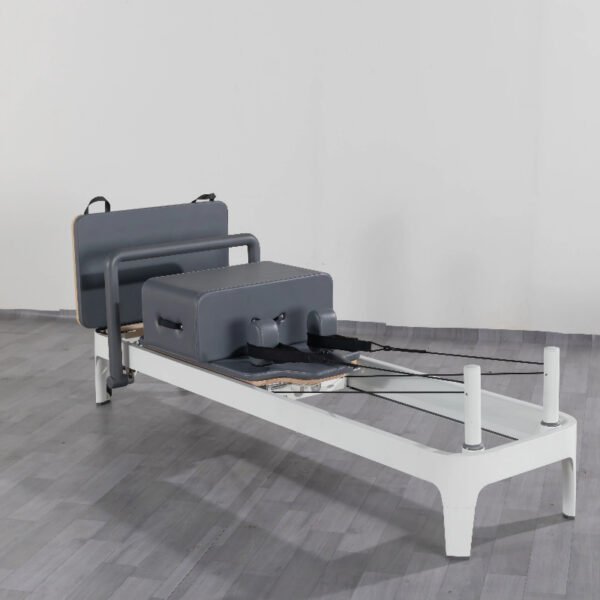
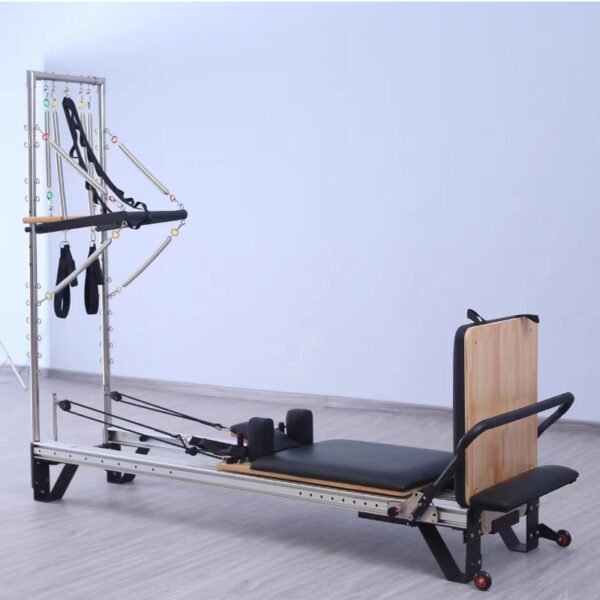
The current market offers a gradient of products ranging from entry-level to professional. Basic models are often portable door-frame band systems suitable for home users, while advanced models include fixed wall pulley racks configured for small studios. Of particular note, some high-end products achieve functional integration through clever design. For instance, certain expandable wall systems can, through attachments, achieve a sliding carriage function similar to a Foldable Pilates Reformer. This “one machine, multiple functions” characteristic significantly enhances the commercial value of the product.
How to Choose the Right Wall Pilates Equipment for Your Home or Studio
B2B procurement requires a comprehensive evaluation of space, target clientele, budget, and brand equity. For small studios or homes, compact and easy-to-install products should be prioritized. In contrast, large commercial gyms should focus on durability, weight capacity, and functional richness. Among numerous suppliers, CoreFlow stands out with its fusion of fluid dynamics principles and ergonomic design, launching several wall training systems that have received market acclaim. Their products not only excel in structural stability but also reflect professionalism in user experience details, making them a brand worthy of in-depth consideration for B2B procurement.
What Are the Safety Tips and Best Practices When Using Wall Pilates Equipment
Safety is the lifeline of B2B operations. Procurement must ensure wall pilates equipment complies with national fitness equipment safety standards. Installation is critical and must be performed by professionals to ensure the wall’s load-bearing capacity is sufficient (typically requiring concrete or solid brick walls), with all expansion bolts tightened properly. In daily use, a regular inspection mechanism should be established to check for pulley wear, rope aging, and metal part corrosion. Studios should establish Standard Operating Procedures (SOPs) to guide members on correct usage, avoiding accidents caused by incorrect movements.
Conclusion
Wall Pilates equipment is becoming a significant growth area in the fitness market thanks to its space efficiency, training effectiveness, and wide applicability. For B2B enterprises, this represents not just a product line expansion but an upgrade in service models. Whether choosing a powerful alternative to the Foldable Pilates Reformer or introducing innovative brands like CoreFlow, businesses can establish differentiated advantages in a competitive market. Accurate market insight and professional equipment selection are the keys to success.
FAQs
Can beginners safely use wall Pilates equipment at home?
Yes, but only with clear visual or video guidance. Beginners are advised to start with entry-level kits that include detailed tutorials, starting with low-intensity movements and avoiding blindly challenging high-difficulty actions.
How often should I use wall Pilates equipment for best results?
It is recommended to train 3-4 times per week. Consistency is more important than single-session duration. Combined with a scientific diet and rest, noticeable improvements in core strength and flexibility can typically be felt within 4-6 weeks.
Is wall Pilates equipment suitable for people with back problems?
This equipment is generally recommended for back rehabilitation due to its low impact and supportive nature. However, for individuals with specific back issues such as severe scoliosis or acute herniated discs, training must be conducted under the evaluation and guidance of a doctor or physical therapist.

No comment