
Barrel Pilates is one of the most effective yet often overlooked categories of Pilates equipment. Designed to support spinal articulation, core strengthening, and full-body flexibility, barrels have been a cornerstone of the Pilates method since Joseph Pilates himself developed the original designs. Today, barrel equipment remains essential for studios and home practitioners seeking deeper mobility work and more challenging core exercises. This guide explores everything you need to know about barrel Pilates—from its core benefits to the different types available and how to incorporate them into your practice or studio offerings.
What Is Barrel Pilates?
Barrel Pilates refers to a category of Pilates equipment characterized by curved, barrel-shaped surfaces designed to support and challenge the body during exercise. Unlike the flat surface of a mat or the sliding carriage of a Pilates Reformer, barrels provide a rounded surface that encourages spinal articulation, opens the chest and shoulders, and allows for deeper stretching.
The curved design serves multiple purposes: it supports the natural curve of the spine during backbending exercises, provides feedback for proper spinal alignment, and creates instability that challenges core engagement. Barrel exercises typically focus on spinal mobility, back strengthening, abdominal work, and improving posture.
Barrels come in several configurations, from simple portable arches to multi-piece systems with adjustable positions. They are used in both private sessions and group classes, offering modifications for beginners while providing advanced challenges for experienced practitioners. For studio owners, barrels represent a relatively low-cost investment that significantly expands programming capabilities and client offerings.

Why Do Pilates Studios Use Pilates Barrels?
Pilates studios incorporate barrels into their equipment lineup for several compelling reasons that directly impact client outcomes and business success.
First, barrels offer unmatched spinal articulation work. The curved surface guides the spine through safe, supported flexion and extension, helping clients develop better mobility and body awareness. This is particularly valuable for clients with back issues or those working to improve posture.
Second, barrels are incredibly versatile. A single Ladder Barrel from CoreFlow can support exercises ranging from gentle spinal stretches for seniors to advanced abdominal work for elite athletes. This versatility means studios can serve a wider range of clients with the same piece of equipment.
Third, barrels are space-efficient and cost-effective. Compared to larger equipment like reformers or Cadillacs, barrels require minimal floor space while offering exceptional programming value. The CoreFlow Ladder Barrel features a compact footprint that fits easily into any studio layout, making it an ideal addition for studios maximizing every square foot.
Finally, barrels provide visual variety in class offerings. Adding barrel-based classes or incorporating barrel exercises into existing sessions gives clients fresh challenges and keeps their practice engaging, which supports long-term retention.
What Are the Different Types of Pilates Barrels?
What Is a Ladder Barrel in Pilates?
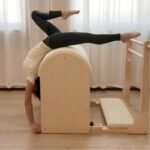
A Ladder Barrel combines a curved barrel surface with an adjustable ladder structure. The ladder provides handholds and footholds at various heights, allowing for progressive stretching and strengthening exercises. This design enables practitioners to work through increasingly challenging ranges of motion safely. The CoreFlow Ladder Barrel features a sturdy wooden frame with precision-cut rungs and a smoothly contoured barrel surface, making it suitable for both studio and home use while accommodating users of different heights and flexibility levels.
What Is a Spine Corrector (Step Barrel)?
The Spine Corrector, also called a Step Barrel, is a portable, single-piece barrel with a stepped design. One side is lower for gentle spinal flexion exercises, while the higher side supports deeper backbending and chest opening. This compact tool is ideal for studios with limited space or for home practitioners. It excels at teaching proper spinal articulation and can be easily stored when not in use, making it one of the most accessible barrel options for beginners.
What Is an Arc Barrel Used For?
An Arc Barrel is a simple, arch-shaped barrel placed on the mat. Its curved surface supports the spine during backbends, opens the chest and shoulders, and provides feedback for proper alignment. The Arc is highly portable and affordable, making it popular for group classes where multiple barrels are needed. It’s excellent for improving spinal mobility and can be used for both stretching and strengthening exercises.
What Are the Benefits of Barrel Pilates?
How Does a Pilates Barrel Improve Spinal Mobility?
The curved surface of a Pilates barrel gently guides the spine through safe ranges of flexion and extension. By providing external feedback and support, barrels help practitioners isolate individual vertebrae and develop greater spinal articulation. Regular barrel work increases the spine’s range of motion, reduces stiffness, and improves overall flexibility—benefits that translate directly to better movement in daily life and other physical activities.
How Can Barrel Pilates Strengthen Your Core?
Barrel exercises require constant core engagement to maintain stability on the curved surface. Movements like rolling like a ball, spine stretch, and teaser variations become more challenging when performed on a barrel, demanding deeper abdominal activation. The instability created by the barrel’s shape forces the deep stabilizing muscles to work harder, leading to more effective core strengthening than many mat-based alternatives.
How Does a Pilates Barrel Help Improve Posture?
Poor posture often results from tight chest muscles and weak upper back muscles—an imbalance barrels directly address. Barrel exercises open the chest and shoulders through supported backbending while strengthening the spinal extensors. The barrel’s feedback helps practitioners find and maintain proper spinal alignment, training the body to carry this improved posture into everyday activities.
How Can Beginners Start Using a Pilates Barrel?
What Are Some Beginner-Friendly Barrel Pilates Exercises?
Beginners should start with gentle, supported exercises that build awareness and confidence. Spinal mobilization sitting against the barrel’s curve allows gentle flexion and extension. Supported backbends lying over the barrel open the chest with minimal strain. Seated side stretches using the barrel for support improve lateral flexibility. With a CoreFlow Ladder Barrel, beginners can use the lowest rung for hand support during these exercises, gradually progressing to more advanced movements as strength and mobility improve. Always move slowly and focus on breath coordination.
What Safety Tips Should You Know Before Using a Pilates Barrel?
Safety begins with proper setup. Ensure the barrel is on a non-slip surface and stable before use. Start with gentle ranges of motion, never forcing the spine into positions that cause pain. Keep movements slow and controlled—the barrel’s curve can make exercises feel easier than they are, leading to overextension. For ladder barrel work, ensure hands and feet are secure on rungs before moving. Beginners should work with a qualified instructor initially to learn proper form and progressions. Listen to your body and respect its limits.
Conclusion
Barrel Pilates represents an essential component of comprehensive Pilates practice, offering unique benefits for spinal health, core strength, and postural improvement that other equipment cannot replicate. From the portable simplicity of an Arc Barrel to the progressive challenges of a Ladder Barrel, these versatile tools deserve a place in every well-equipped studio.
For studio owners considering adding barrel equipment, the CoreFlow Ladder Barrel offers an excellent combination of quality construction, thoughtful design, and practical versatility. Its sturdy wooden frame, precision-cut ladder rungs, and comfortable barrel surface provide the durability and performance that commercial studios require, while its elegant appearance enhances any studio environment.
FAQs
What is the purpose of a Pilates barrel?
The primary purpose of a Pilates barrel is to support and challenge spinal articulation, core strength, and flexibility. Its curved surface guides the spine through safe ranges of motion, provides feedback for proper alignment, and creates instability that enhances core engagement. Barrels are used for stretching, strengthening, and improving overall body awareness.
Is barrel Pilates suitable for beginners?
Yes, barrel Pilates is highly suitable for beginners when introduced properly. The curved surface provides support that makes certain exercises more accessible than mat-based alternatives. Beginners should start with gentle, guided exercises and work with qualified instructors to learn proper form. Portable options like the Arc Barrel are particularly beginner-friendly due to their simplicity and low height.
What is the difference between a ladder barrel and a spine corrector?
A Ladder Barrel combines a curved barrel surface with an adjustable ladder structure, offering progressive hand and foot positions for varying challenge levels. It is larger and typically stationary. A Spine Corrector (or Step Barrel) is a single, portable piece with a stepped design—one side lower for flexion, the other higher for extension. Spine correctors are more compact and affordable, while ladder barrels offer greater exercise variety and progressive resistance.

No comment