
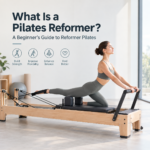
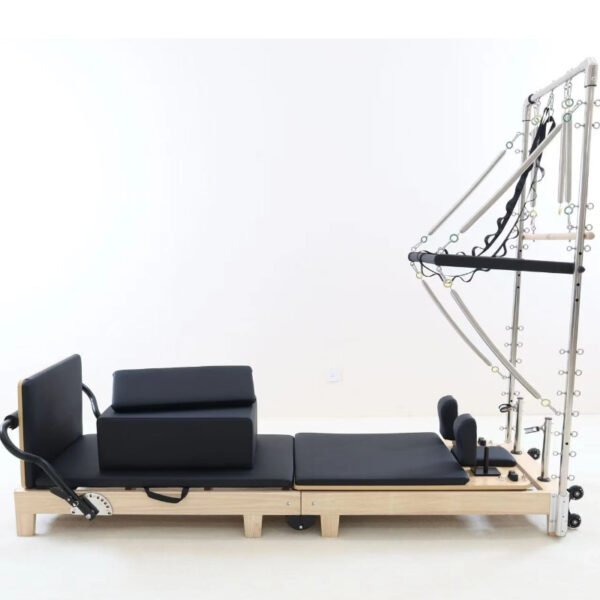
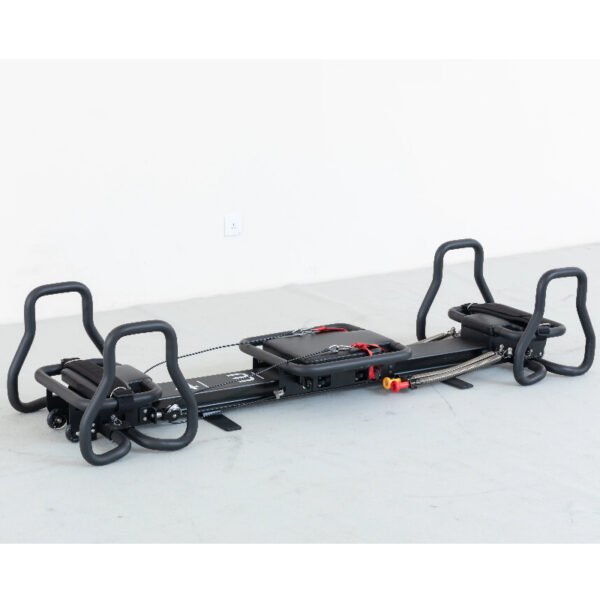






If you have seen a Pilates studio recently, you have probably noticed the long, bed-like machines with springs, straps, and a moving platform. That equipment is called a Pilates Reformer.
But what is a reformer in Pilates, exactly? And why has Reformer Pilates become such a popular way to exercise?
A Pilates Reformer is a specialized piece of exercise equipment designed to support and challenge the body through controlled movement and adjustable resistance. Unlike traditional Mat Pilates, which primarily uses body weight, a Reformer adds a moving carriage, springs, ropes, and a footbar to create more options for resistance, assistance, balance, and movement.
For someone who spends much of the day sitting at a desk, an athlete looking for additional movement training, or a beginner who wants a structured introduction to Pilates, the Reformer can provide a versatile way to train strength, mobility, coordination, and body awareness.
So, what is Reformer Pilates? In simple terms, it is Pilates performed using a Reformer machine.
What Is a Pilates Reformer?
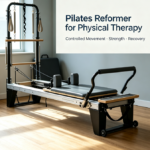
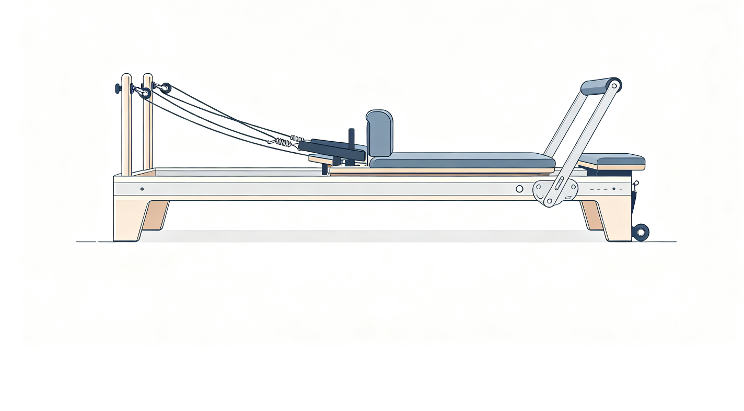
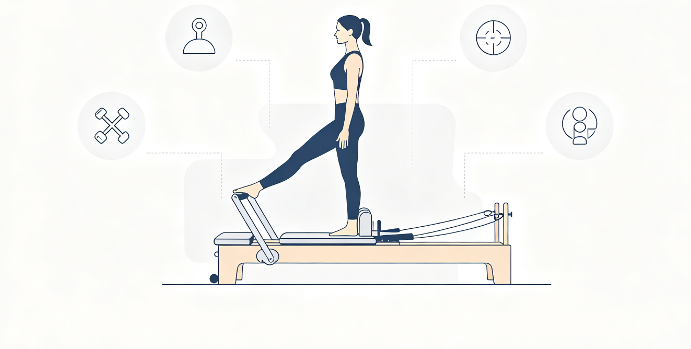
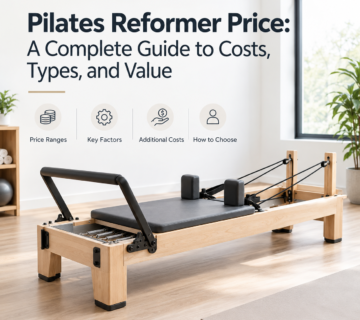
A Pilates Reformer is a piece of Pilates equipment consisting of a frame, a sliding carriage, resistance springs, ropes or straps, a footbar, and support components such as shoulder rests and a headrest.
The carriage moves along the frame as the user pushes or pulls against spring resistance. Depending on the exercise and spring setup, the equipment can either make a movement more challenging or provide additional support.
This is one of the main differences between Reformer Pilates and conventional strength-training equipment. Instead of relying primarily on fixed weights, the Reformer uses spring resistance and the movement of the carriage to create a controlled training environment.
Reformer Pilates can be performed lying down, sitting, kneeling, standing, or using a box and other accessories. This allows one machine to accommodate a wide range of exercises.
The Pilates Reformer is also not a single-purpose machine. A beginner might use it for basic footwork and controlled leg movements, while a more experienced practitioner may use straps, the long box, jumpboard, or tower attachments for more advanced exercises.
A systematic review of Pilates research describes Pilates as a mind-body form of exercise emphasizing controlled movement, strength, core stability, flexibility, posture, and breathing. It can be performed on a mat or with specialized equipment.
How Does a Pilates Reformer Work?
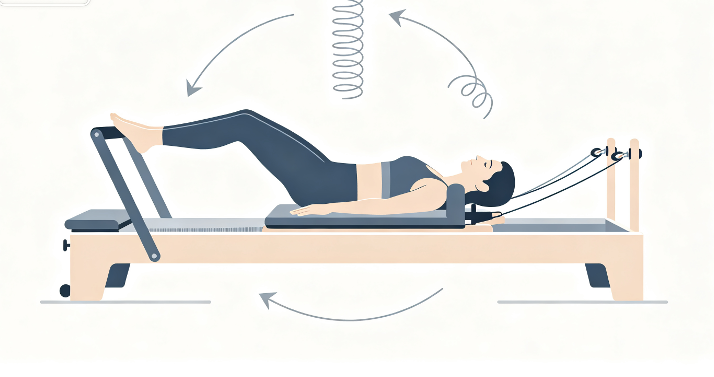
The easiest way to understand how a Reformer works is to think of it as a system of movement + spring resistance + support.
When you push against the footbar, for example, your legs move the carriage away from the footbar while the springs resist that movement. When you release the pressure, the springs help bring the carriage back toward its starting position.
The same principle can be used with the ropes and straps. You might pull the straps with your arms, place your feet in the loops, or use them to assist a movement.
The resistance can be changed by adjusting the spring configuration. This allows an instructor or user to modify the challenge according to the exercise, experience level, and training objective.
An important point is that more springs do not always mean an easier or harder workout in a simple way. Heavier resistance can provide more support in some movements, while lighter resistance may require greater control and stability.
For example, imagine someone who works at a computer for eight hours a day. A Reformer session might include controlled leg work, hip mobility exercises, upper-body pulling movements, and trunk stabilization. The goal is not simply to move a heavy load but to coordinate the whole body through controlled movement.
This combination of resistance and movement is a major reason why Reformer Pilates can be adapted to different experience levels.
What Are the Different Types of Pilates Reformers?
There is no single official industry classification for Reformer types. In practice, Reformers are often distinguished by their construction, intended use, and additional features.
| Reformer type | Common characteristics | Typical use |
| Classical Pilates Reformer | Traditional design, often wood-based, compact and relatively simple | Pilates studios and classical Pilates practice |
| Contemporary Reformer | Modern frame, adjustable components and broader configuration options | Studios, gyms, wellness centers and general training |
| Reformer with Tower | Combines a Reformer with a tower and additional springs/attachment points | Studios, rehabilitation and more varied programming |
| Folding or Home Reformer | Designed to reduce storage requirements or simplify home use | Home workouts and smaller spaces |
Classical Reformers generally follow traditional equipment concepts and are commonly associated with wooden construction and a more traditional Pilates setup.
Contemporary Reformers may use wood, aluminum, or other materials and often provide more adjustment options. They are widely used in commercial Pilates studios, fitness facilities, and wellness environments.
A Pilates Reformer with Tower adds a vertical tower system with additional springs and attachment points. This expands the range of exercises that can be performed without requiring a separate Cadillac or tower unit.
For example, CoreFlow offers Reformers in different configurations, including commercial aluminum models, wooden Reformers, folding models, and Reformer systems with tower functions. This type of product variety can be useful when a studio needs to match its equipment to available space, class format, or target users.
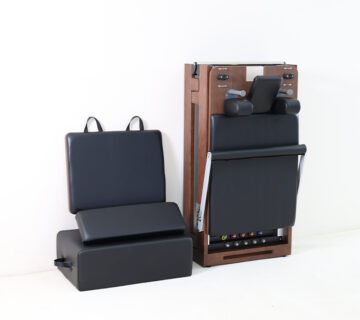
For home users, a folding Reformer can be particularly practical when storage space is limited. However, buyers should still consider the machine’s dimensions, stability, adjustment range, and available training space before choosing a model.
What Are the Main Parts of a Pilates Reformer?
Although Reformers can look complicated at first, most models are built around a few basic components.
Frame: The main structure supports the carriage, springs, footbar, and other components. Frames may be made from wood, aluminum, or other materials depending on the design.
Carriage: The padded platform moves back and forth along the frame. Many exercises are performed directly on the carriage.
Springs: Springs provide adjustable resistance. Different spring configurations can change how much assistance or resistance an exercise provides.
Footbar: The footbar provides a stable surface for the feet or hands during exercises. Its position can often be adjusted.
Ropes and straps: These connect the user’s hands or feet to the spring system through pulleys. They allow for a wide variety of upper- and lower-body exercises.
Shoulder rests: These help stabilize the body during exercises performed while lying on the carriage.
Headrest: The headrest supports the head and neck and may have several adjustment positions.
Some Reformers can also be used with accessories such as a box, jumpboard, or tower attachment, depending on the model.
What Are the Benefits of Reformer Pilates?
The benefits of Reformer Pilates depend on the individual’s program, consistency, technique, and overall health. Research on Pilates has reported potential improvements in areas including strength, flexibility, balance, pain, and physical function, although the quality and certainty of evidence vary between outcomes. A 2023 umbrella review of 27 systematic reviews found potential benefits across several health outcomes, while also noting that much of the available evidence was low or very low certainty.
1. Builds Strength and Muscular Endurance
The spring system provides resistance throughout many movements. Exercises can involve the legs, glutes, arms, shoulders, back, and core rather than focusing on only one muscle group.
A 2025 randomized controlled trial involving 47 overweight and obese women found improvements in body composition, upper-extremity strength, and muscular endurance after an eight-week Reformer Pilates program performed three times per week.
This was one specific study population, so the results should not be treated as a guarantee for every Reformer user.
2. Supports Mobility and Flexibility
Many Reformer exercises combine controlled resistance with a relatively large range of movement. The carriage and straps can also provide support while users work through different positions.
For someone who spends most of the day sitting, exercises that involve hip, shoulder, and spinal movement can complement a sedentary daily routine.
3. Develops Balance and Body Control
Because the carriage can move underneath the body, users often need to control their position rather than simply move against a fixed surface.
This can make relatively small changes in alignment noticeable during an exercise and encourages concentration on movement quality.
4. Offers Adjustable Resistance
One of the most useful features of the Reformer is its adaptability.
A beginner may need more support and simpler movement patterns, while an experienced practitioner may use lighter springs or more demanding positions to increase the coordination and stability challenge.
The same machine can therefore be used across different stages of training.
5. Can Be Used in Different Training Settings
Reformers are commonly found in Pilates studios, but they are also used in fitness facilities, rehabilitation settings, wellness centers, and private homes.
For example, a Pilates studio may choose commercial Reformers designed for frequent daily use, while a home user may prioritize a folding design that is easier to store.
Recent research has also investigated Reformer Pilates in specific populations. For example, a 2024 randomized study involving sedentary women examined a six-week Reformer Pilates program and reported improvements in several measured cognitive-function outcomes.
These studies are useful for understanding potential applications, but they do not mean that Reformer Pilates produces the same results for everyone.
What Is the Difference Between Mat Pilates and Reformer Pilates?
The main difference is the equipment and the way resistance is created.
| Mat Pilates | Reformer Pilates |
| Primarily uses body weight | Uses springs, carriage, straps and body weight |
| Requires relatively little equipment | Requires a Pilates Reformer |
| Easy to practice at home or while traveling | Usually requires access to a Reformer |
| Resistance is mainly body weight and small props | Resistance can be adjusted through springs |
| Fewer mechanical support options | Carriage and straps can provide support or challenge |
| Generally easier to set up | Requires more space and equipment |
Mat Pilates can be a convenient starting point because it requires little equipment. Reformer Pilates, on the other hand, offers additional resistance and support options.
Neither approach has to replace the other. Many Pilates practitioners use both mat and Reformer exercises depending on their goals, available equipment, and training environment.
Research comparing the two methods is still developing. For example, a randomized trial involving people with fibromyalgia found positive changes in both Reformer and home Mat Pilates groups, with some outcomes differing between the approaches.
Conclusion
So, what is a Pilates Reformer?
It is a specialized Pilates machine that combines a moving carriage, adjustable springs, straps, a footbar, and other support components to create a flexible training environment.
And what is Reformer Pilates? It is the practice of performing Pilates exercises using this equipment, allowing resistance and support to be adjusted for different movements and experience levels.
For beginners, the Reformer can provide a structured way to learn controlled movement. For experienced practitioners, it offers many options for strength, mobility, balance, and coordination. For Pilates studios and fitness businesses, different Reformer configurations can also be selected according to class formats, available space, and customer needs.
If you are considering purchasing a Reformer, look beyond appearance alone. Frame construction, carriage movement, spring configuration, adjustability, upholstery, accessories, and intended use can all affect the experience.
For studios, distributors, and fitness businesses looking for factory-direct Pilates equipment, CoreFlow provides different Reformer configurations for commercial and home applications, with OEM/ODM customization available for qualified projects.
FAQs
Is a Pilates Reformer suitable for beginners?
Yes, beginners can learn Reformer Pilates, but the machine should be introduced gradually. A first session with a qualified instructor can help you understand how to adjust the footbar, headrest, springs, and straps and how to position your body correctly.
The adjustable resistance can also make certain exercises more accessible. However, the appropriate setup depends on the individual, so beginners should not assume that a particular spring setting or exercise is suitable for everyone.
If you have an injury, recently had surgery, are pregnant, or have a medical condition that may affect exercise, consult an appropriate healthcare professional before beginning a new program.
How often should you use a Pilates Reformer?
There is no single frequency that works for everyone. Your schedule, experience, training goals, recovery, and overall activity level all matter.
For many recreational users, two or three sessions per week can be a practical routine. Some people may practice less frequently, while experienced practitioners may train more often.
Consistency and appropriate exercise selection are generally more important than simply increasing the number of sessions.
Can you use a Pilates Reformer at home?
Yes. Home Reformers are available in different sizes and configurations, including folding models designed for spaces where storage is a concern.
Before purchasing one, consider the machine’s overall dimensions, ceiling height if relevant, floor space, storage requirements, noise, maintenance, and whether you have enough room to safely perform exercises around the machine.
If you are new to Reformer Pilates, learning the basic movements and equipment setup with an instructor before training independently can also be helpful.

No comment