






If you have recently seen short, slow-paced Pilates workouts on social media, you may have come across the term “Asian Pilates.” The name can make it sound like a completely new Pilates method, but the reality is more nuanced.
Asian Pilates is not a single standardized Pilates system with one official set of exercises. Instead, the term is increasingly used to describe Pilates practices that place greater emphasis on controlled movement, posture, breathing, body awareness, and a calm, flowing pace. In some Asian studios, particularly in places such as South Korea and Japan, Pilates may also be influenced by local approaches to movement and wellness.
So, what is Asian Pilates workout practice really like, and how is it different from regular Pilates? This guide explains what the term means, where the concept comes from, the exercises you may encounter, and what current research can—and cannot—tell us about its benefits.
What Is Asian Pilates?
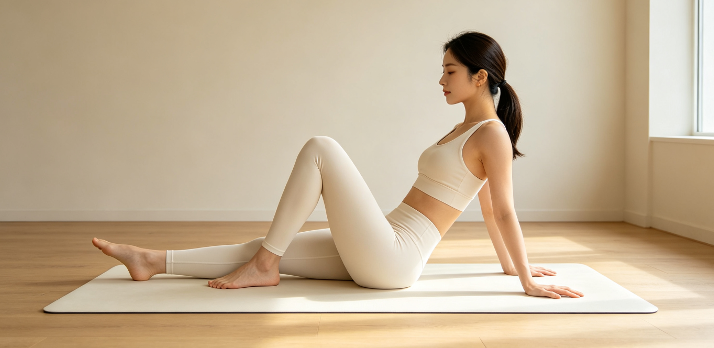
Asian Pilates generally refers to a mindful, controlled style of Pilates that emphasizes precision, alignment, breathing, smooth transitions, and awareness of how the body moves.
The important point is that Asian Pilates is not an officially defined Pilates method in the same way that people may refer to Classical Pilates or other established training approaches. The term is used differently by studios, instructors, fitness apps, and social media creators.
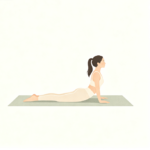
In practice, an Asian Pilates workout may look very familiar to anyone who has taken a conventional Pilates class. You might see exercises such as pelvic curls, leg circles, bridges, side-lying leg work, planks, spine articulation, and controlled Reformer exercises.
What changes is often the way the movements are performed.
Instead of rushing through repetitions, an instructor may ask you to slow down, coordinate each movement with your breathing, maintain neutral alignment, and pay attention to small changes in your posture.
That emphasis is consistent with the broader foundations of Pilates. A systematic review examining how Pilates has been defined across 119 papers found recurring attention to core stability, flexibility, muscle control, posture, breathing, and the mind-body connection.
Where Does the Concept of Asian Pilates Come From?
There is no single historical origin for “Asian Pilates.”
The modern term has become popular alongside the growth of Pilates studios, wellness content, and short-form fitness videos. Recent media coverage has also highlighted differences in how Pilates is taught across Asian countries. For example, instructors interviewed by Marie Claire UK described Korean classes as placing strong emphasis on accuracy, alignment, balance, and structured body assessment, while Japanese approaches may put more attention on the personal experience and purpose of movement.
Some instructors also incorporate ideas associated with practices such as Tai Chi, Qigong, or other forms of mindful movement. However, these influences should not be confused with the historical origin of Pilates itself.
A useful way to understand the term is therefore:
Asian Pilates describes a contemporary way of practicing or presenting Pilates rather than a separate exercise system with a single founder or official curriculum.
Is Asian Pilates a Formal Pilates Method?
Not currently.
There is no universally accepted international definition that requires an instructor or studio to follow a specific “Asian Pilates” syllabus.
This matters because two classes advertised as Asian Pilates can look quite different. One may be a simple mat workout designed for home use, while another may involve a Pilates Reformer, detailed posture assessment, slower transitions, and individualized instruction.
This is also why it is better to evaluate the actual exercises, teaching style, instructor qualifications, and equipment rather than assuming that the label alone determines the quality of a workout.
How Is Asian Pilates Different From Traditional Pilates?
The biggest difference is usually emphasis rather than exercise selection.
Traditional Pilates already includes principles such as control, concentration, precision, centering, flow, and breathing. Asian Pilates generally places extra attention on the quality and pace of movement, creating a practice that may feel slower and more deliberate.
| Asian Pilates | Traditional Pilates |
| Often uses a slower, controlled pace | Pace can vary by class and instructor |
| Strong emphasis on posture and body awareness | Strong emphasis on control, precision, and alignment |
| Breathing may be closely coordinated with movement | Breathing is also a core Pilates principle |
| Smooth transitions and mindful movement are common | Flow and controlled transitions are established Pilates principles |
| May incorporate local wellness or movement influences | Primarily follows established Pilates principles |
These are tendencies rather than strict rules. A traditional Pilates class can be extremely slow and mindful, while an Asian Pilates class can also be physically challenging.
Does Asian Pilates Use Different Movements or Equipment?
Usually, there is no special piece of equipment that makes an exercise “Asian Pilates.”
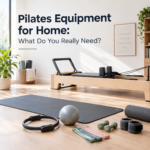
Mat-based sessions may use nothing more than a Pilates mat, while instructors may add resistance bands, small balls, rings, or light weights.
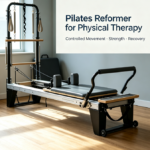
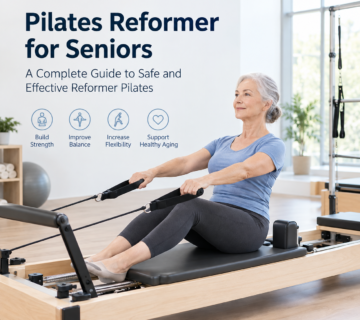
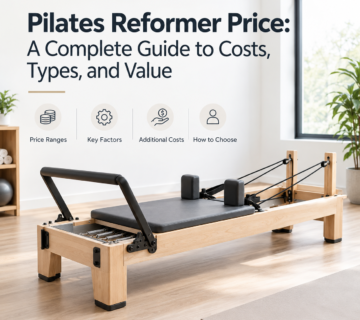
A Pilates Reformer can also be used. The machine adds adjustable spring resistance and a moving carriage, allowing instructors to modify exercises for different strength and movement goals.
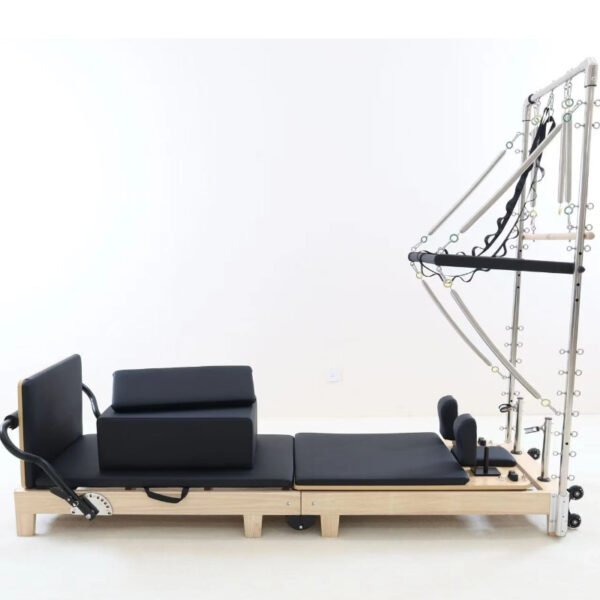
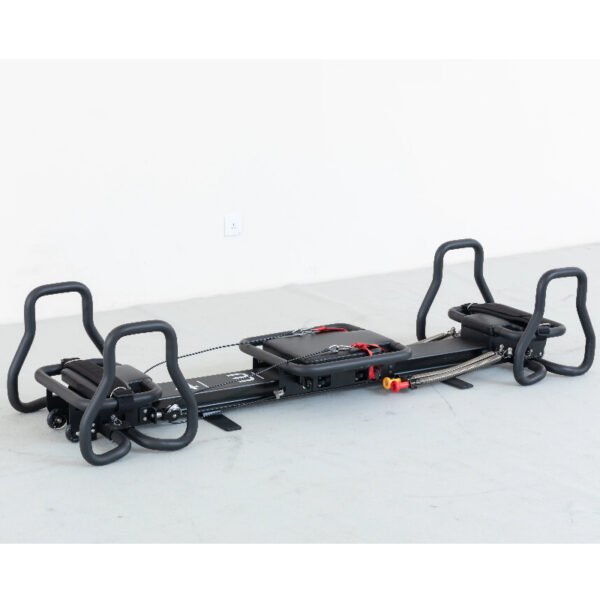
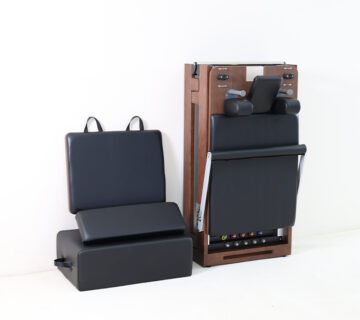
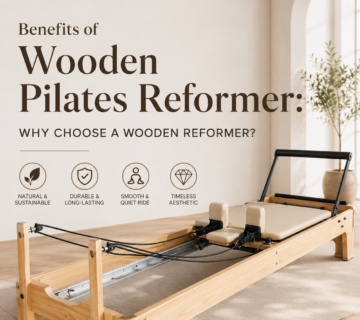
For people practicing at home, space can be a deciding factor. A Foldable Pilates reformer can be useful when a full-time studio setup is impractical. CoreFlow’s C10-08, for example, is a foldable wood Reformer designed for situations where users want Reformer-based training while keeping equipment more manageable in a home or smaller studio environment.
The equipment itself does not make the workout “Asian.” The teaching approach—such as slower pacing, precise alignment, and mindful movement—is more relevant.
Why Are Breath, Control, and Flow So Important?
Breathing and controlled movement are central to Pilates in general, but they can become especially noticeable in a slower Asian Pilates session.
When you slow down a movement, it becomes easier to notice whether your pelvis is shifting, whether your shoulders are tightening, or whether you are holding your breath.
For example, during a slow bridge, you might focus on maintaining a stable ribcage while articulating the spine one segment at a time. The goal is not simply to finish the repetition. It is to understand how the movement feels and where the effort is coming from.
That makes Asian Pilates particularly relevant to people who prefer a more focused and less rushed exercise experience.
What Are the Main Principles and Techniques of Asian Pilates?
Although there is no universal Asian Pilates curriculum, several themes appear repeatedly in descriptions of the practice:
Controlled movement
Postural awareness
Breath coordination
Core engagement
Smooth transitions
Mobility and range of motion
Mindful attention
Gradual progression
These principles overlap considerably with conventional Pilates.
How Do Slow, Controlled Movements Work?
Slowing down does not necessarily make an exercise easier.
Consider a Reformer footwork exercise. Moving the carriage quickly can allow momentum to contribute to the movement. Moving it slowly requires you to control both the outward and returning phases.
The same idea applies to mat exercises. A slow leg lift requires you to pay attention to pelvic stability rather than simply moving the leg from one position to another.
This is one reason beginners may find a seemingly gentle Asian Pilates workout surprisingly demanding. The challenge often comes from maintaining control throughout the entire range of motion.
How Are Mindfulness and Body Awareness Used?
Mindfulness in Pilates does not have to mean meditation during exercise.
In practical terms, it can mean noticing your breathing, muscle tension, posture, balance, and movement quality while exercising.
For someone who spends several hours working at a computer, this awareness can be useful. You may begin to notice that your shoulders rise when you concentrate, your head moves forward, or you shift your weight to one side while sitting.
The workout then becomes less about completing a certain number of repetitions and more about learning how your body responds to movement.
What Are the Benefits of Asian Pilates?
Many of the benefits associated with Asian Pilates are actually benefits that have been studied in Pilates more broadly. There is currently limited research specifically testing “Asian Pilates” as a distinct exercise method.
That distinction is important.
Research does provide evidence that Pilates can influence areas such as posture and balance. A 2024 systematic review of 13 studies involving 783 participants found evidence supporting a role for Pilates in improving body posture, although the researchers also noted limitations in the available studies.
Another 2024 systematic review and meta-analysis included 39 studies involving 1,770 older adults. It found Pilates was associated with improvements in several measures of static and dynamic postural balance, while the evidence did not establish a reduction in the number or fear of falls.
So it is reasonable to discuss potential benefits, but it would be misleading to claim that Asian Pilates has unique medical effects that have already been proven independently of Pilates.
Can Asian Pilates Improve Core Strength, Posture, and Mobility?
It may help, particularly when sessions consistently include controlled core exercises, spinal movement, balance work, and mobility exercises.
For example, a beginner might perform pelvic tilts, bridges, dead bugs, side-lying leg work, and controlled spinal articulation during a mat session.
A Reformer session can introduce additional resistance and support, allowing the instructor to modify the challenge.
However, results depend on factors such as exercise selection, frequency, technique, individual fitness level, and instruction. Pilates should not be presented as a guaranteed solution for posture or pain.
Can Asian Pilates Support Balance and Stress Management?
The slow pace and attention to breathing may make Asian Pilates appealing to people who want exercise to feel more focused and less rushed.
Balance can also be trained through controlled single-leg movements, standing exercises, footwork, and exercises that challenge stability.
Research on Pilates and balance is encouraging, but evidence varies by population and outcome. A systematic review of Pilates and muscle strength, for example, found low or very low certainty that Pilates was superior to other exercise methods for several strength, balance, and flexibility outcomes.
In other words, Asian Pilates can be a useful form of movement training, but it should not be marketed as uniquely superior to every other type of exercise.
Who Can Try Asian Pilates and How Do You Get Started?
Asian Pilates can be adapted for many fitness levels, including people who are new to Pilates.
The easiest starting point is usually a beginner mat session. Focus on breathing, neutral alignment, controlled movement, and learning how to engage your core without holding your breath.
If you prefer equipment-based training, a Reformer class provides another option. Beginners should ideally learn the basic setup and movement patterns from a qualified instructor before progressing to more demanding exercises.
Is Asian Pilates Suitable for Beginners?
Yes, many Asian Pilates workouts are designed around low-impact, controlled movements that can be modified for beginners.
A beginner does not need to start with advanced exercises or a long workout. A short session focusing on breathing, pelvic control, spinal mobility, bridges, and basic leg exercises can provide a practical introduction.
The key is progression. If an exercise causes pain rather than normal muscular effort or stretching, stop and seek appropriate professional advice.
What Equipment Do You Need for Asian Pilates?
You can start with very little equipment.
For a basic free Asian Pilates workout for beginners, a comfortable exercise mat may be enough. A resistance band or small Pilates ball can add variety.
For a more equipment-focused workout, a Pilates Reformer provides adjustable spring resistance and a moving carriage. Foldable models can be particularly practical for home users or compact studios because the equipment can be stored when it is not being used.
For professional Pilates studios, the equipment choice will depend more on class format, available space, expected usage, and the type of clients being served.

Conclusion
So, what is Asian Pilates?
It is best understood as a contemporary way of practicing Pilates that often emphasizes slow, controlled movement, breathing, posture, body awareness, and smooth flow. The term does not describe one officially standardized Pilates method, and different instructors or platforms may use it in different ways.
Many of the principles associated with Asian Pilates are already part of Pilates itself. What makes the approach feel different is often the pacing, teaching environment, attention to alignment, and influence of broader Asian movement and wellness practices.
If you are looking for a calmer workout, want to improve your awareness of movement, or simply prefer controlled low-impact exercise, Asian Pilates may be worth exploring. You can begin with a mat and gradually introduce equipment such as a Pilates Reformer as your experience develops.
The most useful question is not whether Asian Pilates is a completely new form of exercise. Instead, ask whether its approach to movement, pace, and instruction fits your goals and preferences.
FAQs
Is Asian Pilates the same as regular Pilates?
Not exactly, but the two share many of the same foundations. Asian Pilates is generally used to describe a more mindful, controlled, and often slower approach to Pilates. There is no universal definition, so the actual experience varies between instructors and studios.
Is Asian Pilates good for beginners?
It can be. Many Asian Pilates workouts use low-impact movements that can be modified for different fitness levels. Beginners should start with basic exercises and focus on breathing, alignment, and controlled movement before progressing to more challenging variations.
Can you do Asian Pilates at home?
Yes. A mat-based Asian Pilates workout can be done at home with little or no equipment. If you want to use a Reformer, a foldable model can be a practical option when space is limited. For beginners using a Reformer for the first time, professional instruction can help with equipment setup and exercise technique.

No comment