
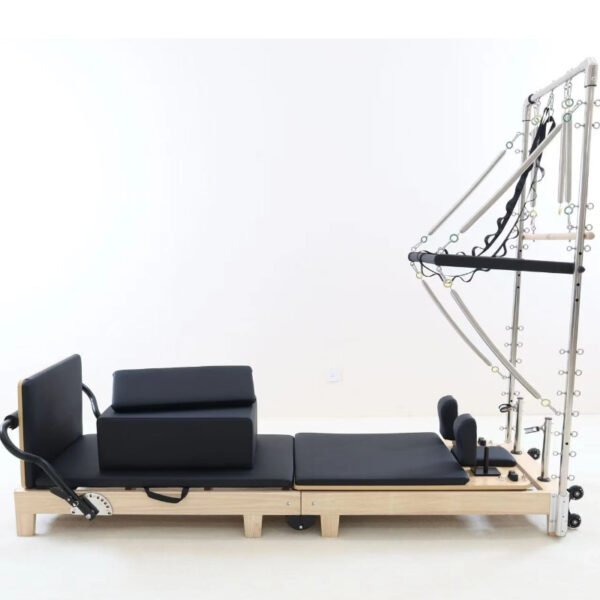
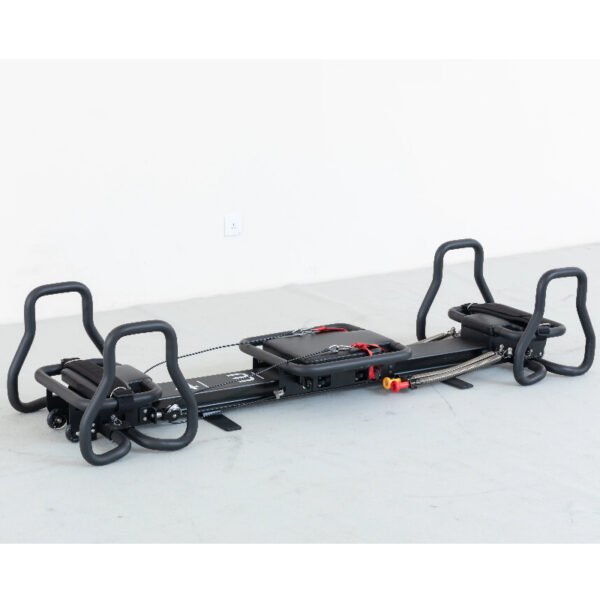






As Pilates continues to evolve beyond traditional mat exercises, more fitness professionals and home users are looking for equipment that delivers studio-quality training without requiring significant floor space. One solution that has rapidly gained popularity is the Pilates Spring Wall, also known as a Pilates Springboard.
Combining adjustable spring resistance with a compact wall-mounted design, the Pilates Spring Wall offers a versatile way to improve strength, posture, flexibility, and body awareness. It delivers many of the same resistance-training principles found in a traditional reformer while taking up only a fraction of the space.
Whether you’re a Pilates beginner, a studio owner, a rehabilitation specialist, or someone building a home gym, understanding how a Pilates Spring Wall works can help you determine whether it’s the right addition to your fitness routine.
In this guide, we’ll explore the benefits, functionality, exercises, and buying considerations of modern springboard Pilates equipment, while comparing it to traditional Pilates apparatus such as the reformer and Cadillac.
What Is a Pilates Spring Wall?
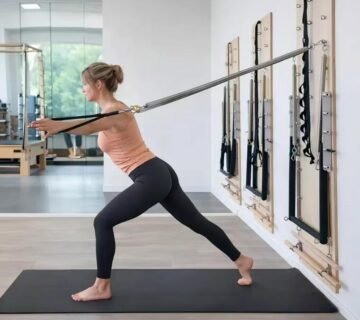
A Pilates Spring Wall is a wall-mounted resistance training system that uses adjustable springs, handles, bars, and straps to create a full-body Pilates workout experience.
Unlike large Pilates machines that require significant floor space, a Spring Wall attaches directly to a structural wall and uses spring tension to provide resistance during movement.
Many fitness professionals consider it a compact alternative to a Wall Mounted Pilates Reformer Machine because it incorporates similar spring-based resistance principles without requiring a moving carriage.
A typical Pilates Spring Wall includes:
- Adjustable resistance springs
- Roll-down bar
- Handles and foot loops
- Wall-mounted panel or frame
- Multiple attachment points
These components allow users to perform hundreds of exercises targeting the core, upper body, lower body, and postural muscles.
Why Are Pilates Spring Walls Becoming So Popular?
The modern fitness industry is increasingly focused on equipment that maximizes functionality while minimizing space requirements.
Traditional reformers are highly effective but often expensive and bulky. A commercial reformer can occupy more than 25 square feet of floor space, making it difficult for smaller studios and home users.
By contrast, springboard Pilates equipment offers:
- Compact installation
- Lower investment cost
- Adjustable resistance
- Beginner-friendly operation
- Versatile exercise options
For many users, a Pilates Spring Wall provides an accessible entry point into resistance-based Pilates training.
How Does a Pilates Spring Wall Work?
The system operates through adjustable springs that create resistance as users push, pull, rotate, stretch, or stabilize against tension.
Unlike fixed-weight training equipment, spring resistance changes throughout the range of motion. As the spring lengthens, resistance gradually increases.
This creates several advantages:
Continuous Muscle Engagement
The muscles remain active throughout the movement rather than only at specific points.
Improved Movement Control
Users must control both the effort phase and return phase, reducing reliance on momentum.
Enhanced Stabilization
The body’s deep stabilizing muscles continuously engage to maintain proper alignment.
Progressive Resistance
Different spring tensions allow beginners and advanced users to train safely at appropriate levels.
This unique resistance profile is one reason Pilates equipment has remained popular among fitness professionals, physical therapists, and rehabilitation specialists.
Why Do Springs Matter in Pilates Training?
Springs are the foundation of Pilates equipment.
Unlike traditional free weights, springs create variable resistance that responds dynamically to movement.
Benefits include:
| Traditional Weights | Pilates Springs |
|---|---|
| Fixed resistance | Variable resistance |
| Limited stabilization demand | High stabilization demand |
| Momentum often used | Controlled movement required |
| Primarily strength focused | Strength + mobility + control |
This combination of resistance and control helps users develop functional strength while improving movement quality.
The spring system also allows exercises to be scaled for:
- Beginners
- Seniors
- Athletes
- Rehabilitation clients
- Professional Pilates practitioners
What Does the Research Say About Pilates?
Scientific evidence supporting Pilates continues to grow.
Research published through the National Center for Biotechnology Information (NCBI) suggests that Pilates-based exercise programs may contribute to:
- Improved core endurance
- Better balance
- Increased flexibility
- Enhanced postural control
- Improved functional movement
Several systematic reviews have also reported positive effects on trunk strength and physical function across various populations.
While outcomes vary depending on consistency, exercise selection, and individual factors, these findings help explain why Pilates is frequently incorporated into wellness and rehabilitation programs.
Key Benefits of Using a Pilates Spring Wall
1. Improves Core Strength
Almost every Spring Wall exercise requires active core engagement.
Muscles commonly targeted include:
- Transverse abdominis
- Internal obliques
- External obliques
- Multifidus
- Pelvic floor muscles
These muscles play a critical role in spinal support and movement efficiency.
2. Enhances Posture
Many people spend hours each day sitting at computers.
This often contributes to:
- Rounded shoulders
- Forward head posture
- Tight chest muscles
- Weak upper-back muscles
Spring Wall exercises encourage proper alignment and balanced muscular development.
Over time, users often report increased postural awareness during daily activities.
3. Increases Flexibility
Spring-assisted stretching allows controlled mobility training without forcing joints into uncomfortable positions.
Common areas improved include:
- Hamstrings
- Hip flexors
- Shoulders
- Thoracic spine
- Calves
4. Supports Functional Strength
Unlike isolated gym exercises, Pilates movements train multiple muscle groups simultaneously.
This helps improve:
- Balance
- Coordination
- Movement efficiency
- Joint stability
5. Provides Low-Impact Training
Because resistance is spring-based rather than impact-based, Pilates Spring Wall workouts are often gentler on the joints than many traditional fitness programs.
Can a Pilates Spring Wall Improve Core Stability and Spinal Alignment?
Yes.
One of the primary purposes of Pilates training is improving the body’s ability to stabilize the spine during movement.
Spring Wall exercises challenge users to maintain:
- Neutral pelvis
- Neutral spine
- Proper shoulder positioning
The spring resistance provides immediate feedback when alignment is lost.
Over time, this helps develop greater body awareness and improved movement mechanics.
For office workers, athletes, and older adults, these benefits can carry over into everyday activities.
Pilates Spring Wall vs Reformer: Which Is Better?
This is one of the most common questions among prospective buyers.
The answer depends on goals, space, and budget.
| Feature | Pilates Spring Wall | Pilates Reformer |
|---|---|---|
| Space Requirement | Minimal | Large |
| Cost | Lower | Higher |
| Installation | Wall Mounted | Floor Standing |
| Resistance Training | Excellent | Excellent |
| Exercise Variety | High | Very High |
| Home Gym Friendly | Excellent | Moderate |
| Group Training | Excellent | Moderate |
A Wall Mounted Pilates Reformer Machine alternative such as a Spring Wall is often ideal for users prioritizing space efficiency and affordability.
Those seeking the most comprehensive Pilates apparatus experience may still prefer a traditional reformer.
Pilates Spring Wall vs Pilates Cadillac
Many studio owners also compare Spring Walls with Cadillacs.
| Feature | Spring Wall | Cadillac |
|---|---|---|
| Space Efficiency | Excellent | Low |
| Cost | Lower | Higher |
| Beginner Accessibility | High | Moderate |
| Group Class Use | Excellent | Limited |
| Rehabilitation Applications | Good | Excellent |
Both systems offer spring resistance, but Spring Walls provide a more compact and scalable solution for most facilities.
Real-World Example: A Home Office Worker’s Experience
Consider Sarah, a remote marketing manager who spends nearly eight hours per day working at a computer.
Over time she began experiencing:
- Tight shoulders
- Poor posture
- Lower back discomfort
After researching Pilates equipment, she initially considered purchasing a reformer.
However, space limitations in her home made installation difficult.
Instead, she chose a Pilates Spring Wall.
Her weekly routine included:
- Standing chest expansion
- Assisted squats
- Core stabilization drills
- Hip mobility exercises
After several months of consistent practice, she noticed improved posture awareness and greater ease during daily activities.
While results vary from person to person, this scenario reflects why many home users are adopting Spring Wall systems.
Best Beginner Pilates Spring Wall Exercises
Standing Chest Expansion
Benefits:
- Improves posture
- Strengthens upper back
- Opens the chest
How to Perform
- Hold handles at chest height.
- Pull arms backward.
- Squeeze shoulder blades together.
- Slowly return.
Perform 10–12 repetitions.
Assisted Core Rotation
Benefits:
- Activates obliques
- Improves rotational strength
- Enhances spinal mobility
How to Perform
- Stand sideways to the wall.
- Hold the handle with both hands.
- Rotate away from the wall.
- Return under control.
Perform 8–10 repetitions per side.
Glute Kickbacks
Benefits:
- Strengthens glutes
- Improves hip stability
- Supports lower-back health
How to Perform
- Attach a foot strap.
- Extend one leg backward.
- Maintain a neutral spine.
- Return slowly.
Perform 10 repetitions per leg.
How Advanced Users Progress Their Workouts
Experienced practitioners can increase challenge by:
Increasing Spring Resistance
Heavier springs increase muscular demand.
Combining Movements
For example:
- Rotation + Squat
- Lunge + Row
- Plank + Leg Extension
Reducing Rest Periods
Shorter recovery times improve muscular endurance.
Using Additional Accessories
Examples include:
- Resistance loops
- Extension straps
- Roll-down bars
This allows virtually endless exercise variations.
Is a Pilates Spring Wall Suitable for Rehabilitation?
Many physical therapists and movement specialists incorporate spring-based training into rehabilitation programs.
Potential advantages include:
- Controlled resistance
- Gradual progression
- Reduced joint impact
- Improved movement awareness
Common applications may include:
- Postural retraining
- Shoulder stabilization
- Core activation
- General mobility work
Individuals recovering from injury should always consult qualified healthcare professionals before beginning a new exercise program.
Can You Install a Pilates Spring Wall at Home?
Yes.
One of the biggest advantages of a Pilates Spring Wall is its compact installation footprint.
Most systems require:
- A structurally sound wall
- Professional mounting hardware
- Approximately 6–8 feet of exercise space
Installation can typically be completed within a few hours.
This makes it one of the most practical forms of Pilates equipment for home gyms.
How to Choose the Best Pilates Spring Wall
Before purchasing, consider the following factors.
Build Quality
Look for:
- Commercial-grade materials
- Durable wall mounting systems
- High-quality springs
Resistance Options
Multiple spring tensions allow greater exercise variety and progression.
Included Accessories
A complete package should include:
- Roll-down bar
- Handles
- Foot loops
- Safety straps
- Multiple springs
Intended Use
| User Type | Recommended System |
|---|---|
| Home User | Standard Spring Wall |
| Pilates Studio | Commercial Spring Wall |
| Rehabilitation Clinic | Adjustable Professional System |
| Fitness Center | Multi-Station Wall System |
Available Space
Measure wall dimensions before purchasing.
Future expansion should also be considered.
Who Should Buy a Pilates Spring Wall?
A Pilates Spring Wall can be an excellent choice for:
Home Users
Seeking studio-style Pilates training in limited spaces.
Pilates Studios
Looking to increase class capacity while maximizing floor efficiency.
Physical Therapy Clinics
Needing adjustable resistance for rehabilitation and corrective exercise.
Fitness Facilities
Wanting versatile equipment suitable for multiple training populations.
Conclusion
The Pilates Spring Wall has become one of the most versatile and space-efficient pieces of modern Pilates equipment.
By combining adjustable spring resistance with a compact wall-mounted design, it delivers many of the benefits traditionally associated with larger Pilates apparatus while remaining accessible to home users and commercial facilities alike.
Whether you’re looking to improve posture, strengthen your core, increase flexibility, support rehabilitation, or expand a Pilates studio, a high-quality springboard Pilates equipment system can provide a practical and effective solution.
For users seeking a compact alternative to a Wall Mounted Pilates Reformer Machine, the Pilates Spring Wall offers an impressive combination of functionality, adaptability, and value.
FAQs
Is a Pilates Spring Wall the same as a Wall Mounted Pilates Reformer Machine?
No. A Pilates Spring Wall uses fixed wall-mounted springs, while a reformer includes a moving carriage. However, both use spring resistance and support many similar Pilates training principles.
Why is springboard Pilates equipment becoming popular?
Springboard Pilates equipment offers studio-quality resistance training while requiring significantly less space and investment than traditional reformers.
How often should beginners use a Pilates Spring Wall?
Most beginners can start with 3–4 sessions per week, lasting approximately 20–30 minutes per workout.
What muscles does a Pilates Spring Wall target?
It can effectively train the core, shoulders, back, glutes, legs, and postural stabilizing muscles.
Is a Pilates Spring Wall suitable for seniors?
Many seniors use Spring Walls because the adjustable spring resistance allows workouts to be customized to individual fitness levels.
How much space do I need for a Pilates Spring Wall?
Most installations require a solid wall and approximately 6–8 feet of open exercise space in front of the unit.
Can Pilates studios use Spring Walls for group classes?
Yes. Many studios install multiple Spring Walls to support larger class sizes while maximizing floor efficiency.
Is a Pilates Spring Wall worth buying for a home gym?
For users with limited space who want resistance-based Pilates training, a Spring Wall is often one of the most cost-effective and versatile options available.

No comment