
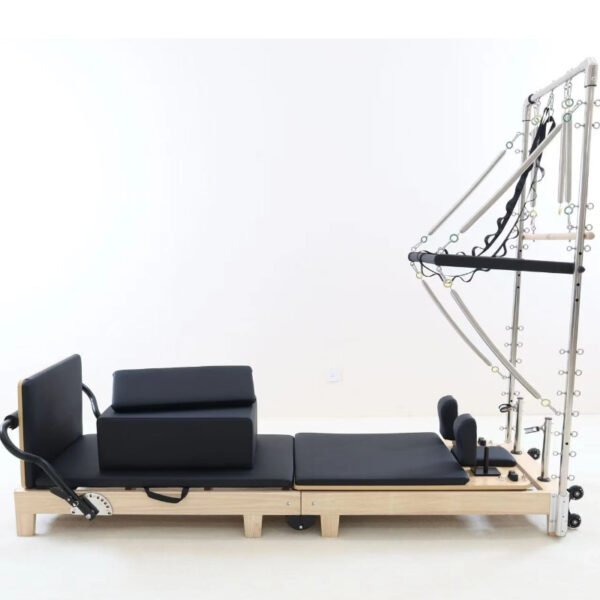
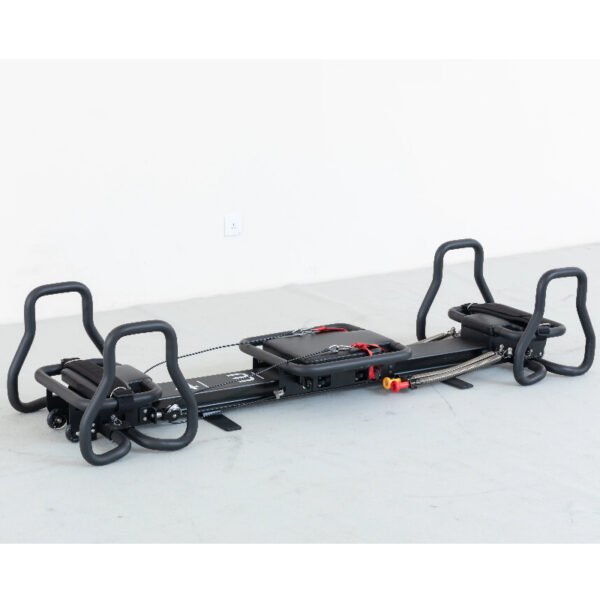






If you have seen people performing slow, challenging exercises on a long machine with a moving carriage, you may have wondered: what is a Lagree machine, and how is it different from a Pilates reformer?
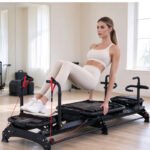
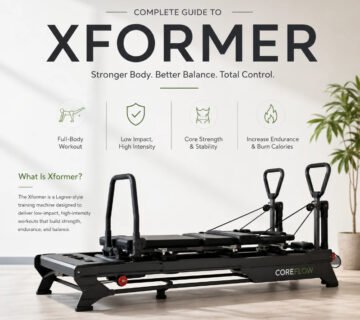
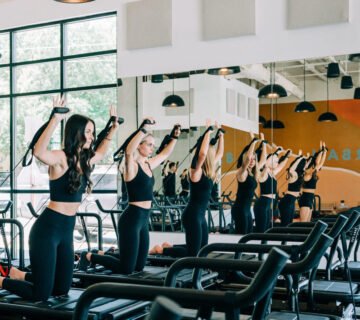
A Lagree machine is a spring-resistance exercise machine designed for Lagree Fitness workouts. The best-known example is the Lagree Megaformer, which combines a sliding carriage, adjustable resistance, platforms, and handles to support a wide range of full-body exercises.
Unlike many traditional strength-training workouts, Lagree emphasizes slow, controlled movements, sustained muscular tension, and relatively short rest periods. This approach can challenge muscular endurance and core stability while keeping the movements low-impact.
However, a Lagree machine is not simply another name for a Pilates reformer. Although the two machines share some design features, their training methods and equipment configurations differ.
In this guide, we will explain how a Lagree machine works, explore its potential benefits, compare Lagree with reformer Pilates, and discuss what studio owners should consider when evaluating equipment for commercial use.
What Is a Lagree Machine?
A Lagree machine is a specialized fitness apparatus developed for the Lagree Method, a high-intensity, low-impact training system created by fitness professional Sebastien Lagree.
The machine most closely associated with this method is the Lagree Megaformer. It uses spring resistance and a moving carriage to challenge multiple muscle groups through controlled, continuous movements.
Unlike conventional gym machines that often isolate one muscle group at a time, a Megaformer-style workout can combine core engagement, upper-body effort, lower-body strength, and balance challenges within the same exercise.
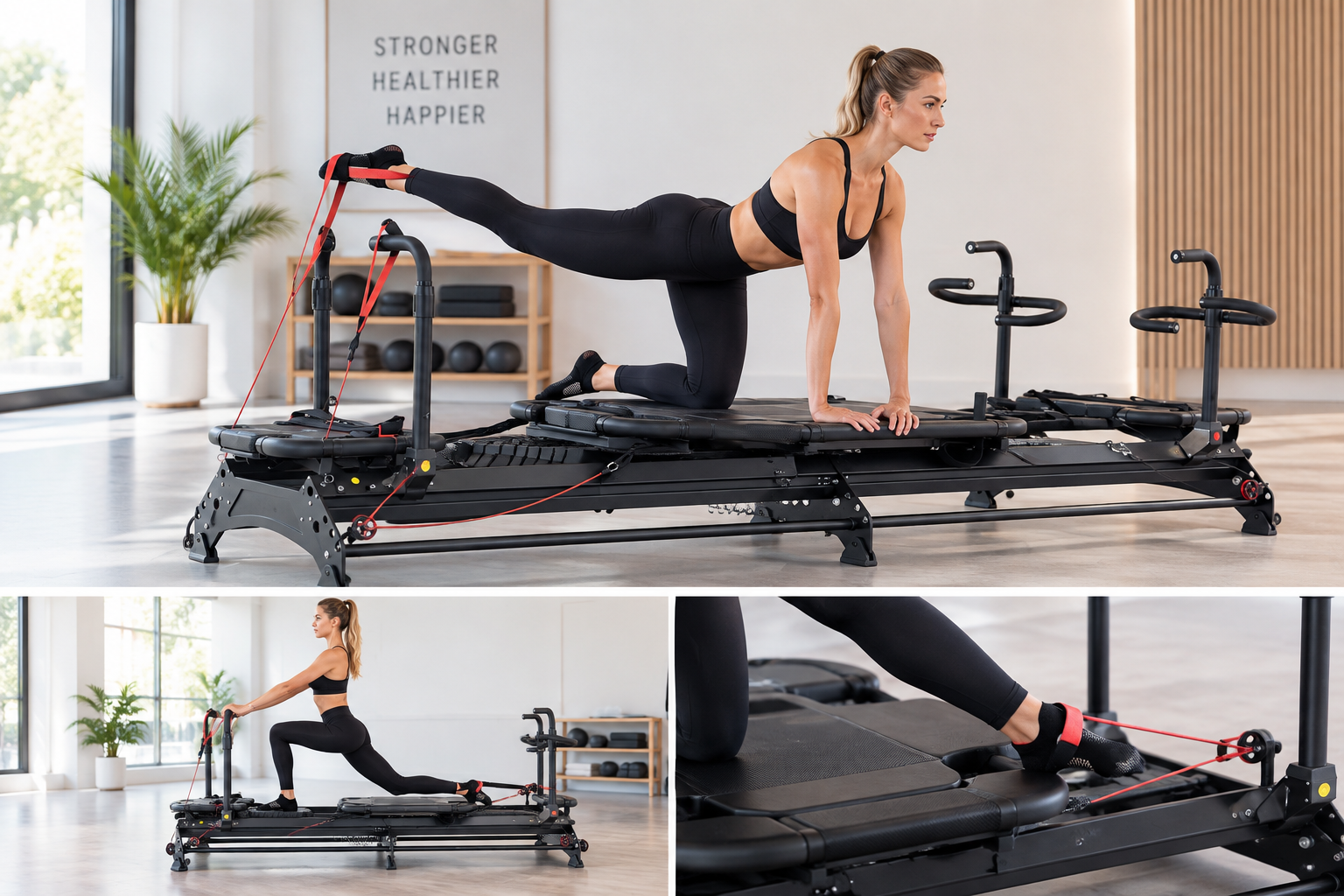
For example, a participant might perform a slow lunge while keeping the carriage moving against spring resistance. The exercise requires the legs to work while the core and other stabilizing muscles help maintain control.
What Is a Lagree Megaformer?
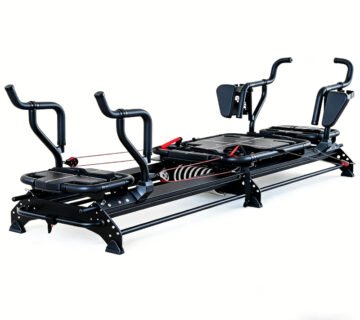
The Megaformer is the signature machine associated with the Lagree Method. It has evolved through multiple generations, with different models offering different platform layouts, handlebar configurations, and resistance systems.
Typical design elements include:
Moving carriage: Provides a surface that slides during exercises.
Spring-resistance system: Creates adjustable resistance as the carriage moves.
Front and rear platforms: Support standing, kneeling, and other exercise positions.
Handlebars and stability bars: Provide hand placement options and support during selected movements.
Hand and foot openings or straps: Allow users to position their limbs for different exercises, depending on the model.
The exact configuration varies between machines. Studio owners should therefore compare individual models rather than assume that every Megaformer or Megaformer-style machine has identical features.
How Does a Lagree Machine Work?
A Lagree machine works by combining spring resistance with controlled carriage movement.
When a user pushes or pulls against the resistance, the springs oppose the movement. The user must control the carriage while maintaining body alignment and performing the exercise.
Lagree workouts generally emphasize slow repetitions, sustained muscular engagement, and limited rest between exercises. Instead of focusing only on completing a fixed number of repetitions, an instructor may ask participants to maintain a controlled movement for a set period.
For beginners, an exercise might involve a modified plank or a supported lunge. More experienced participants may progress to positions that demand greater strength, coordination, and stability.
The goal is not simply to move the carriage as quickly as possible. Good technique, appropriate resistance, and controlled movement are central to the training approach.
What Are the Main Features of a Lagree Machine?
The design of a Lagree machine allows instructors to create varied workouts using one piece of equipment. Understanding its main components helps explain why it differs from more familiar gym machines.
What Are the Key Components of a Lagree Machine?
Although designs vary, the following components are common to many Megaformer-style machines.
| Component | Main function |
| Sliding carriage | Supports the body and moves during exercises |
| Spring system | Provides resistance and allows adjustments to exercise difficulty |
| Front and rear platforms | Provide additional positions for standing, kneeling, and other movements |
| Handlebars and stability bars | Offer support and different hand placements |
| Straps, loops, or openings | Help users position their hands or feet for selected exercises |
| Frame and rolling mechanism | Support the machine and enable smooth carriage movement |
The frame, carriage mechanism, and spring system are especially important in commercial environments, where equipment may be used repeatedly throughout the day.
For studio owners, a machine should be evaluated not only by the number of exercises it supports but also by its stability, movement quality, ease of adjustment, and maintenance requirements.
How Does Spring Resistance Work on a Lagree Machine?
Springs provide resistance as the carriage moves away from its resting position. The amount of resistance depends on factors such as the spring characteristics, the number of springs engaged, and the machine’s configuration.
Adding springs does not necessarily make every exercise proportionally harder. Spring resistance can affect both the effort required to move the carriage and the control needed to return it.
For instance, a standing lunge may feel different from a plank even when the same spring configuration is used. Body position, leverage, range of motion, and individual strength all influence the challenge.
A suitable resistance setting should allow users to maintain controlled movement without sacrificing alignment. Beginners generally benefit from learning the movement pattern before progressing to more demanding variations.
What Makes the Megaformer Different From Traditional Workout Equipment?
Traditional weight machines often guide users through a relatively fixed movement path. A Megaformer-style machine provides a moving surface and multiple body-position options, requiring users to manage resistance and stability simultaneously.
Compared with free weights, it also offers a different resistance experience because the carriage moves against springs rather than relying primarily on gravity acting on a weight.
This combination makes the machine versatile for full-body conditioning. Nevertheless, it does not replace every other type of exercise equipment, and the most appropriate choice depends on the studio’s training programs and clientele.
What Are the Benefits of Using a Lagree Machine?
Lagree training combines muscular effort with balance, coordination, and controlled movement. Its benefits depend on the exercises performed, resistance settings, training frequency, and the individual’s fitness level.
How Does Lagree Training Build Strength and Muscular Endurance?
Slow movements and sustained muscular tension can make exercises demanding even when the external resistance appears relatively light.
For example, a prolonged lunge challenges the working leg muscles while requiring the body to remain stable. Repeating this type of exercise across a workout can help develop muscular endurance and strength.
The spring system also allows resistance to be adjusted as participants become more comfortable with a movement.
However, strength improvements depend on progressive training and appropriate recovery. Lagree should not automatically be considered a complete replacement for all forms of resistance training, particularly when a person’s goals require specific maximal-strength or power development.
Can a Lagree Machine Improve Core Stability and Balance?
Many Lagree exercises require participants to stabilize their trunk while the carriage moves beneath them.
A plank variation, for example, may involve maintaining body alignment while controlling carriage movement. This requires coordination between the abdominal muscles, back muscles, hips, and other stabilizing muscles.
Exercises performed in standing or split-stance positions may also challenge balance and body awareness.
The degree of difficulty depends on the exercise and the participant’s ability. Users who find a movement too challenging can often benefit from a more supported variation, reduced range of motion, or adjusted resistance.
Is Lagree Training Suitable for Different Fitness Levels?
Lagree training can be adapted to different experience levels, but a challenging class is not automatically appropriate for every person.
Beginners should learn how to get on and off the machine safely, understand the carriage and spring system, and follow the instructor’s movement cues. They may need to use supported positions or simpler variations before progressing.
Experienced exercisers may explore more demanding movements, longer periods of muscular tension, or exercises requiring greater coordination.
People with injuries, persistent pain, balance limitations, or other medical concerns should consult an appropriate healthcare professional before participating in a demanding new exercise program. Instructor guidance is also important when selecting suitable modifications.
What Is the Difference Between a Lagree Machine and a Pilates Reformer?
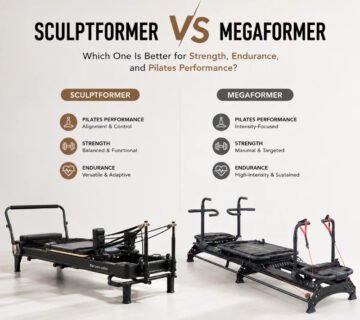
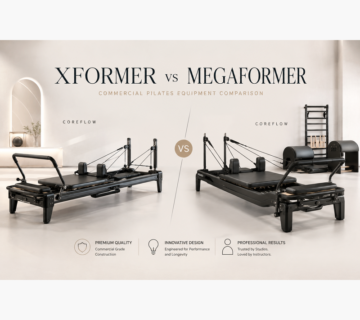
A Lagree machine and a Pilates reformer share several features, including a moving carriage and spring-based resistance. However, they were developed for different training systems.
Lagree emphasizes sustained muscular tension and high-intensity, low-impact conditioning. Traditional reformer Pilates places greater emphasis on controlled movement, alignment, breathing, coordination, and movement quality, although contemporary Pilates classes can also be physically demanding.
How Do Lagree and Pilates Differ in Training Methods?
Lagree workouts typically use slow, continuous movements with limited rest between exercises. Participants often hold challenging positions or work through small, controlled ranges of motion.
Reformer Pilates uses the carriage and springs to support or resist a wide variety of movements. Depending on the instructor and program, sessions may focus on mobility, posture, coordination, core control, strength, or rehabilitation-related exercise.
Neither method is universally better. The appropriate choice depends on individual goals, instruction, physical limitations, and personal preferences.
What Are the Differences in Machine Design and Resistance?
The following table summarizes the main differences. Specific features vary across machine models and training programs.
| Feature | Lagree Megaformer | Traditional Pilates Reformer |
| Primary training method | Lagree Method | Pilates |
| Main training emphasis | Muscular endurance and high-intensity conditioning | Movement control, alignment, coordination, and strength |
| Carriage | Moving carriage with a configuration designed for Lagree exercises | Moving carriage designed for Pilates exercises |
| Platforms and handles | Often features front and rear platforms with multiple handlebar positions | Commonly includes a footbar, shoulder blocks, and straps |
| Resistance | Spring-based resistance, configured for the machine model | Spring-based resistance, configured for the machine model |
| Typical exercise experience | Sustained effort with relatively short rest periods | Varied pacing, with controlled movement and exercise-specific rest |
| Common settings | Lagree studios and selected home-training environments | Pilates studios, rehabilitation settings, gyms, and homes |
One important distinction is that a Lagree Megaformer is not simply a Pilates reformer with more springs. The overall layout, exercise options, and intended training method matter as much as the resistance system.
The term Lagree reformer is sometimes used informally by people searching for Lagree-style equipment. However, it is useful to distinguish a traditional Pilates reformer from a machine designed specifically for the Lagree Method.
Which Is Better for Your Fitness Goals: Lagree or Pilates?
Choose based on what you want from your training.
Consider Lagree if you enjoy challenging, low-impact workouts that emphasize sustained effort, muscular endurance, and full-body conditioning.
Consider reformer Pilates if you want to focus on controlled movement, coordination, mobility, and a broad range of Pilates exercises.
Consider both if your schedule, budget, and physical needs allow you to benefit from different training approaches.
For studio owners, the decision also involves business considerations. The target clientele, instructor qualifications, class format, equipment investment, and operating requirements should all be evaluated before choosing a machine.
It is also important to understand that the Lagree Method is a distinct branded training system. Buying a machine with a similar appearance does not automatically authorize a studio to advertise classes as official Lagree training. Prospective operators should verify applicable licensing and training requirements directly with Lagree Fitness.
How Do You Choose the Right Lagree Machine for a Studio?
Choosing equipment for a commercial studio requires more than comparing the initial purchase price. The machine must suit the intended training format, fit the available space, and withstand the expected frequency of use.
What Features Should You Consider Before Buying a Lagree Machine?
Start by identifying the exercises and class formats you intend to offer. Then evaluate the equipment against the following criteria:
Frame and construction: Look for a stable structure and clearly documented materials.
Resistance system: Check the spring configuration, adjustment process, and availability of replacement components.
Carriage movement: Assess smoothness, noise, stability, and ease of maintenance.
User accessibility: Consider the platform layout, handle placement, and suitability for your target clientele.
Maintenance and support: Ask about spare parts, service arrangements, warranty terms, and the manufacturer’s support process.
Training compatibility: Confirm whether the machine is suitable for the method you intend to teach and whether separate licensing requirements apply.
A supplier should be able to explain the machine’s specifications and help you determine whether its design fits your studio’s requirements.
If you are comparing equipment for a Lagree-style training space, explore our lagree megaformer equipment category to review relevant options. Check each product’s actual specifications and intended use rather than assuming that every machine is an officially licensed Megaformer.
How Much Space Does a Lagree Machine Require?
Space planning should account for more than the machine’s external dimensions.
You also need room for participants to mount and dismount the equipment, instructors to demonstrate movements, and users to access the platforms and handles safely.
For example, a studio planning a row of machines should map the full operating footprint of each unit before finalizing the floor plan. The arrangement should allow instructors to move through the room without obstructing participants.
The exact space requirement depends on the selected model, manufacturer recommendations, local safety requirements, and class format. Request the machine dimensions and installation guidance before purchasing.
Should You Consider Commercial Durability, Maintenance, and Cost?
Yes. Equipment used for multiple classes per day may experience substantially more wear than a machine used occasionally at home.
When comparing suppliers, request information about construction materials, spring replacement, carriage maintenance, warranty coverage, lead times, shipping arrangements, and after-sales support.
It is also worth calculating the total cost of ownership rather than looking only at the initial quotation. Shipping, installation, routine maintenance, spare parts, training, and any required method licensing may affect the overall investment.
If you are considering a manufacturer-direct purchase, ask for a detailed quotation and confirm which services and accessories are included. Compare suppliers using the same criteria so that differences in specifications and support are clear.
Conclusion
A Lagree machine is a spring-resistance fitness apparatus designed for the Lagree Method, with the Megaformer being its best-known example. Its moving carriage, adjustable resistance, and multiple exercise positions support challenging workouts that emphasize muscular endurance, core stability, and controlled movement.
Although Lagree machines and Pilates reformers look similar, they serve different training methods. Understanding those differences can help individuals choose an appropriate workout and help studio owners select equipment that matches their business plans.
Before purchasing a machine, consider its design, resistance system, operating footprint, maintenance requirements, and compatibility with your intended training format. For commercial buyers, a well-informed equipment decision starts with clear specifications, realistic operating requirements, and a supplier that can explain the details.
FAQs
Is a Lagree machine the same as a Pilates reformer?
No. Both use a moving carriage and spring resistance, but a Lagree Megaformer is designed for the Lagree Method, which emphasizes sustained muscular tension and high-intensity conditioning. Pilates reformers are designed for Pilates exercises, which may focus on control, alignment, mobility, coordination, and strength.
Is Lagree training suitable for beginners?
It can be, provided the workout is appropriately adapted and the participant receives suitable instruction. Beginners should learn the machine’s operation, start with manageable exercises, and progress gradually rather than trying to match the intensity of experienced participants.
Can you use a Lagree machine at home?
Yes, some Lagree machines are designed for home use, while larger models are intended primarily for studio environments. Before buying, check the machine’s dimensions, installation requirements, intended usage, maintenance needs, and any applicable licensing requirements if you plan to teach branded Lagree classes.

No comment