






If you have ever taken a Reformer Pilates class, you may have noticed that not every Reformer studio teaches the method in exactly the same way. Some classes move quickly and use a wide range of modern exercises and props, while others follow a more structured sequence based on the original Pilates system.
This is where the term classical Pilates Reformer comes in.
A classical Reformer is not simply an older version of a Pilates machine. It refers to an approach to Reformer Pilates that stays relatively close to the movement system, exercise order, equipment proportions, resistance principles, and teaching philosophy associated with Joseph Pilates and the early development of Contrology.
For people shopping for a Reformer, this distinction matters. The machine itself influences how exercises feel, while the instructor, programming, and teaching method determine how the equipment is actually used.
In this guide, we will look at what makes a Reformer classical, how a traditional Pilates Reformer works, how it differs from contemporary equipment, and what to consider when choosing one for a home or professional studio.
What Is a Classical Pilates Reformer?
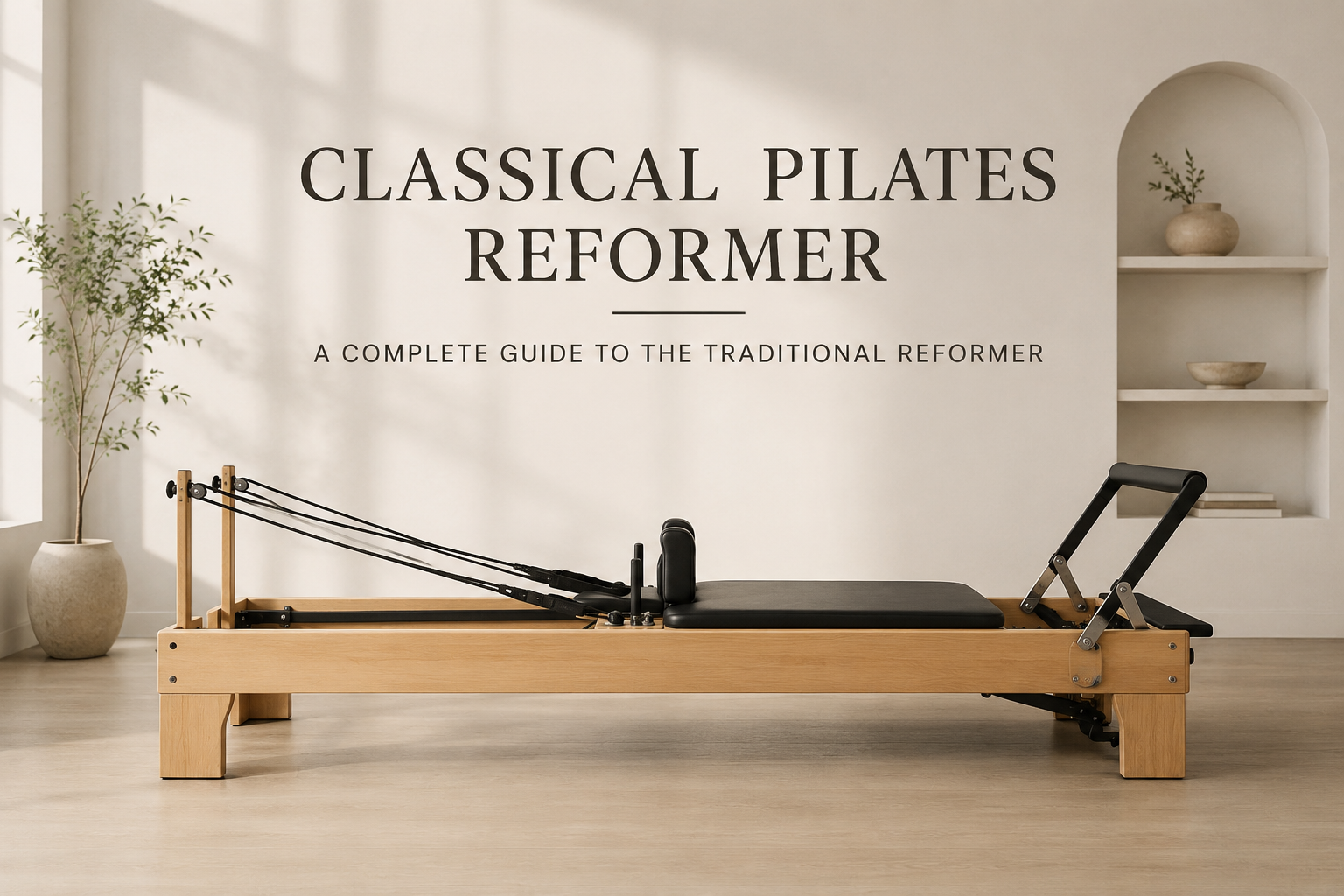
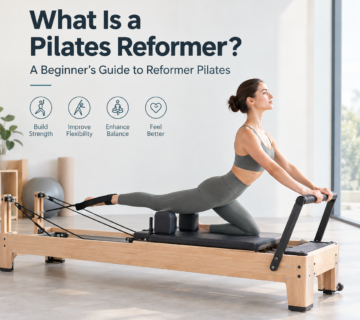
A classical Pilates Reformer is a Reformer designed and used for the traditional Pilates method developed by Joseph Pilates. The equipment typically includes a moving carriage, springs, ropes or straps, pulleys, a footbar, shoulder rests, and a headrest.
The basic purpose is to provide adjustable resistance while guiding the body through controlled movements.
However, “classical” describes more than the machine itself. Classical Reformer Pilates generally emphasizes a structured repertoire, controlled transitions, precise movement, breathing, alignment, and whole-body integration.
The Pilates Journal describes the Classical method as a systematic approach in which exercises are performed in sequence, with an emphasis on dynamics, rhythm, flow, and relatively low repetitions.
That means two people can use similar Reformers but have very different experiences depending on whether they are following a classical or contemporary training approach.
What Makes a Pilates Reformer Classical?
There is no single global specification that legally defines a “classical Reformer.” Different Pilates schools can interpret the original method somewhat differently.
Generally, classical equipment is associated with proportions and mechanical characteristics intended to stay relatively close to the apparatus used in the early Pilates system. Traditional training also tends to place greater emphasis on a defined exercise repertoire and sequence.
Important elements can include:
A relatively traditional frame and carriage configuration
Spring resistance designed for controlled movement
A fixed or traditionally positioned footbar
Traditional shoulder rests and straps
A focus on precise carriage control
Exercise sequences associated with the classical repertoire
Strong attention to breathing, alignment, and movement quality
So, a classical Reformer should be understood as part of a broader training system rather than simply a particular frame style.
How Did Joseph Pilates Develop the Reformer?
The Reformer has its roots in Joseph Pilates’ early experiments with spring resistance. Historical records from the Smithsonian Institution note that Pilates experimented with springs and resistance during World War I and later developed exercise apparatus using platforms, pulleys, and springs.
After moving to New York in 1926, he and Clara Pilates opened a studio and continued developing the method. The Smithsonian records a Pilates Universal Reformer patented in 1927, providing an important historical connection between the modern Reformer and Pilates’ original apparatus.
The equipment evolved over time, so the “original” Reformer was not necessarily one completely fixed design. Pilates himself continued experimenting with his apparatus.
How Is a Classical Pilates Reformer Designed?
The design of a traditional Pilates Reformer is relatively simple compared with many modern gym machines, but that simplicity is intentional.
Instead of relying on weight stacks, the Reformer uses springs to create resistance. The moving carriage allows the user to work against that resistance while maintaining contact with the machine.
The combination of resistance, instability, and controlled movement makes the Reformer useful for exercises ranging from basic footwork to more advanced standing and full-body movements.
What Are the Main Parts of a Classical Pilates Reformer?
The main components normally include:
| Component | Main Function |
| Carriage | Supports the user’s body and moves along the frame |
| Springs | Provide resistance and help control carriage movement |
| Footbar | Provides a stable surface for the feet or hands |
| Shoulder rests | Help position and stabilize the upper body |
| Headrest | Supports the head and helps adjust spinal positioning |
| Straps/Ropes | Connect the user’s arms or legs to the resistance system |
| Pulley system | Transfers force between the straps and springs |
| Frame | Provides the structural foundation of the machine |
The exact dimensions, spring configuration, and hardware can vary between manufacturers and schools.
That is important when comparing different types of Pilates reformers. A wooden classical-style Reformer may feel noticeably different from a contemporary aluminum Reformer even when both are used for similar exercises.
How Do Springs, the Carriage, and Footbar Work Together?
The springs are the heart of the Reformer resistance system.
When the carriage moves, the springs stretch or release. This creates resistance that the user must control throughout the movement. Depending on the exercise and spring setting, resistance can either make a movement more challenging or provide assistance.
For example, during Footwork, the feet push against the footbar while the legs move the carriage away from the platform. The user then controls the return rather than simply allowing the carriage to come back.
This creates an important feature of Reformer training: the user is working during both the outward and return phases.
A well-designed Reformer should therefore provide smooth carriage travel, predictable resistance, stable support, and enough adjustment to accommodate different users and exercises.
What Are the Benefits of Classical Reformer Pilates?
Classical Reformer Pilates is often chosen by people who enjoy a structured approach to movement rather than constantly changing workout formats.
The potential benefits are closely related to Pilates as a whole, including muscular endurance, movement control, balance, flexibility, and body awareness. However, research does not show that Pilates is universally superior to other forms of exercise.
A systematic review published in Heliyon analyzed 11 studies comparing Pilates with other exercise modalities. The researchers found no clear difference between Pilates and other exercise approaches for several measures of strength, balance, and flexibility, and rated the overall evidence as low to very low.
This is a useful distinction: Pilates can be a practical form of exercise, but its benefits should not be presented as guaranteed or unique to Pilates.
Can It Improve Core Strength and Muscle Control?
Core control is one of the central ideas behind classical Pilates.
Rather than isolating the abdominal muscles, traditional Pilates often treats the trunk, pelvis, hips, back, and breathing system as part of an integrated movement strategy.
Research provides some support for this approach. A systematic review of randomized controlled trials found emerging evidence that Pilates can improve core muscle strength and activation, particularly compared with no exercise or differently dosed exercise.
On a Reformer, the moving carriage adds another challenge because the user has to maintain control while the surface beneath the body moves.
Can It Improve Flexibility, Balance, and Coordination?
The controlled movements of Reformer Pilates can provide opportunities to work on range of motion, balance, and coordination.
Earlier systematic research has reported positive effects of Pilates on flexibility, dynamic balance, and muscular endurance in healthy participants, although the strength of evidence varies across outcomes and studies.
For example, an office worker who spends most of the day sitting may use Reformer sessions to practice controlled hip, spinal, and shoulder movements. An older adult may focus more heavily on balance and controlled transitions.
The exercise selection and instruction should be adapted to the individual’s ability rather than assuming that the same sequence is appropriate for everyone.
Why Are Precision and Controlled Movement Important?
One of the defining characteristics of classical training is the attention given to how an exercise is performed.
Instead of simply completing a high number of repetitions, the goal is often to maintain alignment, breathing, timing, and control throughout the movement.
This can make a relatively simple exercise surprisingly demanding.
For instance, controlling the final few inches of a carriage return requires more than leg strength. The user also needs to coordinate the trunk, pelvis, breathing, and spring resistance.
That combination is one reason classical Reformer Pilates can feel technically demanding even when the workout is relatively low impact.
How Does a Classical Pilates Reformer Compare With a Contemporary Reformer?
The distinction between classical and contemporary Reformers is not always black and white.
Both can use the same fundamental mechanics: springs, a moving carriage, straps, pulleys, and a footbar.
The major differences are usually found in equipment proportions, exercise selection, programming, and teaching philosophy.
| Feature | Classical Pilates Reformer | Contemporary Reformer |
| Training style | Structured and sequence-oriented | More flexible and varied |
| Exercise selection | Traditional Pilates repertoire | Traditional + modern variations |
| Equipment design | Often closer to traditional proportions | May include more adjustability |
| Props | Usually limited | May include additional props |
| Teaching focus | Precision, control, flow | May combine Pilates with modern fitness concepts |
| Class format | Often private or small group | Frequently used in larger group classes |
What Are the Main Differences in Design and Features?
A traditional Pilates Reformer often has a relatively straightforward configuration designed around the classical repertoire.
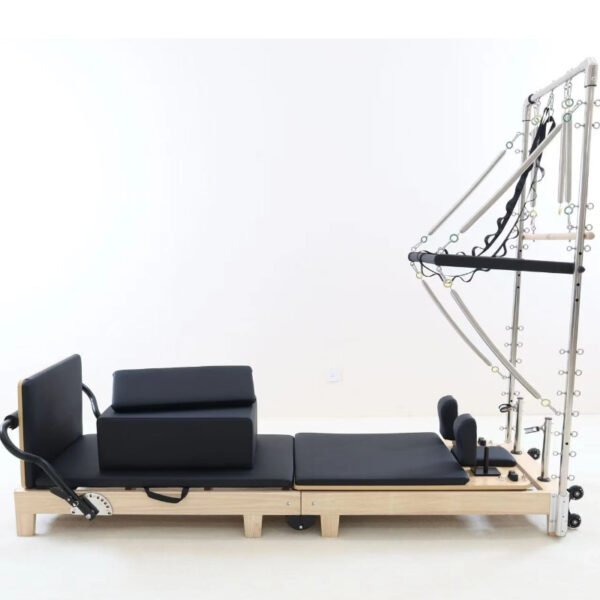
Contemporary Reformers may introduce features such as more adjustable footbars, different carriage dimensions, additional spring positions, longer frames, jump boards, towers, or other accessories.
Neither approach is automatically appropriate for every user.
For a studio focused on classical instruction, a traditional configuration may make more sense because the equipment should support the teaching system. A fitness studio offering a broader range of Reformer exercises may prefer additional adjustability.
Is a Classical Reformer Better for Traditional Pilates Training?
If your goal is to study or teach the classical Pilates system, a classical-style Reformer can make the training experience more consistent with the traditional approach.
That does not necessarily mean it is “better” for every person.
Someone who wants a mixture of Pilates, mobility training, athletic conditioning, and contemporary fitness exercises may prefer a more adjustable Reformer.
The best choice depends on the intended method, instructor preferences, available space, user experience, and expected frequency of use.
How Do You Choose a Classical Pilates Reformer?
When choosing a classical Pilates Reformer, look beyond appearance.
A wooden frame may visually resemble traditional Pilates equipment, but the important factors are how the carriage moves, how the springs feel, how stable the frame is, and whether the dimensions support the exercises you plan to teach.
For a professional studio, equipment durability and consistency become especially important because the machine may be used repeatedly throughout the day.
What Should You Consider When Choosing a Classical Reformer?
Consider these factors before purchasing:
- Frame construction
Wood can provide the traditional appearance associated with classical equipment, while aluminum can offer a different balance of weight, rigidity, and maintenance requirements.
- Carriage movement
The carriage should move smoothly and predictably without unnecessary side-to-side movement.
- Spring resistance
Check how many springs are included, their resistance levels, and whether the configuration suits the training method you intend to use.
- Dimensions
Traditional proportions can be important if you are specifically teaching classical exercises. Check the frame length, carriage size, footbar position, and overall footprint.
- Studio workload
A home Reformer used a few times per week has different requirements from equipment used for multiple classes every day.
- Maintenance and customization
For studios and distributors, replacement parts, upholstery options, finishes, colors, packaging, and OEM/ODM support can also affect the long-term value of the equipment.
CoreFlow offers a range of Pilates Reformer options, including a dedicated Classical Reformer C10-01, alongside wooden, aluminum, commercial, home, and tower configurations. This allows buyers to compare different equipment approaches rather than treating every Reformer as the same type of machine.
Is a Classical Pilates Reformer Suitable for Home and Studio Use?
Yes, but the right configuration depends on the environment.
For home users, available floor space, storage, user height, and training frequency are usually major considerations. A compact or more adjustable Reformer may be more practical than a studio-style setup.
For professional studios, stability, durability, serviceability, upholstery quality, and consistent carriage performance become more important.
A studio that specifically markets classical Pilates should also consider whether the equipment’s dimensions and resistance system align with the method taught by its instructors.
This is where buying directly from an experienced Pilates equipment manufacturer can be useful. Instead of selecting a machine based only on photographs, studio owners can discuss specifications, customization, intended use, and production requirements before placing an order.
Conclusion
A classical Pilates Reformer is more than a piece of exercise equipment with a traditional appearance. It is part of a movement system built around controlled resistance, precise technique, breathing, sequencing, and whole-body coordination.
The history of the Reformer goes back to Joseph Pilates’ early apparatus experiments and the development of the Universal Reformer. Historical records, including the Smithsonian’s collection of a Pilates Universal Reformer, help demonstrate how closely the equipment is connected to the development of the Pilates method.
Today, classical and contemporary Reformers can both support effective Pilates training, but they serve somewhat different preferences and teaching environments.
If you are interested in the traditional method, pay particular attention to equipment proportions, carriage movement, spring resistance, and how closely the machine supports the repertoire you intend to teach.
For studios, gyms, distributors, and serious home users, the most suitable Reformer is ultimately the one that matches the training method, available space, expected workload, and long-term equipment requirements.
FAQs
What is a classical Pilates reformer?
A classical Pilates Reformer is a Reformer designed and used around the traditional Pilates method associated with Joseph Pilates. It generally emphasizes traditional equipment characteristics, structured exercise sequences, controlled movement, breathing, precision, and whole-body coordination.
What is the difference between a classical and contemporary Pilates reformer?
Classical Reformers generally follow equipment proportions and training principles associated with the traditional Pilates system, while contemporary Reformers may offer greater adjustability and support modern exercise variations. The distinction can vary between Pilates schools and manufacturers.
Can beginners use a classical Pilates reformer?
Yes. Beginners can learn on a classical Reformer when exercises are appropriately selected and taught by a qualified instructor. The traditional sequence can provide a structured learning framework, but beginners do not need to perform advanced exercises immediately.
Is a traditional Pilates reformer different from a classical Pilates reformer?
The terms are often used interchangeably when referring to equipment or training that follows the original Pilates approach. However, “classical” can refer more specifically to the teaching method and repertoire, while “traditional” is sometimes used more broadly to describe equipment or practices that resemble earlier Pilates designs.
What are the main types of Pilates reformers?
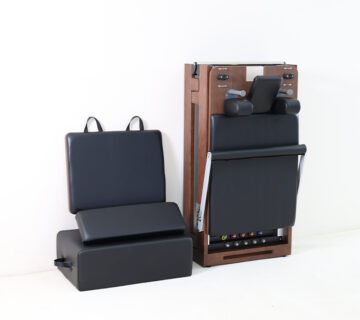
Common types include classical-style wooden Reformers, contemporary aluminum Reformers, commercial studio Reformers, home Reformers, foldable Reformers, and Reformers with towers. The best option depends on the intended training style, available space, and frequency of use.

No comment