


Looking for a way to make your Reformer Pilates workout more dynamic? A Pilates jumpboard can add rhythmic jumping movements, cardiovascular challenges, and new exercise variations to your regular Pilates routine. Whether you are new to Reformer Pilates or an experienced practitioner, this accessory offers a different way to train your lower body while maintaining a focus on core control and movement quality.
But what exactly is a Pilates jumpboard, how does it work, and is it suitable for beginners? Understanding its benefits, limitations, and proper use can help you decide whether it belongs in your workout routine or Pilates studio.
In this guide, we explain how a Pilates jumpboard works, introduce beginner-friendly exercises, and share practical tips for choosing a compatible board.
What Is a Pilates Jumpboard?
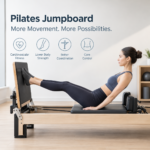
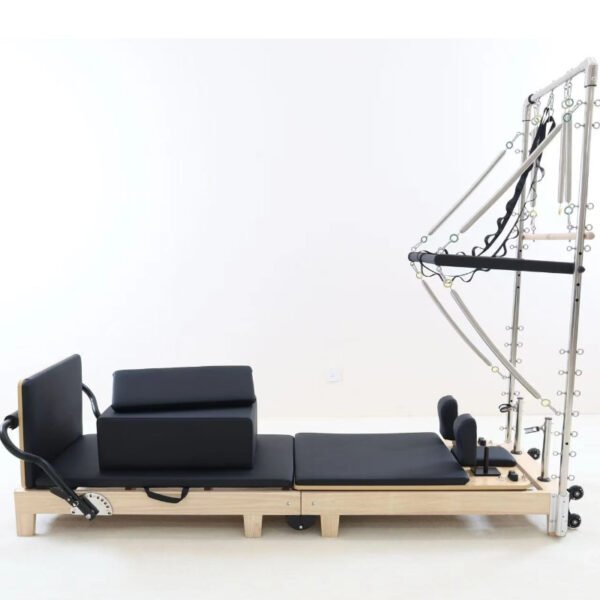
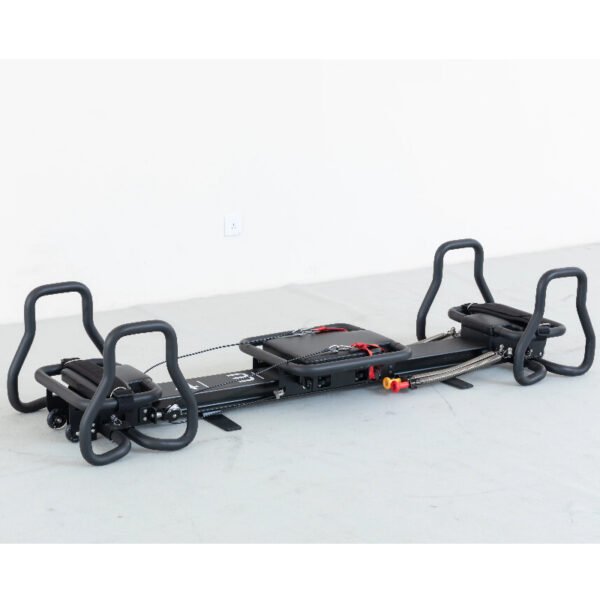
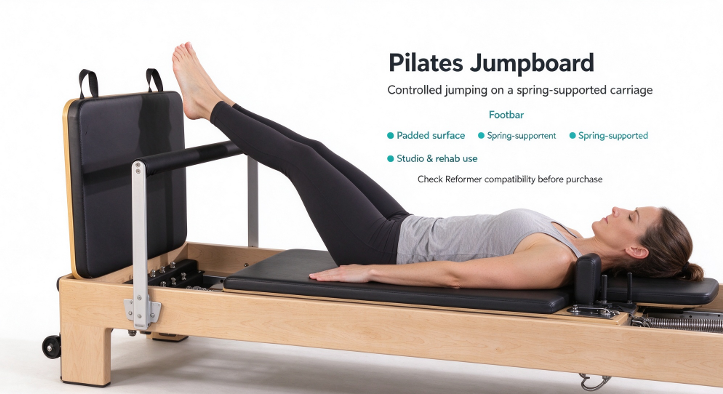
A Pilates jumpboard is a firm, usually padded accessory attached to the footbar end of a Pilates Reformer. It creates a broad surface against which you can press your feet and perform controlled jumping movements while lying on the carriage.
Unlike traditional floor jumping, jumpboard exercises take place on a moving Reformer carriage supported by a spring system. This setup allows practitioners to practice repeated takeoffs and controlled landings without repeatedly landing on a hard floor.
A Pilates reformer jump board is commonly used in studio classes, personal training sessions, and certain rehabilitation-oriented exercise programs under professional supervision.
Jumpboards vary in shape, dimensions, padding, and attachment design. Some are designed for specific Reformer models, so compatibility is an important consideration before purchasing one.
How Does a Pilates Jumpboard Work?
The jumpboard provides a surface to push against while the Reformer carriage moves along its tracks. As you extend your legs, the carriage moves away from the board against spring resistance. You then control the return movement, allowing your feet to reconnect with the board softly and evenly.
The springs influence the amount of resistance and the feel of the movement. The goal is not simply to jump as hard or as fast as possible. Instead, focus on coordinated leg movement, controlled breathing, and a stable pelvis and trunk throughout each repetition.
What Is a Pilates Jumpboard Used For?
A jumpboard can be used for more than repeated two-foot jumps. Depending on the equipment and the practitioner’s ability, exercises may include alternating-leg jumps, wider foot positions, single-leg variations, and controlled footwork.
For home users, it can introduce variety into an existing Reformer routine. For Pilates studios, it can support dedicated jumpboard classes or short cardio-focused segments within a broader session.
What Are the Benefits of Using a Pilates Jumpboard?
A jumpboard adds a dynamic element to Reformer Pilates while retaining many of the method’s core principles: control, coordination, breathing, and deliberate movement.
Potential benefits include:
Cardiovascular challenge: Repeated jumping movements can raise your heart rate, depending on the pace, duration, resistance, and individual fitness level.
Lower-body muscular endurance: Repeated leg extensions engage muscles around the hips, thighs, and calves.
Coordination and rhythm: Alternating legs or changing foot positions challenges timing and movement awareness.
Core control: Maintaining a stable pelvis and trunk while the carriage moves requires attention to abdominal engagement and breathing.
Workout variety: Jumpboard exercises offer an alternative to conventional footwork and can help instructors create more varied class formats.
The results depend on how the exercises are programmed and performed. A short, gentle session will place different demands on the body than a longer, faster workout.
How Can Jumpboard Exercises Improve Cardiovascular Fitness?
When performed continuously, jumpboard exercises can increase breathing rate and heart rate, making them a useful component of a cardiovascular-focused Pilates session.
For example, an instructor might alternate a short series of two-foot jumps with slower footwork and controlled breathing. The pace can then be adjusted according to the participant’s ability.
The U.S. Department of Health and Human Services recommends that adults aim for 150–300 minutes of moderate-intensity aerobic activity per week, alongside muscle-strengthening activities on at least two days. Jumpboard training may contribute to overall activity, but whether a particular session counts as moderate or vigorous exercise depends on its actual intensity.
See the Physical Activity Guidelines for Americans for the full recommendations.
Can Pilates Jumpboard Workouts Be Low-Impact?
Jumpboard Pilates is often described as low-impact because the practitioner lies on the Reformer carriage rather than repeatedly landing upright on a hard surface. The carriage and spring system can change how forces are managed during the movement.
However, low-impact does not mean zero-impact or suitable for everyone. Repeated jumping still places demands on the feet, ankles, knees, hips, and spine.
If you have joint pain, a recent injury, osteoporosis, balance concerns, or a medical condition that may affect exercise safety, consult a qualified healthcare professional before starting a jumping routine. A non-jumping Reformer session may be a more appropriate option.
How Can Jumpboard Training Improve Coordination and Core Control?
A successful jumpboard repetition involves more than pushing through the legs. You must coordinate the push, carriage movement, landing, and next repetition without losing control of your torso.
For example, an instructor may ask you to alternate your feet while keeping your pelvis steady and your breathing regular. This encourages you to pay attention to left-right symmetry and movement timing.
Over time, appropriately progressed exercises may help develop movement awareness and muscular endurance. The priority should remain consistent technique rather than increasing speed at the expense of control.
What Are the Best Pilates Jumpboard Exercises for Beginners?
Beginners should first learn basic Reformer footwork and understand how the carriage and springs respond. Once an instructor confirms that jumping is appropriate, start with a short set of simple movements.
What Are Basic Two-Foot Jumpboard Exercises?
Lie on the carriage with your head and shoulders supported as instructed. Place both feet comfortably on the board, with your knees aligned with your toes.
Press through both feet to move the carriage away from the board, allowing your feet to leave the surface only as much as the exercise requires. Return with control and reconnect with the board quietly.
Start with a small number of repetitions at a manageable pace. Avoid locking your knees or allowing the carriage to slam back into position.
How Can You Perform Single-Leg Jumpboard Exercises?
Once two-foot movements feel controlled, an instructor may introduce alternating-leg jumps. One foot pushes away as the other prepares for the next contact, creating a walking or running rhythm.
Keep the pelvis stable and avoid twisting through the hips. The range of movement should remain comfortable, with each landing controlled rather than forced.
Single-leg variations demand more coordination and may not be appropriate for every beginner. Build a foundation with simpler exercises before progressing.
What Are Some Advanced Pilates Jumpboard Variations?
More experienced practitioners may explore wider foot positions, faster alternating jumps, side-lying variations, or other instructor-led progressions.
These exercises can change the coordination and muscular demands of the session. However, advanced variations are not automatically more effective than basic movements.
A useful progression is to improve landing control, alignment, and consistency before increasing speed or complexity. The appropriate variation depends on the person’s experience, mobility, and training goals.
How Do You Use a Pilates Jumpboard Safely and Choose the Right One?
Safe and effective jumpboard training starts with suitable equipment, proper setup, and an appropriate exercise progression. The same principles apply whether you use a Pilates reformer jumpboard at home or in a professional studio.
How Should Beginners Prepare for a Jumpboard Workout?
Before starting, check that the jumpboard is securely installed and that the Reformer is stable. Confirm the spring configuration with a qualified instructor, as the appropriate resistance varies by machine and exercise.
Begin with a warm-up and controlled footwork. Keep your pelvis and trunk organized, maintain comfortable knee alignment, and land quietly rather than allowing your feet or the carriage to hit abruptly.
Stop if you experience pain, dizziness, unusual shortness of breath, or other concerning symptoms. Anyone returning from an injury or managing a relevant medical condition should seek individualized guidance before attempting jumps.
Is a Pilates Jumpboard Compatible With Every Reformer?
No. A jumpboard must fit the specific Reformer design and attachment system. Differences in frame dimensions, footbar construction, mounting points, and carriage geometry can affect compatibility and stability.
Before ordering a Pilates reformer jump board, confirm the exact Reformer brand and model, the board’s dimensions, and its installation requirements. Do not assume that a board will fit simply because it is advertised as a universal accessory.
Manufacturers such as Balanced Body list jumpboards for particular Reformer models, illustrating why model-specific checks matter.
What Should You Consider When Buying a Pilates Jumpboard?
The right choice depends on how you plan to use the equipment, how frequently it will be used, and which Reformer it needs to fit.
| Buying factor | What to check |
| Compatibility | Confirm the Reformer model and attachment dimensions. |
| Padding | Consider comfort, surface stability, and ease of cleaning. |
| Board size | Check the usable foot area and whether it suits the intended exercises. |
| Construction | Look for a stable attachment and durable materials suitable for your usage level. |
| Intended use | Consider home practice, private sessions, group classes, or studio use. |
| Maintenance | Ask about cleaning instructions, replacement parts, and after-sales support. |
For studio owners, it is also worth considering how the jumpboard fits into your class programming. A compatible board can expand exercise options, but instructor training, client screening, and equipment maintenance remain essential.
If you are selecting equipment for a new studio or upgrading an existing setup, explore our range of pilates reformer equipment to compare options for different training environments.
Conclusion
A Pilates jumpboard can bring a new dimension to Reformer training by combining controlled leg movements, rhythmic jumping, and core-focused exercise. Depending on the workout design, it may support cardiovascular conditioning, lower-body endurance, coordination, and movement awareness.
The key is to choose appropriate exercises, prioritize controlled landings, and progress gradually. Beginners should establish basic Reformer skills before attempting more demanding variations, while people with relevant health concerns should seek professional guidance.
Whether you practice at home or manage a Pilates studio, the right equipment starts with compatibility, stability, and a clear understanding of your training goals. A well-chosen jumpboard can add versatility to your Reformer sessions when used appropriately.
FAQs
Is a Pilates jumpboard suitable for beginners?
Yes, some beginners can use a jumpboard, provided they have learned basic Reformer movements and jumping is appropriate for their individual needs. Starting with instructor-guided, low-intensity exercises is generally preferable to immediately attempting fast or advanced variations.
Can Pilates jumpboard exercises help with weight management?
Jumpboard workouts can contribute to overall physical activity and energy expenditure. However, weight management depends on several factors, including nutrition, total activity, sleep, and individual circumstances. A jumpboard alone does not guarantee weight loss.
What is the difference between a Pilates jumpboard and a Pilates Reformer?
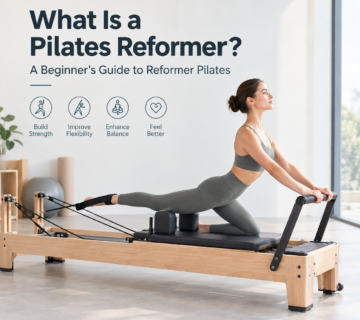
A Pilates Reformer is the main exercise machine, featuring a moving carriage, springs, and other components. A jumpboard is an accessory attached to one end of the Reformer, allowing users to perform supported jumping exercises and additional footwork variations. They serve different purposes but work together during a jumpboard session.

No comment