
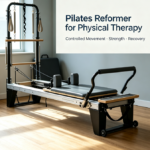
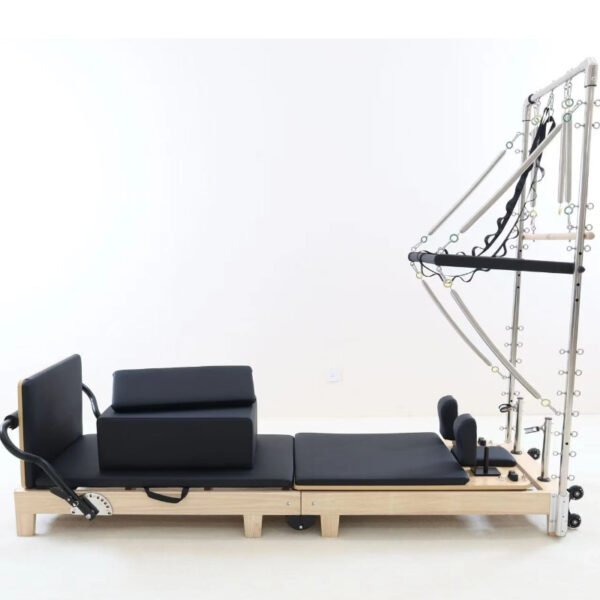
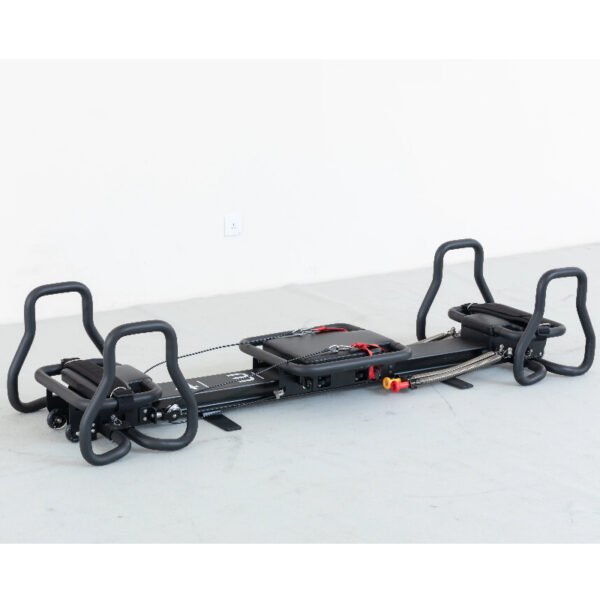






Un Reformer Pilates professionale è progettato per un utilizzo intensivo in studi Pilates, palestre e centri di riabilitazione. È dotato di una struttura rinforzata, componenti di alta qualità e un sistema di resistenza fluido, studiati per garantire stabilità, affidabilità e prestazioni costanti anche in caso di utilizzo quotidiano ad alta frequenza. Pilates reformer can be more than a piece of fitness equipment. In a physical therapy or rehabilitation setting, its adjustable resistance, moving carriage, straps, and supported positions can give therapists another way to guide controlled movement and progressive exercise.
For people recovering from an injury, managing persistent pain, or working to restore strength and mobility, the key is not simply using a reformer. The value comes from choosing appropriate exercises, adjusting resistance and range of motion, and progressing the program according to the individual’s needs.
This guide explains how a Pilates reformer for physical therapy can fit into rehabilitation, what benefits it may offer, what conditions it can support, and what clinics should consider when selecting professional Pilates equipment.
What Is a Pilates Reformer for Physical Therapy?
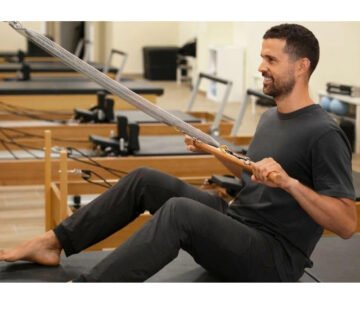
A Pilates reformer is a resistance-based exercise apparatus built around a sliding carriage, springs, ropes or straps, shoulder rests, and a footbar. Unlike many conventional strength machines, the reformer allows the body to work in supported positions while the resistance and movement path can be adjusted.
In physical therapy, the same basic equipment can be adapted to different stages of rehabilitation. A patient may begin with a relatively supported movement and lighter resistance, then gradually progress toward more demanding exercises as strength, coordination, and confidence improve.
This adaptability is one reason reformers appear in some physiotherapy clinics, rehabilitation facilities, and clinical Pilates programs. Merrithew, for example, specifically markets its rehabilitation reformers for physical therapy and medical facilities, with features such as adjustable spring systems, carriage configurations, and higher platforms intended to make access easier for some patients.
How Is a Pilates Reformer Different From a Standard Exercise Machine?
A conventional resistance machine usually guides the user through a relatively fixed movement. A reformer offers more variables: spring resistance, carriage travel, footbar position, strap length, body position, and exercise selection.
For a physical therapist, this can make the equipment useful for modifying an exercise rather than simply increasing weight. The goal is controlled movement that matches the patient’s current ability.
How Does Adjustable Resistance Support Physical Therapy Exercises?
The reformer’s springs provide resistance in both supported and moving positions. A therapist can select an appropriate resistance level and change the setup as the patient progresses.
This makes the reformer particularly useful when rehabilitation requires gradual loading. Instead of treating resistance as simply “heavier” or “lighter,” the therapist can use it to change the amount of assistance, challenge, and control required during a movement.
How Can a Pilates Reformer Support Physical Therapy and Rehabilitation?
The main attraction of a Pilates reformer for physical therapy is its ability to combine resistance, support, and controlled movement in one piece of equipment.
A typical rehabilitation session may use the reformer to work on several goals at once. For example, a patient recovering from a lower-extremity injury may perform supported leg movements to develop strength while working on joint control. Another patient with persistent back pain may use carefully selected exercises to improve trunk control and general physical activity.
This fits with the broader role of exercise in rehabilitation. The World Health Organization recommends exercise programs as part of non-surgical management for chronic primary low back pain and emphasizes that care should be person-centered and tailored to the individual.
Importantly, this does not mean Pilates is automatically the right treatment for every patient. Physical therapy involves assessment, clinical reasoning, exercise selection, education, and progression. The reformer is one tool within that process.
How Can Reformer Exercises Support Strength and Muscle Control?
Reformer exercises can provide resistance while keeping the body in a relatively supported position. This can allow a therapist to focus on specific movement patterns and muscle control without immediately requiring the patient to perform a fully weight-bearing exercise.
For example, controlled leg work can be used to challenge the muscles around the hips and knees, while upper-body exercises can target shoulder and trunk control. The therapist can adjust resistance and repetitions according to the patient’s response.
The emphasis is often on quality of movement rather than simply moving more weight.
Can a Pilates Reformer Improve Mobility, Balance, and Stability?
Mobility and stability often need to be developed together during rehabilitation. A patient may have sufficient range of motion but lack the strength or coordination to control that range effectively.
Reformer exercises can provide a stable platform from which to practice controlled movement. Depending on the exercise, the carriage and spring system can provide either assistance or resistance, while the therapist observes alignment and movement quality.
Some physiotherapy practices also use Reformer Pilates alongside conventional strengthening, manual therapy, and other rehabilitation methods. Kaizen Physiotherapy & Performance, for example, describes using Reformer Pilates within rehabilitation for back pain, sports injuries, and post-operative recovery.
How Does Controlled Resistance Support Progressive Rehabilitation?
Progression is an important part of rehabilitation. A patient who can perform an exercise comfortably today may need a more challenging version later.
A reformer allows several variables to change without replacing the exercise entirely. Resistance, repetitions, range of motion, body position, and exercise complexity can all be modified.
This can help create a gradual progression from supported movement toward more independent functional exercise. The exact progression should depend on the patient’s condition, treatment goals, and clinical assessment rather than following a fixed reformer program.
What Conditions and Rehabilitation Goals Can a Pilates Reformer Support?
There is no single list of conditions for which a Pilates reformer for physical therapy should be considered universally appropriate. The suitability of an exercise program depends on the diagnosis, symptoms, stage of recovery, and professional assessment.
However, reformer-based exercise is commonly incorporated into rehabilitation programs addressing musculoskeletal issues, including back pain, mobility limitations, strength deficits, postural control, and return-to-activity goals.
Low back pain is particularly relevant because it is one of the world’s largest rehabilitation challenges. WHO reports that approximately 619 million people experienced low back pain globally in 2020 and identifies it as the leading cause of disability worldwide.
For clinics, this makes adaptable exercise equipment valuable—but the equipment itself is not the treatment. The therapist’s assessment and exercise prescription remain central.
| Rehabilitation goal | How a reformer may be used |
| Strength development | Controlled resistance exercises with adjustable spring tension |
| Mobility | Supported movements through an appropriate range of motion |
| Core and trunk control | Exercises requiring controlled carriage movement and stabilization |
| Balance and coordination | Progressive exercises that challenge postural control |
| Return to activity | Gradual progression toward more demanding movement patterns |
Can Pilates Reformers Be Used for Post-Injury Rehabilitation?
They can be incorporated into rehabilitation after certain injuries when the patient’s healthcare professional considers the exercises appropriate.
The reformer’s supported environment may be useful when a patient is not yet ready for more demanding free-standing exercises. For example, a therapist may use controlled lower-body movements before progressing toward squats, lunges, step-ups, or sport-specific exercises.
The timing matters. After surgery or a significant injury, exercise selection should follow the relevant medical and rehabilitation protocol rather than a generic Pilates routine.
Can Reformer Exercises Support Back, Joint, and Mobility Training?
Yes, reformer-based exercises can be used as part of programs addressing back and joint-related rehabilitation goals.
For people with chronic low back pain, the broader evidence supports exercise as a useful non-surgical intervention, although research does not establish Pilates as universally superior to other forms of active rehabilitation. The American Physical Therapy Association’s clinical practice guideline resources similarly emphasize evidence-based assessment and intervention for low back pain rather than relying on one exercise method alone.
For joint rehabilitation, the reformer may allow a therapist to adjust loading and body position according to the patient’s current capabilities.
Can Physical Therapy Clinics Adapt Reformer Exercises to Different Patients?
One of the practical advantages of a reformer is its flexibility.
A physical therapy clinic may see patients with very different needs on the same day. One patient may need gentle supported movement, while another may be working on strength and return-to-sport conditioning.
The same reformer can accommodate different programs through changes in spring resistance, footbar position, exercise selection, repetitions, and body positioning. This makes the equipment potentially useful for clinics that want one platform capable of supporting multiple stages of rehabilitation.
What Should You Look for in a Pilates Reformer for Physical Therapy?
Choosing a Pilates reformer for physical therapy requires a different mindset from choosing a machine for occasional home workouts.
A clinic should consider how frequently the equipment will be used, who will use it, how easy it is for patients to access, how precisely resistance can be adjusted, and whether the configuration gives therapists enough exercise options.
Key considerations include:
Stable construction: The frame and moving components should remain stable during repeated professional use.
Smooth carriage movement: Predictable movement is important when therapists are working on controlled exercise.
Adjustable resistance: Multiple resistance options allow exercise difficulty to be modified.
Accessible design: A higher carriage or appropriate access configuration may be useful for patients with limited mobility.
Adjustable footbar and headrest: These features can help accommodate different body sizes and exercise positions.
Tower compatibility: A tower can expand exercise options without requiring a completely separate reformer.
Commercial durability: Rehabilitation facilities may use equipment repeatedly throughout the day, making construction and maintenance important procurement considerations.
CoreFlow’s commercial Pilates reformer range is designed for professional environments including studios, gyms, and rehabilitation facilities, with models covering conventional reformers and reformers with tower configurations.
Should You Choose a Commercial-Grade Pilates Reformer?
For a physical therapy clinic or rehabilitation facility, commercial-grade equipment is generally more appropriate than a basic home reformer because the equipment may be used repeatedly throughout the day by different patients and therapists.
The important point is not simply choosing the most expensive machine. Clinics should match construction, adjustment options, accessibility, and maintenance requirements to their actual workload.
A studio that provides occasional rehabilitation sessions may have different requirements from a dedicated physical therapy facility running multiple one-on-one sessions every day.
Why Are Adjustable Springs and Smooth Carriage Movement Important?
Resistance and carriage movement directly affect how an exercise feels and how precisely it can be performed.
A therapist may need to make small adjustments to resistance as a patient’s strength changes. Consistent carriage movement also helps the therapist observe movement quality without unnecessary mechanical distractions.
For this reason, spring quality, pulley or rope systems, carriage wheels, tracks, and adjustment mechanisms deserve attention when comparing professional reformers.
CoreFlow’s commercial reformers emphasize adjustable resistance, stable construction, and smooth carriage movement for professional Pilates environments.
Is a Pilates Reformer With Tower Useful for Rehabilitation Facilities?
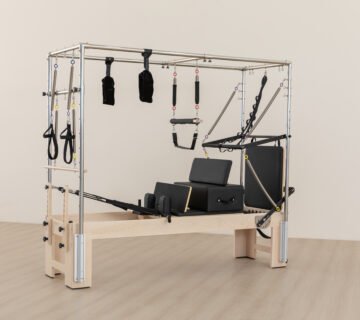
Un Reformer Pilates professionale è progettato per un utilizzo intensivo in studi Pilates, palestre e centri di riabilitazione. È dotato di una struttura rinforzata, componenti di alta qualità e un sistema di resistenza fluido, studiati per garantire stabilità, affidabilità e prestazioni costanti anche in caso di utilizzo quotidiano ad alta frequenza. Pilates reformer with tower combines the moving carriage of a reformer with a vertical resistance system. This gives therapists additional ways to work with the upper body, trunk, hips, and assisted movement patterns.
It can also be useful when floor space is limited because one integrated unit can provide functions that would otherwise require separate pieces of equipment.
CoreFlow offers several Reformer With Tower configurations intended for professional studios and rehabilitation-oriented environments, including aluminum and wood-based systems.
For a clinic, the key question is whether the additional programming flexibility will actually be used. A standard commercial reformer may be sufficient for a facility whose rehabilitation programs focus primarily on carriage-based exercises.
When Should You Consider a Reformer, Cadillac, or 3-in-1 System?
The answer depends on the facility’s treatment model, available space, and range of services.
| Equipment | Typical role in a professional setting | Consider when |
| Pilates Reformer | Resistance-based carriage exercises and progressive movement | You need a versatile core piece of equipment |
| Reformer With Tower | Reformer training plus additional vertical resistance exercises | You want broader exercise options in one unit |
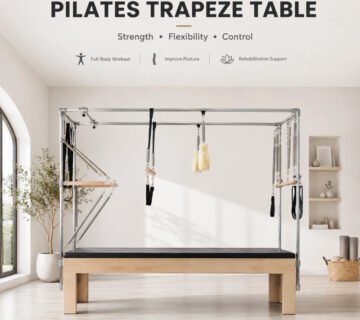
| Cadillac Pilates Reformer | Supported and spring-based movement using a larger fixed frame | Your therapists use a wider range of apparatus-based exercises |
| 3-in-1 Reformer/Cadillac System | Combines several functions into one apparatus | Space efficiency and exercise versatility are priorities |
For example, CoreFlow’s 3-in-1 Cadillac Pilates Reformer combines a reformer, Cadillac, and tower in one oak-frame system and is positioned for professional studios, fitness facilities, and rehabilitation facilities.
For a smaller rehabilitation space, an integrated system may make sense when multiple apparatus functions are required but floor area is limited. For a larger clinic, separate equipment may provide more flexibility for simultaneous sessions.
Conclusion
Un Reformer Pilates professionale è progettato per un utilizzo intensivo in studi Pilates, palestre e centri di riabilitazione. È dotato di una struttura rinforzata, componenti di alta qualità e un sistema di resistenza fluido, studiati per garantire stabilità, affidabilità e prestazioni costanti anche in caso di utilizzo quotidiano ad alta frequenza. Pilates reformer for physical therapy can be a useful addition to rehabilitation when it is integrated into an appropriately designed exercise program. Its adjustable resistance, supported movement, and flexible exercise configurations allow therapists to modify training according to different stages of recovery.
The most important consideration is not whether a reformer is inherently better than conventional physical therapy equipment. Rather, it is whether the equipment gives the therapist practical options for the patients and rehabilitation goals the facility serves.
For Pilates studios, physiotherapy clinics, rehabilitation centers, and wellness facilities, choosing a stable commercial reformer with appropriate resistance adjustment and configuration options can make the equipment more useful across a wider range of sessions.
CoreFlow manufactures commercial Pilates equipment for professional facilities, with options including standard reformers, Reformer With Tower systems, and integrated Cadillac/Reformer configurations. For clinics or distributors evaluating equipment for rehabilitation applications, selecting the configuration based on actual patient needs, space, frequency of use, and programming requirements is a practical place to start.
FAQs
Is a Pilates Reformer good for physical therapy?
A Pilates Reformer can be a useful tool within physical therapy for selected patients and rehabilitation goals. Its adjustable resistance and supported movement can help therapists design progressive exercises for strength, mobility, coordination, and movement control. It should be used as part of an individualized rehabilitation program rather than as a replacement for professional assessment.
What type of Pilates Reformer is best for a physical therapy clinic?
There is no single best configuration for every clinic. A physical therapy facility should consider commercial durability, carriage stability, spring adjustment, accessibility, footbar and headrest adjustment, and available space. A standard commercial reformer may be sufficient for some clinics, while a Reformer With Tower or 3-in-1 system may be more appropriate when a broader range of exercises is required.
Can physical therapists use Pilates Reformers for injury rehabilitation?
Yes. Physical therapists may incorporate reformer-based exercises into rehabilitation when appropriate for the patient’s condition and stage of recovery. The exercises should be selected and progressed according to clinical assessment, medical restrictions, and individual tolerance. After surgery or a significant injury, patients should follow the guidance of their healthcare professional rather than starting a generic reformer program.

No comment