
- HOME
- Prodotti
- Pilates Reformer
- Pilates Cadillac
- Reformer Pilates Pieghevole
- Megaformer
- Lagree Reformer
- Tower Pliates
- Pilates Ladder Barrel
- Pilates Chair
- Pilates Wall Unit
- Pilates Spine Corrector
- Reformer Pilates Professionale
- Reformer Pilates per Casa
- Reformer Pilates in Legno
- Aluminum Pilates Reformer
- Classical Pilates Reformer
- Pilates Equipment
- Blog
- Chi siamo
- Servizi
- Contattaci
Quick Access
Posts






- HOME
- Prodotti
- Pilates Reformer
- Pilates Cadillac
- Reformer Pilates Pieghevole
- Megaformer
- Lagree Reformer
- Tower Pliates
- Pilates Ladder Barrel
- Pilates Chair
- Pilates Wall Unit
- Pilates Spine Corrector
- Reformer Pilates Professionale
- Reformer Pilates per Casa
- Reformer Pilates in Legno
- Aluminum Pilates Reformer
- Classical Pilates Reformer
- Pilates Equipment
- Blog
- Chi siamo
- Servizi
- Contattaci
#Reformer Pilates Classico
Reformer Pilates Classico
Explore CoreFlow’s classical Pilates reformers designed for Pilates studios, instructors, distributors, and professional buyers who value the traditional Pilates approach. Our classical reformer equipment combines traditional design characteristics with modern manufacturing processes to provide stable construction, controlled spring resistance, smooth carriage movement, and a professional training experience.
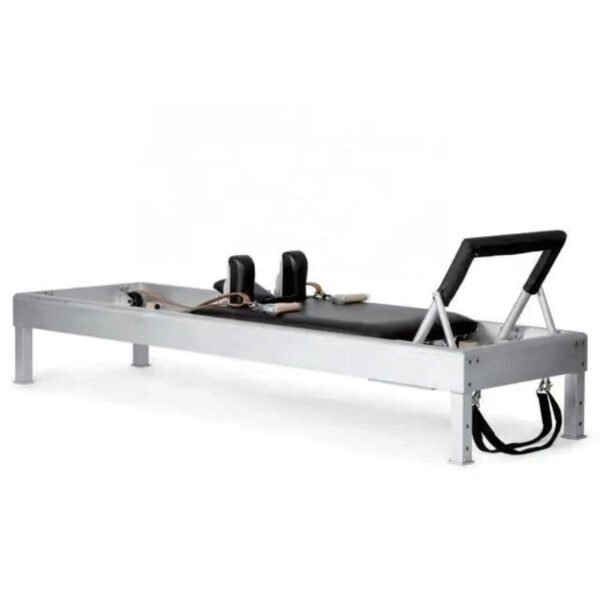
A classical Pilates reformer typically follows the traditional equipment concept associated with Joseph Pilates, including a stable frame, moving carriage, spring resistance system, footbar, shoulder rests, headrest, straps or ropes, and traditional accessories. Depending on the model, materials and configurations can be customized for different studio concepts and commercial requirements.
CoreFlow provides classical Pilates reformer solutions for professional studios, instructor training facilities, distributors, and private-label brands. OEM and ODM customization is available for selected projects, including frame materials, upholstery colors, accessories, branding, and other product specifications.
Visualizzazione del risultato
What Is a Classical Pilates Reformer?
A classical Pilates reformer is a Reformer designed around the traditional equipment characteristics and training principles associated with the original Pilates method developed by Joseph Pilates.
Like other reformers, a classical Pilates reformer uses a moving carriage, springs, straps or ropes, a footbar, shoulder rests, and other components to provide controlled resistance and support during exercise. What makes a reformer “classical” is not simply its age or appearance, but the relationship between its equipment design, proportions, resistance system, and the traditional Pilates repertoire.
Classical Reformer Pilates generally places greater emphasis on precise movement, controlled transitions, alignment, breathing, sequencing, and the traditional exercise repertoire. The equipment is designed to support this method rather than simply provide a general resistance-training platform.
For Pilates studios and instructors who follow a classical approach, equipment selection can therefore be an important part of maintaining a consistent training environment. Frame proportions, carriage height, footbar configuration, spring resistance, straps, and other components may all influence how traditional exercises are performed.
CoreFlow’s classical Pilates reformers combine traditional design characteristics with modern manufacturing capabilities, making them suitable for studios, instructors, training facilities, distributors, and private-label Pilates equipment projects.
What Makes a Pilates Reformer Classical?
A classical Pilates reformer is designed around the traditional proportions, components, resistance system, and movement principles associated with the original Pilates apparatus. While manufacturers may use different materials and construction techniques, several characteristics are commonly associated with a classical reformer.
Traditional Reformer Dimensions
One of the most commonly referenced classical reformer lengths is 86 inches (approximately 218 cm). Many manufacturers also offer shorter or longer classical configurations, including 80 inches (approximately 203 cm) and 89 inches (approximately 226 cm).
For example, Legacy Pilates Apparatus offers classical reformers in 80″, 86″, and 89″ lengths, while Balanced Body’s Contrology Classical Reformer is also available in 80″, 86″, and 89″ configurations. These dimensions reflect different historical and studio-use configurations rather than a single universal industry standard.
Traditional Frame Proportions
A classical-style reformer commonly has a frame width of approximately 25–27 inches (63–69 cm) and a frame height around 13–14 inches (33–36 cm), although exact dimensions vary by manufacturer and model.
For comparison, Align-Pilates lists its 86-inch Classical Reformer at 218 cm × 66 cm × 35 cm, while TecnoPilates lists an 86-inch model at approximately 218 cm × 65 cm × 35 cm.
Four-Spring Resistance System
Traditional-style reformers commonly use four springs to provide resistance and assistance during exercises. Classical-oriented manufacturers may use springs with similar or matched resistance characteristics rather than the widely color-coded spring systems found on many contemporary reformers.
The exact spring tension and resistance progression vary by manufacturer, so buyers should check the manufacturer’s technical specifications rather than assuming that every classical reformer uses identical springs.
Leather Straps and Traditional Handles
Leather carriage straps and traditional-style handles are commonly associated with classical reformers. Some classical models use leather straps together with wooden handles to provide a more traditional tactile experience.
Modern classical-style reformers may combine traditional leather straps and handles with updated frame materials or safety components.
Traditional Footbar Configuration
The footbar is another important component of a classical reformer. Its height, position, and relationship to the carriage can affect the setup and execution of traditional exercises.
Classical-oriented designs generally pay close attention to the footbar’s position and overall equipment proportions rather than treating the footbar simply as an adjustable support.
Traditional Carriage Feel
Classical reformer design places significant emphasis on the relationship between spring resistance, carriage travel, and the user’s movement. The goal is not simply to provide resistance but to create a controlled carriage experience that supports precise movement and feedback.
For this reason, a classical reformer should be evaluated as a complete system rather than by dimensions alone.
Classical Does Not Mean One Exact Specification
There is no single universally accepted set of dimensions that defines every classical Pilates reformer. Historical apparatus varied, and modern manufacturers may interpret traditional specifications differently.
When comparing classical reformers, look at the overall combination of frame dimensions, carriage height, footbar position, spring configuration, straps, handles, accessories, and intended Pilates repertoire.
Classical Pilates Reformer vs Modern Reformer
Classical and modern Pilates reformers share the same basic concept of a moving carriage and spring-based resistance, but they may differ in equipment proportions, adjustment options, materials, and design philosophy.
| Feature | Classical Pilates Reformer | Modern Pilates Reformer |
|---|---|---|
| Design Philosophy | Based on traditional Pilates equipment | Often incorporates contemporary features |
| Equipment Proportions | Generally follows traditional dimensions or design principles | May use different dimensions and configurations |
| Sistema di molle | Traditional-style resistance system | May offer additional resistance or adjustment options |
| Footbar | Traditional configuration | Often more adjustable |
| Frame | Traditional wood or other classical-style construction | Wood, aluminum, and other modern designs |
| Adjustability | May emphasize traditional setup | Often includes more adjustment options |
| Accessories | Traditional Pilates accessories | May include additional modern accessories |
| Training Approach | Often paired with classical Pilates repertoire | Suitable for contemporary or mixed approaches |
| Best For | Classical Pilates studios and instructors | Contemporary, mixed, and multi-purpose studios |
Which Reformer Should You Choose?
The right choice depends on the studio’s teaching approach and equipment requirements.
A classical Pilates reformer may be preferable for studios and instructors who want equipment that closely reflects traditional Pilates training and equipment characteristics.
A modern reformer may be more appropriate for facilities that prioritize additional adjustability, convenience features, multi-functional configurations, or contemporary Pilates programming.
Neither design is automatically better for every studio. Buyers should consider the teaching method, instructor preferences, target clients, available space, equipment configuration, and long-term studio requirements.
Classical Pilates Reformer Dimensions
Classical Pilates reformer dimensions are an important consideration for instructors, studio owners, and professional buyers because equipment proportions can influence exercise setup, carriage travel, user positioning, and studio layout.
Although historical Pilates apparatus was not manufactured to one single universal specification, 80-inch, 86-inch, and 89-inch reformers are commonly available in the classical Pilates equipment market.
Common Classical Reformer Lengths
| Classical Reformer Length | Approx. Metric Length | Typical Consideration |
|---|---|---|
| 80 inches | 203 cm | More compact; suitable for smaller spaces and some shorter practitioners |
| 86 inches | 218 cm | Common studio-oriented classical configuration |
| 89 inches | 226 cm | Longer configuration that may provide additional working length |
Legacy Pilates Apparatus, for example, offers 80″, 86″, and 89″ classical reformers and describes the 86-inch model as its studio standard. Balanced Body’s Contrology Classical Reformer also offers 80″, 86″, and 89″ frame configurations.
Common Classical Reformer Width and Height
Many classical-style reformers are approximately 25–27 inches (63–69 cm) wide and around 13–14 inches (33–36 cm) high, although dimensions vary between manufacturers.
For example:
Align-Pilates 86″ Classical Reformer: 218 × 66 × 35 cm
TecnoPilates 86″ Wood Reformer: 218 × 65 × 35 cm
Legacy 86″ Reformer: approximately 218 × 67.5 × 35 cm frame dimensions
These examples show that an 86-inch classical reformer is commonly around 218 cm long, 65–68 cm wide, and 35 cm high, although individual models can differ.
Why Do Classical Reformer Dimensions Matter?
The dimensions of a reformer affect more than the amount of floor space it occupies. Frame length, carriage travel, carriage height, footbar position, and spring attachment points can influence how traditional exercises are performed.
For example, a longer reformer can provide additional working length for taller practitioners and exercises requiring greater carriage travel. A shorter 80-inch configuration can be useful where studio space is limited.
How Much Studio Space Does a Classical Reformer Need?
The reformer’s physical dimensions are only the starting point when planning a studio. Instructors and clients also need room for mounting, dismounting, spring adjustments, standing exercises, side work, and instructor access.
For example, if a reformer is approximately 218 cm long × 66 cm wide, the actual working zone will need to be considerably larger than the machine footprint.
When planning multiple reformers, measure the complete usable area of the studio rather than simply placing machines side by side.
Which Classical Reformer Length Should You Choose?
An 80-inch reformer may be appropriate for compact spaces or users who do not require the additional length of a longer frame.
An 86-inch reformer is a common choice for professional studios and can accommodate a broad range of users.
An 89-inch reformer provides additional frame length and may be preferred by taller practitioners or studios that want a longer traditional configuration.
The ideal length ultimately depends on practitioner height, exercise repertoire, studio space, instructor preference, and the manufacturer’s specific design.
Is a classical reformer Pilates machine suitable for commercial studios?
Yes. A classical reformer can be suitable for Pilates studios, instructor training facilities, boutique fitness studios, and other professional environments when it is built with durable materials and designed for repeated use. Commercial buyers should consider frame stability, carriage performance, upholstery durability, spring quality, and maintenance requirements.
What features should I look for in a traditional Pilates reformer?
Important features can include a stable frame, smooth carriage movement, reliable spring resistance, comfortable shoulder rests, an adjustable headrest, a classic footbar, durable upholstery, and suitable straps or ropes. Traditional-style accessories such as leather straps and wooden handles may also be preferred for a more classic setup.
Can I customize a classical Pilates reformer?
Yes. Our factory supports OEM and ODM customization for classical Pilates reformers. Depending on the project, customization can include frame materials, functions, upholstery colors, accessories, and other product specifications to match your studio or private-label requirements.
What materials are available for classical Pilates reformers?
Classical-style reformers can be manufactured using different materials depending on the design and application. Wood is commonly selected for its traditional appearance, while aluminum can provide a modern alternative with a different visual and structural profile. The best choice depends on your studio design, durability requirements, target market, and budget.
Can I order customized classical Pilates reformers for my brand?
Yes. We provide OEM and ODM Pilates equipment manufacturing for distributors, Pilates brands, studios, and fitness businesses. You can discuss customized materials, functions, colors, accessories, and other specifications with our factory team to develop a product suited to your market.
Who should consider buying a classical Pilates reformer?
Classical Pilates reformers can be a good option for Pilates studios, classical Pilates instructors, training centers, distributors, and brands looking for traditional-style equipment. They are particularly relevant when the studio’s teaching approach and visual identity emphasize classical Pilates equipment and methodology.