


A Pilates barrel can be a valuable addition to a Pilates routine, whether you want to explore spinal mobility, develop core control, or expand your range of movement. However, not every Pilates barrel is designed for the same purpose. The Pilates barrel vs. spine corrector comparison is particularly important when choosing equipment for home workouts, professional Pilates studios, or instructor-led training.
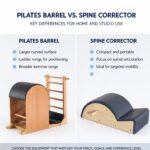
Although both apparatuses feature a curved surface that supports the body during movement, they differ in size, structure, exercise options, and space requirements. A Spine Corrector is generally compact and versatile, while a Ladder Barrel offers a larger curved surface combined with ladder rungs for additional support and positioning.
Understanding these differences can help you choose the right Pilates equipment for your experience level, training goals, and available space.
What Is a Pilates Barrel?
A Pilates barrel is a piece of Pilates equipment with a curved surface designed to support the body during controlled movements. Depending on its design, it can be used for spinal extension, abdominal exercises, lateral flexion, stretching, and balance work.
Pilates barrels come in several forms, including the Spine Corrector, Small Barrel, and Ladder Barrel. Each offers different levels of support and exercise possibilities.
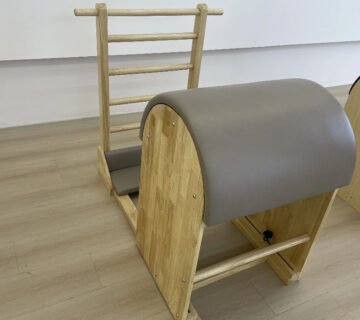
The Ladder Barrel typically consists of a padded, curved barrel connected to a ladder-like structure with wooden or other durable rungs. The curved surface supports the back, hips, or abdomen during selected exercises, while the rungs provide hand or foot support.
In a Pilates studio, instructors may use this apparatus for exercises such as Swan, side bends, abdominal work, and controlled stretching. Its larger structure also allows practitioners to explore movements that require more space or different body positions.
What Is a Pilates Spine Corrector?
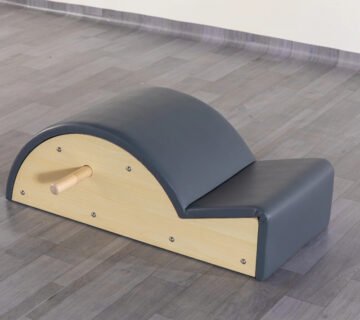
Un Reformer Pilates professionale è progettato per un utilizzo intensivo in studi Pilates, palestre e centri di riabilitazione. È dotato di una struttura rinforzata, componenti di alta qualità e un sistema di resistenza fluido, studiati per garantire stabilità, affidabilità e prestazioni costanti anche in caso di utilizzo quotidiano ad alta frequenza. Pilates Spine Corrector is a smaller apparatus featuring a curved, raised section and, in many designs, a lower step or platform. It supports the spine and helps practitioners explore controlled flexion, extension, and core-focused movements.
Unlike a Ladder Barrel, a Spine Corrector does not have an integrated ladder. Its compact shape makes it easier to move, store, and incorporate into home workouts or smaller studios.
Common spine corrector exercises include supported abdominal curls, arm movements, leg variations, and carefully controlled spinal extension. The equipment can be useful for beginners and experienced practitioners alike, provided the exercises are appropriate for their abilities.
Despite its name, a Spine Corrector does not automatically correct spinal alignment or treat back conditions. Its role is to provide support and movement opportunities within a well-designed Pilates program.
What Are the Key Differences Between a Pilates Barrel and a Spine Corrector?
The main difference is that Pilates barrel is a broad term covering several types of curved apparatus, whereas Spine Corrector refers to a particular compact design. When comparing a Spine Corrector with a Ladder Barrel, the structural differences become more obvious.
| Feature | Pilates Ladder Barrel | Pilates Spine Corrector |
| Design | Curved barrel with ladder rungs | Curved support, often with a step |
| Size | Generally larger | More compact |
| Support | Curved surface and multiple rungs | Primarily the curved surface and step |
| Exercise focus | Stretching, extension, side bending, and strength | Spinal mobility, abdominal work, and controlled movement |
| Space requirements | Requires more dedicated floor space | Usually easier to store |
| Typical users | Home practitioners with space, studios, and instructors | Beginners, home users, and studio clients |
| Best suited to | Broader movement options and progressive training | Compact, targeted training and supported exercises |
These are general differences rather than universal specifications. Designs vary by manufacturer, so it is worth checking the dimensions, adjustment features, and intended exercises before purchasing.
How Do Their Designs and Structures Differ?
A Ladder Barrel combines a curved padded surface with ladder rungs, often allowing the distance between the barrel and ladder to be adjusted. This can help instructors accommodate different body proportions and exercise setups.
A Spine Corrector generally has a fixed, compact form. Its curved section and step provide different support positions without the larger ladder structure.
The Ladder Barrel may be preferable when a studio needs a dedicated apparatus for a wider range of supported stretches and extensions. The Spine Corrector is often more practical when storage and floor space are limited.
How Do Their Uses and Exercises Compare?
Both apparatuses can support spinal mobility, core control, and flexibility training, but the available movements differ.
On a Spine Corrector, practitioners may perform supported abdominal curls, arm series, leg movements, and selected extension exercises. Its shape allows the instructor to modify the range of movement according to the practitioner’s ability.
A Ladder Barrel can accommodate exercises such as Swan variations, side sit-ups, and deeper supported stretches. Its ladder provides additional contact points, making it useful for exercises that involve longer body positions or a greater range of movement.
Neither apparatus is automatically better for every exercise. The appropriate choice depends on the movement, the practitioner’s experience, and the equipment’s dimensions.
Which Muscle Groups Can They Target?
Both apparatuses can be incorporated into exercises involving the abdominal muscles, back extensors, obliques, glutes, and muscles around the hips and shoulders.
The Spine Corrector is particularly useful for exploring controlled trunk movement and supported abdominal work. The Ladder Barrel can provide additional options for exercises that combine trunk stability with hip mobility, side bending, and spinal extension.
The muscles involved will depend on the exercise, technique, and level of assistance provided by the apparatus. Equipment alone does not guarantee a particular training result.
What Are the Benefits of Using a Pilates Barrel or Spine Corrector?
Pilates barrels provide a curved support surface that a flat mat cannot replicate. This changes the relationship between the body and the floor, creating opportunities to explore movement from different positions.
For example, someone who spends much of the day working at a computer may find that a guided Pilates session incorporating chest-opening movements, controlled spinal extension, and hip mobility offers a useful change from prolonged sitting. The equipment supports the exercise, while the practitioner’s control and technique remain essential.
How Can They Support Spinal Mobility and Flexibility?
The curved surface can support selected extension and flexion exercises while allowing practitioners to explore movement gradually.
A Spine Corrector may be suitable for gentle, supported mobility work. A Ladder Barrel offers additional positioning options for selected stretches and extension exercises.
The objective should be controlled movement within a comfortable range rather than forcing a deeper stretch. Anyone experiencing persistent back pain or a diagnosed spinal condition should seek appropriate professional guidance before trying unfamiliar exercises.
How Can They Help Improve Core Strength and Posture?
Many barrel exercises require practitioners to stabilize their trunk while moving their arms, legs, or spine. This creates opportunities to practise abdominal engagement, coordination, and body awareness.
For example, an instructor might use a Spine Corrector to teach a client to maintain controlled trunk positioning during an abdominal exercise. On a Ladder Barrel, the instructor might progress to a supported side-bending movement that challenges lateral trunk control.
These exercises can complement a broader Pilates program. Posture and movement habits depend on many factors, so results vary between individuals.
How Do They Support Different Pilates Training Goals?
The Spine Corrector is useful for compact training sessions focused on supported movement, core control, and spinal mobility.
The Ladder Barrel is particularly valuable when a program includes a wider variety of stretches, side bends, and extension-based exercises. Instructors can also use it to introduce progressions as clients develop strength, coordination, and confidence.
For studios, having both types of apparatus can expand programming options. For home users, choosing one well-suited piece of equipment may be more practical than purchasing several similar items.
Which Pilates Equipment Is Right for You?
The right choice depends on more than the name of the apparatus. Consider your experience, available space, intended exercises, and whether the equipment will be used personally or by multiple clients.
Which Is Better for Beginners?
For many beginners, a Spine Corrector is a practical starting point because it is compact and can support a variety of introductory exercises. However, a beginner can also use a Ladder Barrel under appropriate instruction.
If you are new to Pilates, begin with familiar movements and a comfortable range of motion. Avoid attempting advanced backbends or unsupported positions simply because the equipment makes them possible.
The best option is the one that suits your body, training needs, and level of supervision.
Which Is More Suitable for Pilates Studios and Professional Instructors?
A Ladder Barrel can be a strong addition to a professional studio that offers private sessions, small-group training, or more advanced apparatus-based programming. Its ladder structure and curved surface allow instructors to work with different positions and movement variations.
A Spine Corrector can complement reformers, mats, and other Pilates apparatus by providing a compact option for targeted exercises and warm-ups.
For studio owners, the decision should also account for client demographics, instructor training, floor layout, equipment durability, and expected frequency of use. A mixed equipment setup may offer more flexibility than choosing either apparatus exclusively.
If you are equipping a new studio or expanding an existing one, explore CoreFlow’s Pilates Ladder Barrel collection to compare available models and materials for professional Pilates environments.
What Should You Consider When Choosing Between Them?
Before purchasing, consider these practical questions:
Available space: Measure the floor area required for the apparatus and the exercises performed around it.
Exercise selection: Identify whether you mainly need compact spinal and core work or a broader range of supported stretches and extensions.
Adjustability: For a Ladder Barrel, check whether the barrel-to-ladder distance can be adjusted to suit different users.
Construction and comfort: Review frame stability, upholstery, padding, finish, and the quality of the support surfaces.
User requirements: Consider the range of body sizes, experience levels, and training needs the equipment must accommodate.
Maintenance and purchasing support: For commercial use, review care requirements, warranty terms, replacement-part availability, and shipping arrangements.
For Pilates studios, these details are especially important when purchasing multiple units or sourcing equipment directly from a manufacturer.
Conclusion
The difference between a Pilates barrel and a Spine Corrector comes down to design, support, and intended use. A Spine Corrector offers a compact curved surface for supported spinal mobility, core exercises, and selected extension movements. A Ladder Barrel combines a curved barrel with ladder rungs, creating additional positioning options for stretching, side bending, and more varied apparatus-based training.
For beginners and home users, the Spine Corrector may be a convenient choice when space is limited. For professional studios and instructors seeking a broader range of supported movements, a Ladder Barrel may be a worthwhile investment.
Before choosing, compare the apparatus dimensions, exercise requirements, construction quality, and user needs. The right equipment should fit naturally into your Pilates program and support controlled, progressive practice.
FAQs
Is a Pilates Barrel the Same as a Spine Corrector?
No. Pilates barrel is a broad term for several curved Pilates apparatuses, including the Spine Corrector, Small Barrel, and Ladder Barrel. A Spine Corrector is a specific compact design, while a Ladder Barrel includes a larger curved surface and ladder rungs.
Can Beginners Use a Pilates Barrel or Spine Corrector?
Yes. Beginners can use either apparatus when the exercises match their ability and are introduced appropriately. A Spine Corrector is often a practical starting point because of its compact design, but a Ladder Barrel can also be used for suitable introductory movements under qualified instruction.
Can You Use a Pilates Barrel for Back Stretching and Core Exercises?
Yes. Depending on the design, a Pilates barrel can support selected back stretches, spinal mobility exercises, abdominal work, and trunk-stability training. Movements should remain controlled and comfortable. If you have persistent back pain or a spinal condition, consult a qualified healthcare professional before beginning unfamiliar exercises.


No comment