
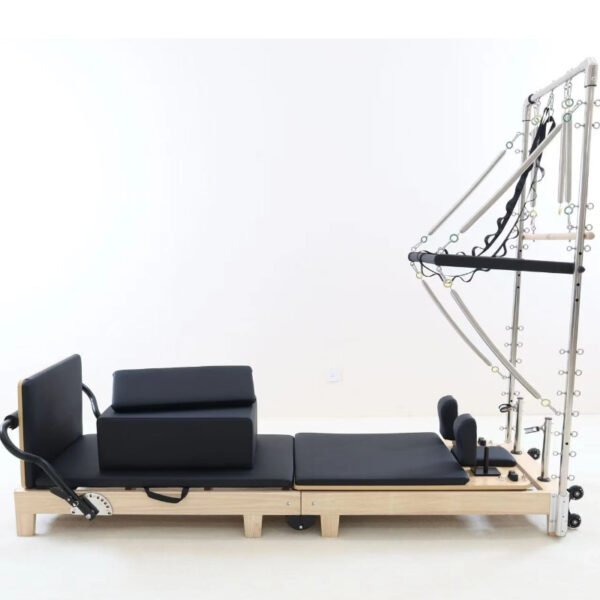
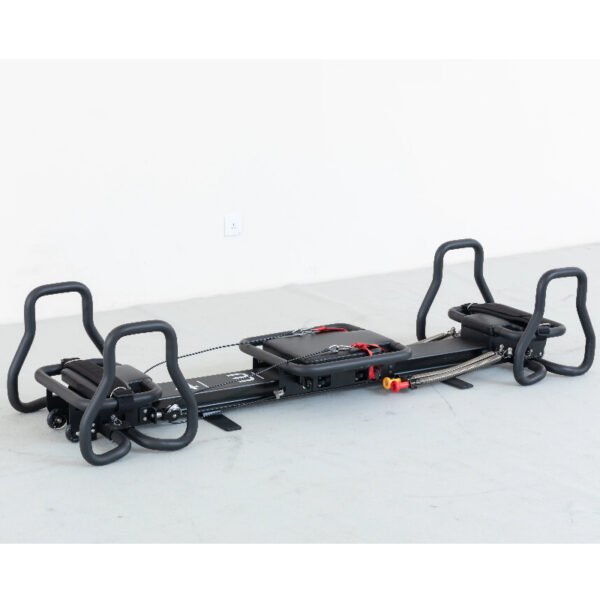






If you are new to low-impact strength training and curious about compact studio equipment, you may wonder what is a pilates chair and how it shapes modern Pilates practice. Chair Pilates has grown rapidly in popularity among home users, boutique studios, rehabilitation centers, and fitness instructors for its small footprint, adjustable resistance, and full-body training effects. Centered around the specialized pilates chair, this discipline follows classic Pilates fundamentals: controlled breathing, neutral spinal alignment, deep core activation, and slow intentional movement. This guide covers origins, core benefits, key differences from other Pilates styles, suitable users, and common questions, helping you fully understand Chair Pilates and how to start safe, effective training with a quality pilates chair.
What Is Chair Pilates and How Does It Work?
If you’re wondering what is a pilates chair, it is a purpose-built fitness device designed specifically for focused, low-impact Chair Pilates training. This specialized practice centers on slow, controlled movements performed on a premium pilates chair, typically the iconic Wunda Chair model. Equipped with adjustable spring resistance, the pilates chair creates customizable tension to target deep stabilizer muscles, core groups, and postural muscles with precise activation. The compact structure of the pilates chair prevents overexertion while boosting muscular endurance and joint mobility. Every movement is intentional and low-stress, helping users build strong functional strength, heighten body awareness, and improve daily movement quality through gentle, effective resistance training.
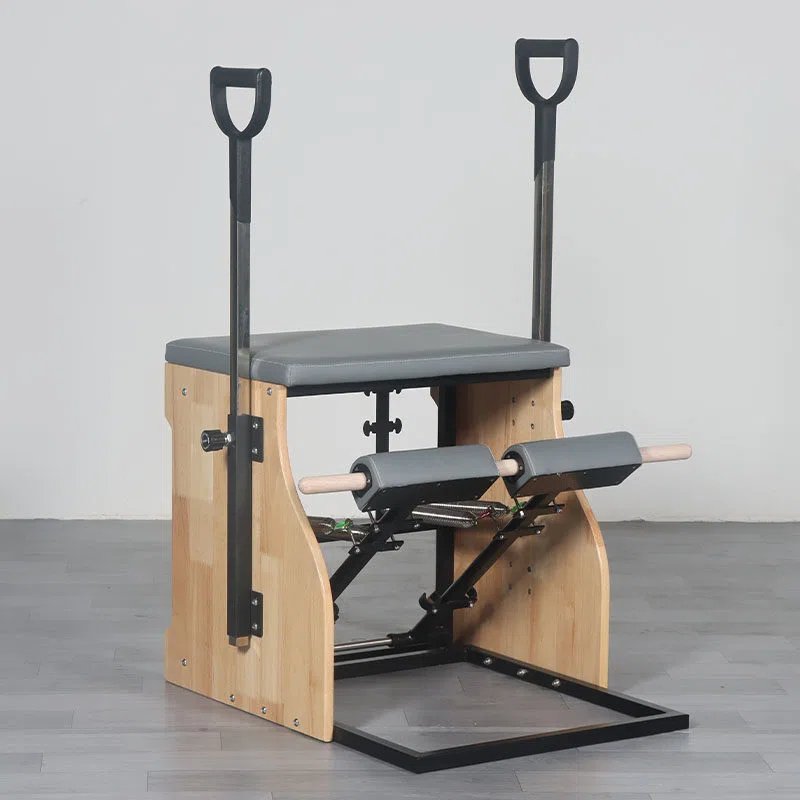
What equipment is used in Chair Pilates?
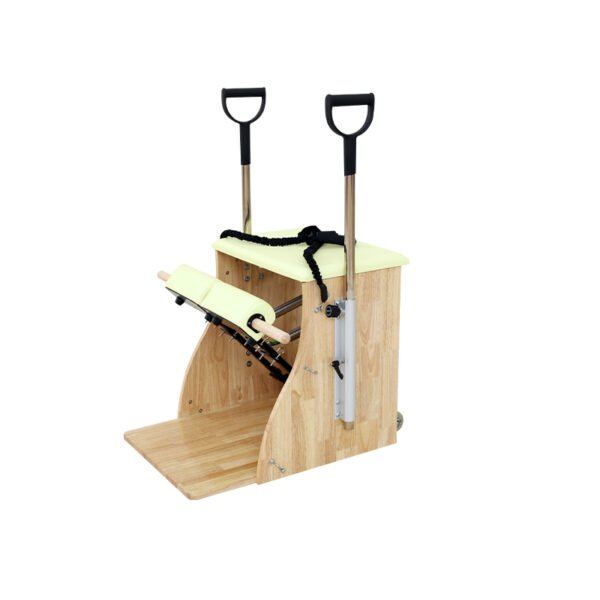
The primary equipment used is a professional pilates chair, commonly known as the Wunda Chair. It features a sturdy wooden frame, supportive padding, adjustable tension springs, foot pedals, and secure handles. Some models include additional straps and accessories to expand exercise options.
Is Chair Pilates suitable for beginners or advanced users?
Absolutely. A standard pilates chair offers multi-level spring adjustments, allowing beginners to start with light resistance and simple moves. Advanced users can increase tension and try complex, stability-focused sequences to boost strength, control, and muscular endurance.
Where Did Chair Pilates Come From and How Did It Evolve?
To understand what is a pilates chair, you must trace its origins to Joseph Pilates, the founder of traditional Pilates methodology. He created the first compact resistance apparatuses, including the early pilates chair, to deliver corrective exercise and rehabilitation in limited spaces. Originally designed for therapeutic use, the pilates chair was refined over generations to meet modern fitness needs. The Wunda Chair, the most popular style of pilates chair, quickly became a studio staple thanks to its small footprint and versatile functions. Today, it has evolved from a clinical tool into a mainstream workout essential for studios and home fitness lovers worldwide.
How does it relate to traditional Pilates created by Joseph Pilates?
The pilates chair is an original Joseph Pilates invention, fully aligned with his core philosophy of “contrology”. It shares the same focus on posture, core strength, breathwork, and muscle balance, serving as a compact complement to his larger Reformer and Cadillac machines.
Why has the Wunda Chair become popular in modern studios?
The Wunda pilates chair saves space, requires minimal installation, and delivers highly efficient isolated muscle training. It suits group classes, one-on-one sessions, and rehabilitation programs, making it a cost-effective, multi-functional addition for small and medium-sized fitness studios.
What Are the Key Benefits of Chair Pilates for the Body and Mind?
Training regularly on a pilates chair delivers comprehensive physical and mental benefits that make Chair Pilates ideal for all ages and abilities. The adjustable spring resistance of each pilates chair activates deep, underused muscle groups, enhancing overall strength without high-impact strain. This gentle practice greatly improves spinal alignment, relieves sedentary tension, and supports long-term joint health.
Can Chair Pilates improve core strength and stability?
Yes. Every exercise on a pilates chair demands continuous deep core engagement to maintain balance and correct form. It targets transverse abdominis, obliques, and lower back muscles, building solid core stability better than many conventional workouts.
Does Chair Pilates help with posture, flexibility, and balance?
Definitely. The controlled ranges of motion stretch tight muscles, correct rounded shoulders and pelvic tilt, and enhance joint flexibility. Constant stabilizer activation on the pilates chair also greatly improves daily balance and body coordination.
Is Chair Pilates effective for rehabilitation and injury prevention?
Chair Pilates is widely recommended by physical therapists. The low-impact, adjustable resistance of the pilates chair protects sensitive joints, repairs muscular imbalances, and strengthens weak areas to prevent recurring injuries.
How Is Chair Pilates Different From Mat Pilates and Reformer Pilates?
Many new practitioners ask how training on a pilates chair compares to mat and Reformer Pilates, and the differences lie in resistance and movement control. Mat Pilates relies only on body weight, offering limited challenge, while the pilates chair adds variable spring resistance for constant muscle engagement. The fixed movement planes of a pilates chair force smaller stabilizer muscles to work harder, making it more technically demanding than mat-based routines. In contrast, the large Reformer allows wide, dynamic motions, whereas the pilates chair focuses on isolated, precise micro-movements for refined strength.
What makes the chair more challenging than mat Pilates?
Without full bodyweight support, the pilates chair requires constant anti-rotation and stabilizer muscle control. Even simple moves need precise alignment, making it easier to activate deep muscles that mat Pilates often cannot target fully.
How does resistance in Chair Pilates compare to the reformer machine?
Reformers provide long, sliding-range resistance, while a pilates chair delivers concentrated, short-range spring tension. Chair resistance is more isolated, ideal for detailed muscle sculpting and postural correction.
Who Should Do Chair Pilates and How Can You Get Started Safely?
Chair Pilates on a professional pilates chair is highly inclusive, suitable for beginners, seniors, fitness enthusiasts, and competitive athletes alike. Newcomers benefit from modified, low-intensity moves on the pilates chair to build foundational strength and proper movement patterns safely. Seniors gain improved posture and joint mobility, while athletes use the pilates chair for balanced cross-training and muscle recovery. In a first session, users will learn basic breathing and alignment, with adjustable spring settings on the pilates chair tailored to personal ability. Training two to three times weekly delivers clear improvements in strength and flexibility.
Is Chair Pilates good for beginners, seniors, or athletes?
It is perfect for all groups. Beginners learn foundational control, seniors enjoy joint-friendly movement, and athletes use the pilates chair to fix imbalances, enhance mobility, and reduce workout fatigue.
What should you expect in your first Chair Pilates session?
Your first session will focus on basic posture, breathing techniques, and light-resistance chair movements. The instructor will adjust the pilates chair settings to fit your body, ensuring comfort and correct form throughout the practice.
How often should you practice Chair Pilates for results?
Two to three sessions per week is ideal. Consistent, moderate practice on the pilates chair brings visible improvements in core strength, posture, and flexibility within 4–6 weeks.
Conclusion
Chair Pilates stands out as one of the most versatile, accessible, and effective branches of traditional Pilates, with the pilates chair acting as its core foundation. Whether you want to build core strength, fix poor posture, increase flexibility, recover from injury, or enjoy low-stress mindful exercise, training on a high-quality pilates chair delivers lasting physical and mental benefits.
FAQs
Is Chair Pilates good for weight loss?
Chair Pilates builds lean muscle and boosts daily metabolism. While it is not high-intensity cardio, regular training on a pilates chair tones the body, reduces fat mass, and shapes a lean, balanced physique when paired with a healthy diet.
Do I need experience before trying Chair Pilates?
No prior Pilates experience is required. The pilates chair is fully adjustable, and instructors can provide beginner-friendly modifications. New users can start slowly to learn alignment and breathing with zero pressure.
Can Chair Pilates be done at home or only in studios?
Absolutely. Compact home-style pilates chair models are widely available, requiring little floor space. You can practice professional Chair Pilates movements at home with a sturdy, well-crafted chair, enjoying studio-quality training anytime.

No comment