
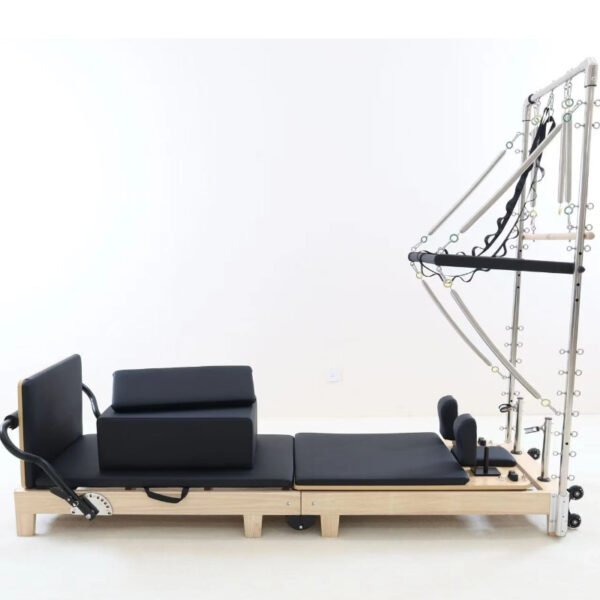
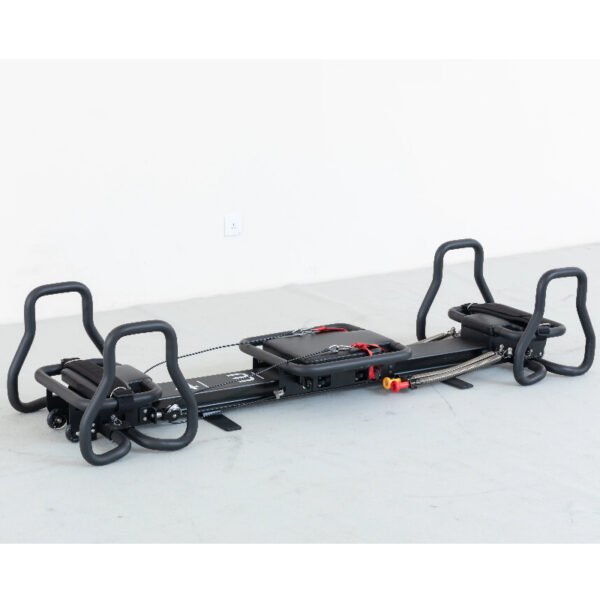






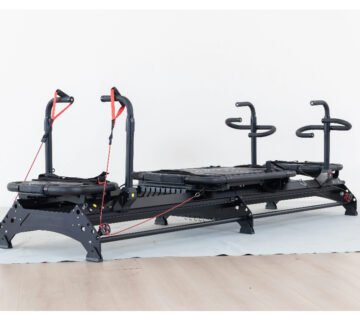
The pilates spring board is a compact and versatile piece of Pilates equipment designed to deliver effective resistance training without taking up the space of larger machines. Originally inspired by the tower system of a Pilates Cadillac, the spring board uses wall-mounted springs and adjustable attachments to create a full-body workout experience.
Today, it has become increasingly popular in both professional studios and home gyms because of its affordability, functionality, and space-saving design. Whether you are a beginner exploring Pilates or an experienced practitioner looking for a practical training solution, understanding how a spring board works can help you decide if it fits your fitness goals. In this guide, we’ll cover its benefits, exercises, comparisons with reformers, and tips for choosing the right model—while also introducing professional equipment solutions from CoreFlow.
What Is a Pilates Spring Board and How Does It Work?
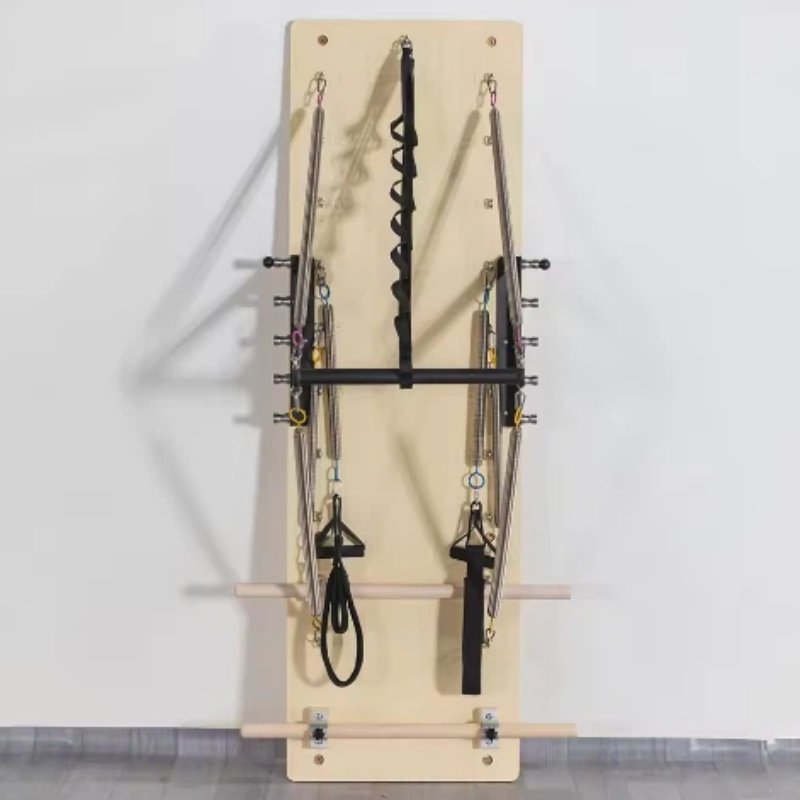
A pilates spring board is a wall-mounted Pilates apparatus that uses springs, straps, and bars to provide adjustable resistance during exercises. It is often considered a simplified version of the tower or Cadillac system, offering many similar movement possibilities in a more compact format.
The equipment typically includes several spring attachment points, arm and leg springs, handles, and a roll-down bar. Users perform exercises standing, kneeling, sitting, or lying on a mat placed near the board. Resistance is generated through spring tension, which can be adjusted based on fitness level and exercise type.
Because it relies on controlled resistance and body alignment, the spring board helps strengthen muscles while improving posture, coordination, and flexibility. Unlike large Pilates machines, it takes up minimal floor space, making it ideal for home environments.
Many people also refer to it as a spring board pilates system or a pilates wall spring board, especially when discussing wall-mounted home setups.
Why Is the Pilates Spring Board Popular for Home and Studio Pilates Training?
The pilates spring board has gained popularity because it combines versatility, affordability, and space efficiency. For home users, it offers many benefits of larger Pilates machines without requiring a dedicated studio-sized room. Since the system mounts to a wall, it keeps floor space open while still supporting a wide range of exercises.
Studios also value spring boards because they allow multiple clients to train simultaneously in smaller spaces. Instructors can teach strength, mobility, and rehabilitation-focused classes using one compact system.
Another reason for its popularity is adaptability. Beginners can use lighter springs for support and controlled movement, while advanced users can increase resistance for more challenging workouts. The equipment also supports functional movement training, helping improve posture, flexibility, and body awareness.
Compared to larger systems, a pilates wall spring board is generally more budget-friendly while still delivering professional-quality training possibilities. This makes it an attractive option for users seeking a balance between performance and practicality.
What Are the Best Pilates Spring Board Exercises for Strength, Flexibility, and Core Control?
The pilates spring board supports a wide variety of exercises targeting strength, mobility, posture, and flexibility. Because the springs provide constant resistance, movements require control and stability throughout the entire range of motion.
For strength training, common exercises include chest presses, rowing movements, leg presses, and squats using spring resistance. These movements engage both major muscle groups and stabilizing muscles, improving overall body strength without high-impact stress.
Core-focused exercises are another major advantage of the spring board. Roll-downs, abdominal curls, and rotational movements challenge deep core muscles while encouraging proper spinal alignment. The adjustable spring tension allows users to progress gradually as strength improves.
Flexibility and mobility exercises are also highly effective on the spring board. Assisted stretches for the shoulders, hips, hamstrings, and spine help improve range of motion while maintaining control and support.
Whether in a studio or at home, spring board pilates workouts offer a balanced combination of resistance training, mobility work, and posture correction in one compact system.
Pilates Spring Board vs Reformer: Which Pilates Equipment Is Better for Your Fitness Goals?
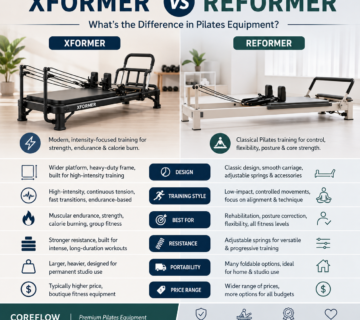
When comparing a pilates spring board with a Pilates Reformer, the best choice depends on your fitness goals, available space, and budget. Both systems use spring resistance, but they provide different workout experiences.
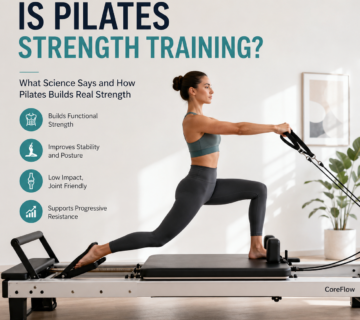
A Pilates Reformer includes a sliding carriage, allowing dynamic full-body movements and a larger variety of exercises. It is excellent for strength training, coordination, rehabilitation, and advanced Pilates practice. Reformers also offer smooth transitions and adjustable resistance, making them suitable for users of all levels.
The spring board, on the other hand, is more compact and affordable. It focuses on vertical resistance and wall-based exercises, making it ideal for posture training, flexibility, and core control. While it may not offer as much exercise variety as a reformer, it still delivers an effective full-body workout.
For users with limited space or budget, a pilates wall spring board can be a practical solution. Those seeking the most comprehensive Pilates experience may prefer investing in a full Pilates Reformer system from CoreFlow.
How to Choose the Best Pilates Spring Board for Home or Commercial Use?
Choosing the right pilates spring board involves considering build quality, available space, resistance options, and intended usage. Whether for home or commercial environments, durability and safety should always be priorities.
Look for strong wall-mounting systems and high-quality springs that provide smooth, consistent resistance. Adjustable attachment points are important because they allow exercises to be customized for different body sizes and movement patterns. Comfortable handles and durable straps also improve the overall training experience.
For home users, compact and easy-to-install systems are often the best option. If you have limited space, choose a model that integrates efficiently with your workout area. Commercial studios, however, may require reinforced designs built for frequent daily use.
Another important factor is versatility. A well-designed spring board should support strength, flexibility, rehabilitation, and mobility exercises. Choosing professional equipment from CoreFlow ensures reliable performance, ergonomic design, and long-term durability for both studio and home Pilates training.
Conclusion
The pilates spring board is a practical and versatile solution for anyone looking to improve strength, posture, flexibility, and core control. Its compact design makes it ideal for both home and studio environments, while its adjustable spring resistance supports users at all fitness levels.
Whether you are starting your Pilates journey or expanding an existing studio, CoreFlow offers professional-quality Pilates equipment designed for durability, performance, and effective full-body training.
FAQs
Is a Pilates Spring Board suitable for beginners?
Yes. Beginners can start with lighter spring resistance and basic movements to safely develop strength, coordination, and body awareness.
Can a Pilates Spring Board provide a full-body workout?
Absolutely. The spring board supports exercises for the upper body, lower body, core, flexibility, and posture, making it an effective full-body training system.
What should you consider before buying a Pilates Spring Board?
Key factors include available space, build quality, adjustable resistance options, installation requirements, and whether the equipment is intended for home or commercial use.

No comment