






Staying active becomes increasingly important with age, but choosing the right form of exercise can become more complicated. Some older adults may want to improve strength and mobility without putting excessive stress on their joints, while others may be looking for a structured way to maintain balance, posture, and independence.
This is where pilates reformer for seniors can be worth considering.
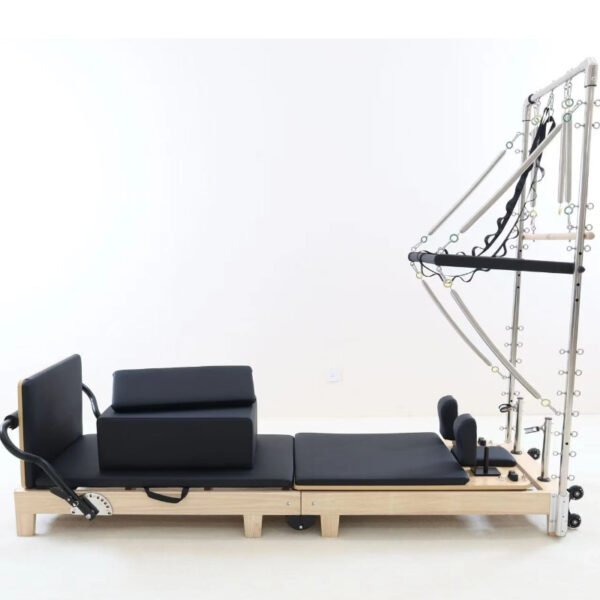
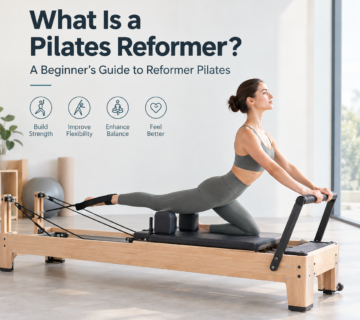
A Pilates Reformer uses a moving carriage, springs, ropes, pulleys, a footbar, and adjustable support to create resistance during controlled movements. Unlike many traditional strength exercises, the user does not necessarily need to support their full body weight throughout the exercise.
For many older adults, this makes Reformer Pilates a practical option that can be adjusted according to fitness level, mobility, and training goals.
However, “senior-friendly” does not mean every Reformer exercise is automatically appropriate for every older adult. Exercise selection, spring resistance, equipment setup, instructor guidance, and individual health conditions all matter.
The CDC recommends that adults aged 65 and older combine aerobic activity, muscle-strengthening activity, and balance exercises as part of their weekly routine. Reformer Pilates can contribute to the strength, mobility, and movement-control portion of that routine, but it does not necessarily replace aerobic or balance-specific exercise.
Is a Pilates Reformer Safe for Seniors?
For many healthy older adults, Reformer Pilates can be a suitable form of low-impact exercise when exercises are appropriately selected and performed with proper instruction.
The main advantage is adjustability. A Reformer allows resistance and exercise difficulty to be changed rather than requiring every participant to perform the same movement at the same intensity.
For example, a 68-year-old who is relatively active may be able to perform a more demanding footwork or standing sequence, while someone of the same age who is new to exercise may start with supported movements and lighter resistance.
Age itself should not be the only factor used to determine whether someone can use a Reformer. Current strength, mobility, balance, previous injuries, medical conditions, and exercise experience are generally more useful considerations.
Why Is Reformer Pilates Considered a Low-Impact Exercise for Older Adults?
Reformer Pilates uses controlled movements and spring resistance rather than repeated jumping or high-impact loading.
The carriage and other components can provide physical support during certain exercises, while spring resistance creates a gradual challenge. This can make the training experience more comfortable for people who prefer to avoid high-impact activities.
That said, low-impact does not mean risk-free. Poor technique, inappropriate resistance, excessive range of motion, or unsuitable exercises can still create problems.
What Should Seniors Consider Before Starting Reformer Pilates?
Older adults who are new to exercise should consider discussing their plans with a healthcare professional, particularly if they have recently had surgery, significant balance problems, cardiovascular concerns, osteoporosis, or another condition that affects movement.
Beginning with a qualified Pilates instructor can also be useful. The instructor can adjust spring resistance, positioning, range of motion, and exercise selection according to the individual’s starting level.
A good first session should feel like an introduction to the equipment rather than a test of how much someone can do.
What Are the Benefits of Pilates Reformer for Seniors?
The potential benefits of Reformer Pilates for older adults are closely related to the basic goals of healthy aging: maintaining strength, mobility, coordination, and the ability to perform everyday activities.
Research and public-health guidance consistently emphasize the importance of physical activity for maintaining function and independence as people age. The CDC notes that regular physical activity can support independent living, bone health, balance, coordination, and overall physical function in adults 65 and older.
Can Reformer Pilates Improve Strength, Balance, and Flexibility?
Reformer exercises can challenge the legs, hips, abdomen, back, shoulders, and arms through controlled resistance.
For example, footwork can involve the lower-body muscles, while straps and pulleys can be used for upper-body and trunk exercises. The resistance can generally be adjusted according to the user’s ability.
The balance benefit is somewhat different. Reformer work can improve body awareness, postural control, and strength, which may support balance. However, older adults should still include dedicated balance exercises in their overall fitness routine because balance training is specifically recommended for this age group.
How Can Reformer Pilates Support Mobility and Daily Movement?
Many older adults are less concerned about athletic performance and more interested in everyday tasks.
Getting up from a chair, walking comfortably, reaching for an object, climbing stairs, or maintaining an upright posture all require a combination of strength, mobility, and coordination.
Reformer Pilates can train controlled movement patterns that complement these daily activities. For example, lower-body strengthening may support standing and walking, while controlled trunk exercises can encourage better postural awareness.
The goal is not simply to become more flexible. It is to maintain useful movement capacity.
Can Seniors Use Reformer Pilates to Improve Posture and Core Stability?
Core control is a central part of many Pilates exercises.
A senior who spends long periods sitting may benefit from exercises that encourage trunk control and better awareness of spinal and pelvic positioning.
However, posture should not be treated as a single “correct” position. A well-designed program should encourage comfortable movement through different positions rather than forcing the body into one rigid posture.
What Are the Best Pilates Reformer Exercises for Seniors?
There is no single list of “best” exercises for every senior. The appropriate exercises depend on the person’s mobility, strength, balance, training experience, and goals.
For beginners, instructors commonly favor controlled exercises where the user can maintain stable positioning and clearly understand the movement.
| Exercise Type | Potential Focus | Beginner Consideration |
| Reformer footwork | Legs, hips, lower-body strength | Start with comfortable resistance and controlled range |
| Seated or supported arm work | Shoulders, arms, posture | Use light resistance and stable positioning |
| Supine leg movements | Hip mobility and leg control | Avoid excessive range of motion |
| Gentle bridging | Glutes, hips, trunk control | Start with a small comfortable range |
| Supported standing work | Functional strength and balance | Use appropriate support and instructor supervision |
Which Beginner Reformer Exercises Are Suitable for Older Adults?
Footwork is often a practical starting point because the user is lying on the carriage and the feet interact with the footbar.
Gentle leg and hip movements can also introduce beginners to spring resistance without requiring complex coordination.
Some seniors may also benefit from supported arm exercises or simple supine movements. Exercises that involve getting on and off the machine repeatedly may require more consideration for people with limited mobility.
The important principle is quality before complexity.
How Can Reformer Exercises Be Modified for Different Fitness Levels?
The same basic exercise can often be modified through spring tension, repetitions, range of motion, body position, or movement speed.
For a beginner, an instructor might reduce resistance and use a smaller range of motion. As strength and confidence improve, resistance or movement complexity can gradually increase.
Someone recovering from an injury may need an entirely different modification.
How Often Should Seniors Use a Pilates Reformer?
There is no universal frequency that works for every senior.
For beginners, one or two supervised sessions per week may provide a practical starting point. Some people may eventually train more frequently, while others may prefer fewer sessions combined with walking, swimming, cycling, or other activities.
The larger goal is to build a sustainable weekly routine rather than maximize Reformer sessions.
The CDC recommends muscle-strengthening activity at least two days per week for adults 65 and older, alongside aerobic and balance activities.
How Do You Choose the Best Pilates Reformer for Seniors?
When selecting a Reformer for an older adult, the most important question is not simply “Which machine is the strongest?”
Instead, consider whether the equipment makes controlled exercise stable, adjustable, comfortable, and accessible.
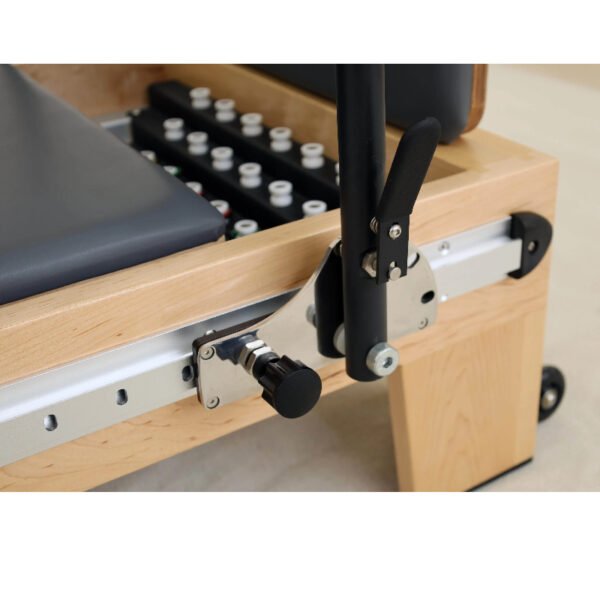
A senior-friendly setup should allow the user to adjust resistance and positioning without unnecessary difficulty.
For home users, equipment dimensions and accessibility are especially important. For studios, durability becomes equally important because the same equipment may be used by people with very different body sizes and fitness levels throughout the day.
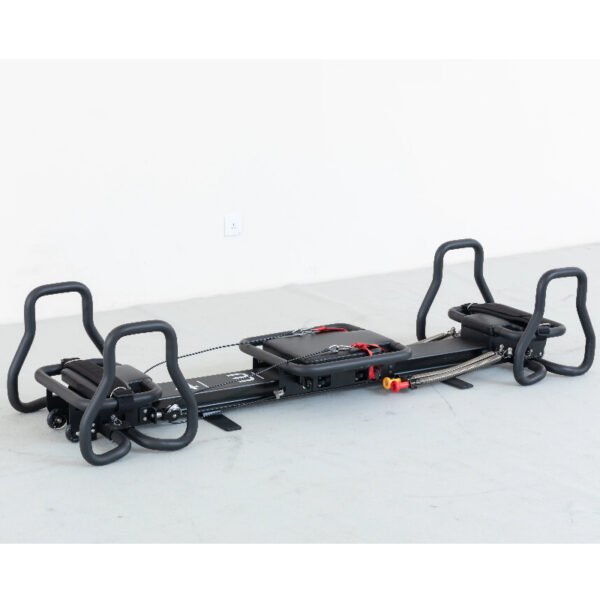
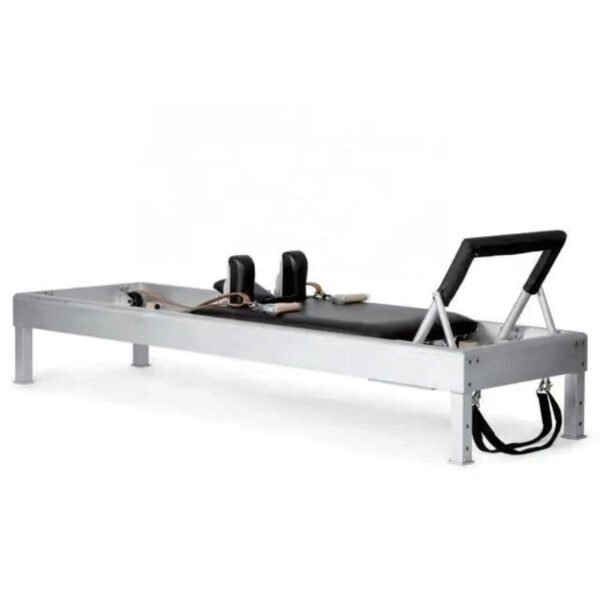
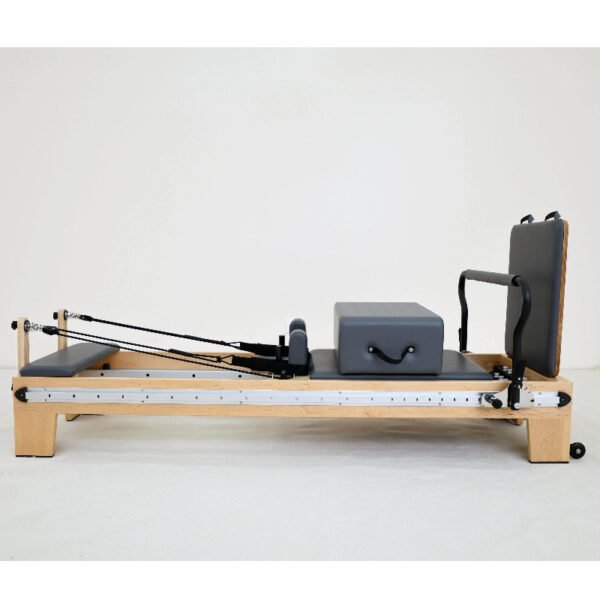
CoreFlow manufactures different Reformer configurations for home and professional applications, including aluminum, wooden, foldable, and tower-equipped models. The company’s product range is designed for different space, training, and commercial requirements.
Why Are Adjustable Springs and Resistance Important for Seniors?
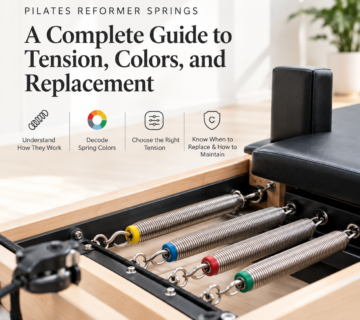
Adjustable resistance allows an instructor or user to modify the training challenge.
This is particularly useful when one Reformer is used by people with different strength levels. A beginner may require lighter resistance, while a stronger user may need more resistance to create an appropriate challenge.
Smooth and predictable resistance can also make it easier for beginners to learn movement control.
Why Do Stability and Frame Construction Matter When Choosing a Reformer?
A stable frame is important because the Reformer itself should not become an unnecessary source of instability.
When the carriage moves, the equipment needs to provide a consistent base for the user.
For studio owners, frame durability also matters because the equipment may be used repeatedly throughout the day.
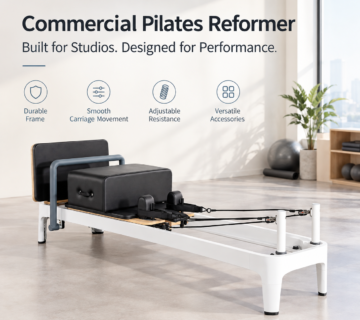
CoreFlow’s commercial Reformers use structural materials such as aluminum alloy and engineered components designed for repeated studio use, with different configurations available for professional environments.
What Reformer Features Can Make Workouts More Comfortable and Accessible?
Several equipment details can influence the experience of older users:
Adjustable headrest for different body positions
Multiple footbar positions for setup flexibility
Stable shoulder rests for supported exercises
Smooth carriage movement for controlled training
Adjustable spring resistance for progressive exercise
Comfortable upholstery for longer sessions
Easy-to-understand spring and rope adjustments
Appropriate equipment height for easier access
Accessibility should be considered from the moment the user approaches the machine. Getting onto and off a Reformer can be just as important as the exercise itself.
Should Seniors Choose a Home Reformer or a Studio-Grade Reformer?
The right choice depends on how and where the equipment will be used.
For a senior who wants occasional home workouts, a compact or foldable Reformer may be more practical, especially when space is limited.
For a Pilates studio serving older adults, a studio-grade Reformer may be preferable because it is designed for repeated use and can provide more configuration options.
CoreFlow offers both home-oriented and commercial Pilates Reformer solutions, allowing buyers to select equipment according to their space and intended use.
If you are comparing different configurations, you can explore CoreFlow’s full range of Pilates reformer equipment to see options for home, studio, and commercial applications.
A Practical Example: What Might a Senior Reformer Session Look Like?
Consider a hypothetical 72-year-old beginner who has been walking regularly but has little experience with resistance training.
Instead of starting with advanced Pilates movements, an instructor might structure the first session around:
Equipment introduction — learning how the carriage, springs, footbar, and straps work.
Gentle warm-up — controlled breathing and simple movement.
Supported footwork — introducing lower-body resistance.
Basic leg movements — working through a comfortable range of motion.
Simple arm exercises — introducing upper-body resistance.
Gentle core work — focusing on control rather than intensity.
Cool-down — comfortable mobility movements
The instructor could then evaluate how the participant responds and modify the next session.
This scenario illustrates an important point: a Pilates Reformer for seniors should be treated as an adjustable training system, not a fixed workout machine.
The machine provides the tools, but the quality of the program depends heavily on exercise selection, instruction, progression, and individual needs.
Conclusion
So, is reformer Pilates good for seniors?
For many older adults, it can be a useful form of low-impact resistance and movement training. The Reformer allows exercises to be modified through spring resistance, body position, range of motion, and exercise selection, making it adaptable to different fitness levels.
Potential benefits include improved muscular strength, mobility, body awareness, posture, and movement control. These qualities can complement the broader physical activity recommendations for adults 65 and older.
However, the best approach is rarely to focus on Reformer Pilates alone. Walking or other aerobic activities, strength training, and balance exercises can all have an important place in a well-rounded routine.
For equipment buyers, the same principle applies: choose a Reformer based on stability, adjustability, accessibility, comfort, construction quality, and intended use, rather than simply choosing the most advanced-looking machine.
As a professional Pilates equipment manufacturer, CoreFlow provides Reformer solutions for studios, gyms, distributors, and home users, with different frame materials, configurations, and customization options.
FAQs
Is Pilates reformer good for seniors?
Yes, Reformer Pilates can be appropriate for many seniors when exercises are matched to their individual abilities. Its adjustable spring resistance and controlled movement make it possible to modify training intensity.
However, it should not automatically be considered suitable for every older adult. Seniors with significant medical conditions, recent surgery, serious balance limitations, or other movement concerns should seek appropriate professional guidance before starting.
What is the best Pilates reformer for seniors?
The best Pilates Reformer for a senior is usually one that provides stable construction, adjustable resistance, comfortable support, smooth carriage movement, and easy equipment adjustment.
For home use, space and accessibility may be particularly important. For studios, durability and versatility are usually higher priorities.
A Reformer with adjustable springs and multiple positioning options can be especially useful because the resistance and setup can be adapted as the user’s ability changes.
Can a 70-year-old or 80-year-old use a Pilates reformer?
Potentially, yes. Being 70 or 80 does not automatically prevent someone from using a Pilates Reformer.
The more important factors are the person’s health, mobility, strength, balance, exercise experience, and specific limitations.
An 80-year-old who is active and mobile may have very different exercise needs from a 70-year-old recovering from surgery. Therefore, Reformer training should be individualized rather than based solely on age.
Is Reformer Pilates better than walking for seniors?
Not necessarily. They serve different purposes.
Walking is an accessible form of aerobic activity, while Reformer Pilates can provide controlled resistance training and movement practice. The CDC recommends that adults 65 and older combine aerobic, muscle-strengthening, and balance activities rather than relying on only one type of exercise.
Can seniors with stiff joints do Reformer Pilates?
Some seniors with joint stiffness may find controlled, low-impact exercise comfortable, and physical activity can be beneficial for people with arthritis. However, the appropriate exercises and range of motion depend on the individual’s condition.
A qualified instructor can modify exercises and resistance to avoid unnecessarily uncomfortable movements.
How should a senior start Reformer Pilates?
A sensible starting point is to learn the equipment from a qualified instructor, begin with basic exercises, use conservative resistance, and gradually increase the challenge as movement quality and confidence improve.
The objective should be consistent, sustainable training rather than doing advanced exercises as quickly as possible.

No comment