






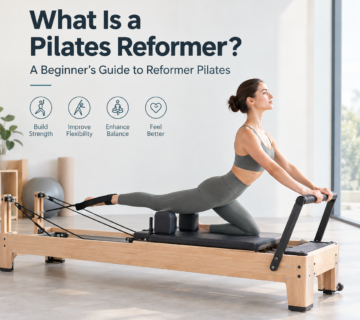
If you are searching for the Pilates Reformer Price, you may have noticed that the numbers vary dramatically. Some machines cost only a few hundred dollars, while professional studio reformers can cost several thousand dollars.
So, how much is a Pilates reformer really? And more importantly, how much should you expect to spend on a machine that matches the way you actually plan to use it?
The answer depends on several factors, including the frame material, resistance system, carriage design, adjustability, accessories, construction quality, and whether the machine is designed for occasional home workouts or continuous studio use.
Current U.S. market examples show this wide range. Entry-level home reformers can be found below $1,000, while established studio-grade machines commonly reach $3,000–$5,000 or more. For example, Merrithew lists its SPX Max Reformer at $3,649, while Forbes Vetted’s 2026 guide identifies the Balanced Body Studio Pilates Reformer as a premium studio-grade option.
This guide explains what you are actually paying for at different price points and how to choose a reformer based on your budget, space, and intended use.
How Much Does a Pilates Reformer Cost in the USA?
So, how much does a Pilates reformer machine cost in the United States?
There is no single standard price, but a practical market range is approximately $500 to $5,000+, with specialized commercial equipment potentially costing more.
The price difference becomes easier to understand when reformers are separated by their intended use.
| Reformer Type | Typical U.S. Price Range | Best For |
| Entry-level home | $500–$1,000 | Beginners and occasional use |
| Mid-range home | $1,000–$2,500 | Regular home practice |
| Premium home / professional | $2,500–$4,000 | Serious home users and instructors |
| Commercial studio | $3,000–$5,000+ | Pilates studios, gyms, and professional use |
These are general market ranges rather than fixed prices, and the actual price can change based on brand, configuration, accessories, shipping, promotions, and customization.
For example, Forbes Vetted’s 2026 testing and research included the AeroPilates Studio 700 as a value-oriented option and the Balanced Body Studio Pilates Reformer as a premium choice. The Balanced Body model uses a maple-based frame, five springs, an adjustable footbar, and an extended carriage.
Merrithew’s SPX Max Reformer provides another useful benchmark: its current listed price is $3,649, positioning it in the professional-grade segment.
For buyers comparing different options, it is therefore more useful to ask “What does this price include?” than simply looking for the cheapest machine.
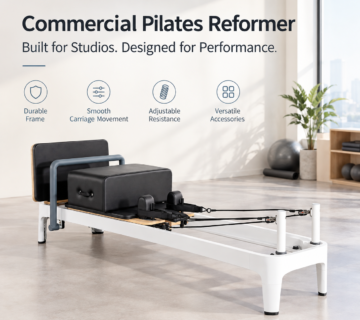
If you are comparing models for home or professional use, you can explore CoreFlow’s range of Pilates reformer machines, including aluminum, wooden, classical, foldable, and studio-oriented configurations.
What Are the Different Pilates Reformer Price Ranges?
Understanding price tiers can make the buying process much easier.
Under $1,000: Entry-Level Home Reformers
At the lower end of the market, reformers are generally designed for beginners and occasional home workouts.
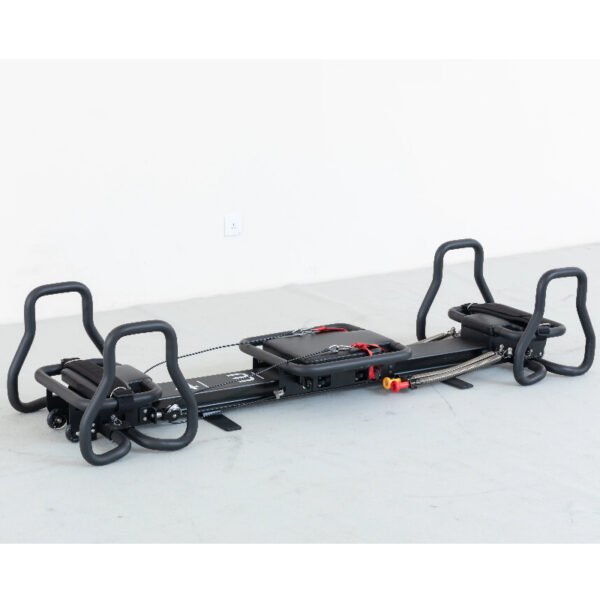
They may use lighter frames, simplified resistance systems, compact designs, or elastic resistance rather than the traditional spring configuration found on many professional machines.
For someone who wants to experiment with Reformer Pilates without making a large initial investment, this category can make sense.
However, lower pricing may involve compromises in areas such as carriage travel, adjustability, stability, weight capacity, or included accessories.
$1,000–$2,500: Mid-Range Home Reformers
This range is often more attractive to people who already know they enjoy Pilates and expect to train consistently.
Machines in this segment may offer:
More substantial frames
Smoother carriage movement
Better upholstery
Adjustable footbars and headrests
Traditional spring resistance
More accessory compatibility
A good example of the value of this segment is the Balanced Body Metro IQ, which has been positioned as a compact home option while retaining features associated with professional Pilates equipment.
$2,500–$4,000: Premium Home and Professional Reformers
Once you move above $2,500, construction quality and professional functionality become increasingly important.
These machines may use hardwood or aluminum frames, more sophisticated carriage systems, higher-quality springs, and more adjustment options.
They can be appropriate for experienced home practitioners, instructors, personal training spaces, and smaller studios.
$4,000+: Commercial and Specialized Equipment
At the higher end, buyers are often paying for durability, customization, accessories, brand support, and equipment designed for frequent professional use.
A studio with several classes every day has very different requirements from someone who practices Pilates twice a week at home.
This is why Pilates Reformer Price should always be evaluated in relation to expected usage rather than treated as a simple “cheap versus expensive” comparison.
Why Do Pilates Reformer Prices Vary So Much?
If two reformers look similar in photographs, why can their prices be thousands of dollars apart?
The answer is usually found in the details.
1. Frame Material
Frame construction has a direct impact on the overall feel and durability of a reformer.
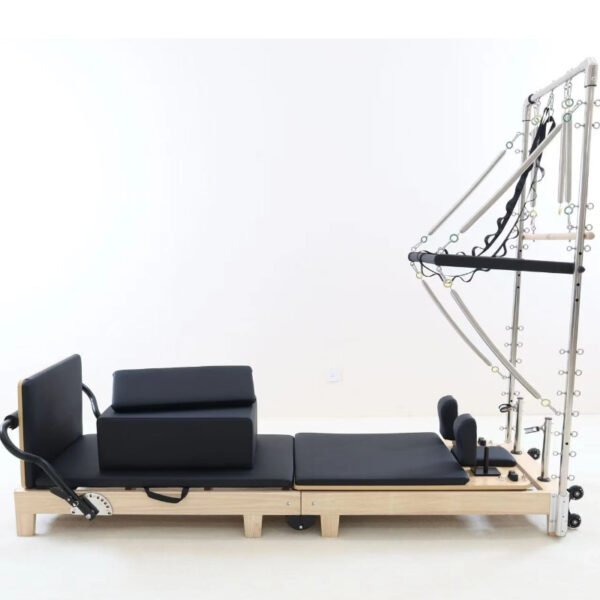
Wooden reformers are popular for their traditional appearance and studio aesthetics. Aluminum models can provide a modern appearance and relatively strong structural performance while also being suitable for commercial environments.
The material itself does not automatically determine whether one reformer is better. Buyers should also consider frame engineering, joints, carriage support, manufacturing precision, and intended usage.
2. Carriage and Wheel System
The carriage is one of the most important components because it directly affects the user’s workout experience.
A well-designed carriage should move smoothly and consistently along the rails. Wheel and bearing quality, rail construction, alignment, and manufacturing tolerances can all influence how the machine feels during exercises.
This is particularly noticeable during controlled movements where inconsistent carriage movement can become distracting.
3. Springs and Resistance
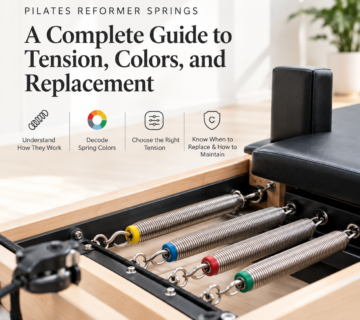
Traditional Pilates reformers use springs to create adjustable resistance.
The number, strength, quality, and configuration of the springs influence how resistance can be adjusted between exercises.
For instructors working with different clients, having multiple resistance options can be particularly useful.
4. Adjustability
Premium reformers commonly provide more adjustment options.
These can include:
Adjustable footbars
Adjustable headrests
Adjustable shoulder rests
Multiple spring settings
Different rope or strap configurations
These features matter because users have different body proportions, flexibility levels, and training experience.
5. Accessories and Expandability
A basic reformer and a reformer with a larger accessory package are not necessarily comparable products.
Depending on the model, accessories can include:
Pilates box
Jumpboard
Platform extender
Additional springs
Tower system
Handles and straps
For example, a reformer with a tower can provide access to a wider range of spring-based exercises, but it will generally cost more than a basic reformer.
What Additional Costs Should You Consider When Buying a Pilates Reformer?
The listed machine price is not always the final amount you will spend.
Before purchasing, consider the total cost of ownership.
Shipping
Large Pilates equipment can be expensive to transport because of its size and weight. For U.S. buyers, shipping costs can vary significantly depending on the delivery location and whether the machine is shipped assembled or packaged for installation.
Accessories
Check whether the accessories you need are included.
A machine that appears cheaper may require additional purchases for a box, jumpboard, tower, or other equipment.
Installation
Some machines arrive mostly assembled, while others require more setup.
If you are purchasing multiple reformers for a studio, installation becomes even more important because you may need to set up an entire room rather than one machine.
Maintenance
Springs, ropes, wheels, upholstery, and other moving components may eventually require inspection or replacement.
For a home user, this may be relatively straightforward. For a busy studio, maintenance planning becomes part of the equipment budget.
Warranty and After-Sales Support
A warranty can also influence the real value of a reformer.
Before buying, check what is covered, how long the coverage lasts, and whether replacement parts are readily available.
How Can You Choose the Right Pilates Reformer for Your Budget?
Instead of starting with a price, start with how you will use the machine.
Scenario 1: Beginner Using a Reformer at Home
If you are new to Reformer Pilates and expect to use the machine occasionally, an entry-level or compact model may be sufficient.
Focus on:
Stability
Basic spring resistance
Comfortable padding
Available space
Ease of storage
You may not need every premium feature immediately.
Scenario 2: Regular Home Practitioner
If you plan to practice three or more times per week, investing in a better-built reformer can make more sense.
At this stage, prioritize smooth carriage movement, spring quality, adjustability, and long-term comfort.
A $1,500–$3,000 budget can provide considerably more choice than the entry-level segment.
Scenario 3: Pilates Instructor or Private Studio
For professional use, the question changes from “How cheap can I buy one?” to “Can this machine handle my workload?”
A commercial reformer should be evaluated for:
Frame durability
Carriage stability
Spring consistency
Weight capacity
Adjustability
Maintenance requirements
Warranty
Replacement parts
If several clients will use the machine every day, a commercial-grade reformer may offer better long-term value than an inexpensive home model.
Scenario 4: Opening or Expanding a Pilates Studio
Studio owners also need to calculate the cost per reformer.
For example, purchasing six machines at $3,000 each means an equipment investment of $18,000 before considering shipping, installation, studio renovation, accessories, and other equipment.
In this situation, buying directly from a manufacturer can sometimes provide more flexibility in pricing, customization, branding, and bulk orders.
CoreFlow, for example, works with studios, distributors, gyms, and fitness businesses and offers both standard reformers and OEM/ODM customization.
The right decision depends on your expected class volume, target clientele, studio positioning, and available capital—not simply the lowest equipment price.
Conclusion
So, how much is a Pilates reformer?
For the U.S. market, a practical starting point is roughly $500 to $5,000+, although specialized and highly customized commercial machines can cost more.
The most important point is that price alone does not tell you whether a reformer is a good investment.
A $700 machine may be perfectly reasonable for someone who wants occasional home workouts. A $3,000–$4,000 commercial reformer may make more sense for an instructor or studio where the equipment is used repeatedly every day.
When comparing Pilates Reformer Price, look beyond the sticker price. Consider frame construction, carriage movement, spring quality, adjustability, accessories, shipping, warranty, maintenance, and the number of people who will use the machine.
Research published in PubMed-indexed journals has also examined Pilates across areas such as physical function, flexibility, strength, balance, and rehabilitation, although the quality and findings of individual studies vary.
Ultimately, the best reformer is usually the one that matches your usage, space, budget, and long-term goals rather than simply the most expensive model available.
FAQs
What is a good price for a Pilates reformer?
For many home users, $1,000–$3,000 provides a useful balance between price, construction, adjustability, and performance. Beginners who only plan to use a reformer occasionally may prefer a lower-cost model, while instructors and studios may need to budget $3,000 or more for professional equipment.
Is an expensive Pilates reformer worth the money?
It can be, depending on how frequently you use it. Premium reformers may offer stronger construction, smoother carriage movement, better adjustability, and more durable components. However, paying more does not automatically make a machine the right choice. A home user who exercises once a week may not benefit from features designed for intensive studio use.
Is it cheaper to buy a Pilates reformer directly from a manufacturer?
It can be, particularly for studios, distributors, and buyers purchasing multiple units. Buying directly from a manufacturer may reduce some intermediary costs and can also provide access to OEM/ODM customization. However, buyers should compare the complete delivered cost, including shipping, accessories, warranty, service, and taxes—not just the factory quotation.
How much does a Pilates reformer machine cost for a home?
A home Pilates reformer can cost anywhere from several hundred dollars to more than $4,000, depending on its construction and features. For someone who practices regularly, a mid-range or premium home reformer may provide a better balance of stability and functionality than a very low-cost model.
How much does a commercial Pilates reformer cost?
Commercial reformers commonly fall around the $3,000–$5,000+ range, although pricing varies by brand, configuration, accessories, and purchasing volume. Studios should also factor shipping, installation, maintenance, and replacement parts into the total equipment budget.
What should I look for when comparing Pilates reformer prices?
Compare the frame, carriage system, springs, adjustability, weight capacity, included accessories, warranty, shipping, and intended usage. Two machines with similar prices may offer very different specifications, so comparing the complete package is more useful than comparing the headline price alone.

No comment