



Pregnancy and childbirth bring significant changes to a woman’s body. From weakened abdominal muscles and pelvic floor changes to lower back discomfort and postural adjustments, recovery after giving birth can take time. For many new mothers, returning to exercise is not simply about getting back into shape. It is about rebuilding strength, improving mobility, and feeling comfortable in their bodies again.
This is where postnatal Pilates can play a valuable role. With its focus on controlled movements, breathing techniques, core stability, and body awareness, Pilates offers a gentle approach to rebuilding strength after pregnancy. It can be adapted to different fitness levels and recovery needs, whether you are a first-time mother or returning to exercise after a second or third pregnancy.
However, postpartum recovery is different for everyone. The right exercises and starting time depend on factors such as delivery method, physical condition, pelvic floor function, and medical history.
In this guide, we will explore what postnatal Pilates involves, its potential benefits, when to start exercising after childbirth, and some practical exercises that can help support your recovery.
What Is Postnatal Pilates and How Does It Work?
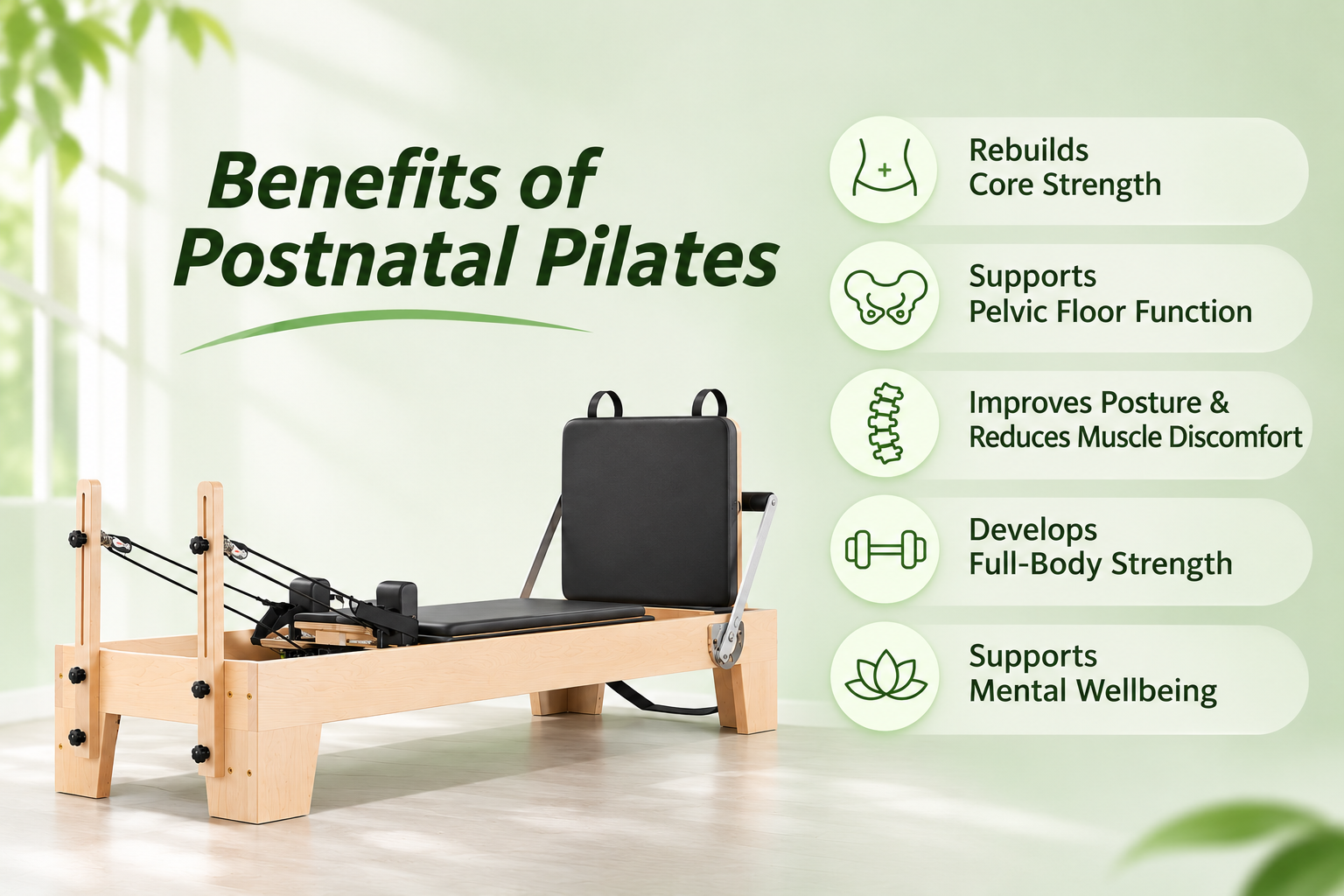
Postnatal Pilates, also known as postpartum Pilates, is a modified Pilates approach designed to support physical recovery after childbirth. Unlike a traditional Pilates workout that may involve challenging abdominal exercises and advanced movements, postnatal sessions place greater emphasis on rebuilding foundational strength and restoring coordination.
The practice typically focuses on four important areas:
Deep core muscles: Exercises target the transverse abdominis, which helps stabilize the trunk and support everyday movements.
Pelvic floor muscles: Controlled contractions and relaxation exercises help improve pelvic floor awareness, coordination, and function.
Posture and alignment: Gentle spinal mobility and upper-body exercises address the postural changes associated with pregnancy, breastfeeding, and carrying a baby.
Breathing and movement control: Coordinating breathing with movement helps manage abdominal pressure and encourages controlled muscle engagement.
Postnatal Pilates can be practiced on a mat or with specialized equipment, depending on the individual’s recovery stage and exercise experience.
For example, a new mother who experiences lower back discomfort when carrying her baby might begin with breathing exercises, pelvic tilts, and gentle glute activation. As her strength and movement control improve, she may gradually progress to more challenging exercises under professional supervision.
The main goal of pilates post natal training is not to rush the body back to its pre-pregnancy condition. Instead, it is to help women develop a stronger and more functional foundation for everyday activities.
What Are the Benefits of Postnatal Pilates?
Postnatal Pilates combines controlled strength training, mobility work, and breathing techniques. When appropriately adapted, it may support several aspects of postpartum recovery.
1. Rebuilds Core Strength
During pregnancy, the abdominal muscles stretch to accommodate the growing baby. After childbirth, some women experience reduced abdominal strength or diastasis recti, a separation of the rectus abdominis muscles.
Postnatal Pilates emphasizes the deeper abdominal muscles rather than immediately introducing demanding abdominal exercises. Gentle core activation and controlled movements can help improve trunk stability and support daily activities such as lifting, bending, and carrying a baby.
2. Supports Pelvic Floor Function
The pelvic floor supports the bladder, bowel, and reproductive organs. Pregnancy and childbirth place considerable demands on these muscles, sometimes contributing to urinary leakage, pelvic heaviness, or reduced muscle coordination.
Postnatal Pilates may incorporate pelvic floor awareness, gentle contractions, and relaxation techniques. Learning to coordinate these muscles with breathing and movement can be useful during recovery.
However, not every pelvic floor problem is caused by weakness. Some women experience excessive muscle tension, making relaxation just as important as strengthening.
3. Improves Posture and Reduces Muscle Discomfort
New mothers often spend considerable time feeding, holding, and carrying their babies. These repetitive activities can contribute to rounded shoulders, tight chest muscles, and lower back discomfort.
Pilates exercises that encourage spinal mobility, upper-back strength, and shoulder stability may help improve movement patterns and postural awareness.
4. Develops Full-Body Strength
Postpartum recovery involves more than the abdominal muscles. The hips, glutes, legs, back, and shoulders also play important roles in everyday movement.
Exercises such as supported squats, glute bridges, and modified bird dogs help develop functional strength that can make daily activities more manageable.
5. Supports Mental Wellbeing
The postpartum period can bring sleep disruption, physical fatigue, and emotional changes. Gentle physical activity may help reduce stress, improve mood, and provide an opportunity to focus on personal wellbeing.
According to the American College of Obstetricians and Gynecologists (ACOG), postpartum physical activity can help improve energy, promote better sleep, relieve stress, and may help prevent postpartum depression.
The key is to approach exercise as part of a broader recovery routine rather than another source of pressure.
When Can You Start Postnatal Pilates After Giving Birth?
There is no single starting date that works for every new mother. The appropriate time depends on the type of delivery, healing progress, medical complications, and previous exercise experience.
It is important to distinguish between gentle postpartum movement and a structured Pilates workout. Some basic activities may be appropriate relatively soon after birth, while more demanding core exercises and equipment-based sessions require additional recovery and assessment.
After Vaginal Delivery
Following an uncomplicated vaginal delivery, gentle activities such as short walks, comfortable breathing exercises, and appropriate pelvic floor movements may be possible within the first few days, depending on how you feel.
More structured postnatal Pilates can be introduced gradually once your healthcare provider confirms that your recovery is progressing appropriately.
If you experienced significant perineal tearing, stitches, excessive bleeding, or other complications, your exercise plan may need additional modifications.
After a C-Section
A cesarean section is major abdominal surgery. The abdominal wall and surrounding tissues need time to heal before you return to exercises that place significant demands on your core.
During the initial recovery period, gentle walking and movements recommended by your medical team may be appropriate. However, exercises involving abdominal loading, twisting, planks, or strong resistance should not be introduced without appropriate medical guidance.
Before returning to a Pilates class, make sure your incision is healing properly and that your healthcare provider has assessed your recovery.
A General Postpartum Exercise Timeline
The following table provides a general overview, not a fixed rehabilitation schedule.
| Recovery stage | Possible activities | Main focus |
| First few days to 2 weeks | Comfortable walking, breathing awareness, gentle mobility if appropriate | Rest, circulation, and early recovery |
| 2–6 weeks | Gradually increased walking and suitable pelvic floor exercises | Rebuilding basic movement confidence |
| Around 6–12 weeks | Individualized postnatal Pilates, gentle core activation, supported strength exercises | Core coordination and functional strength |
| 3–6 months and beyond | Gradually progressed Pilates and more challenging movements when appropriate | Full-body strength, balance, and endurance |
These timeframes are not medical clearance milestones. Some women may progress sooner, while others need considerably longer.
According to ACOG, women with an uncomplicated pregnancy and vaginal delivery may be able to resume some exercise within days of childbirth. Women who have had a cesarean birth or experienced complications should consult their obstetrician about when it is appropriate to restart.
What Are the Best Postnatal Pilates Exercises for New Mothers?
The best postnatal Pilates exercises are those that match your current recovery stage and can be performed without pain, excessive abdominal pressure, or pelvic floor symptoms.
The following movements are examples of foundational exercises that may be incorporated into an appropriately supervised postpartum program. They are not a universal routine, and some may need to be delayed or modified depending on your condition.
1. Diaphragmatic Breathing
Breathing exercises provide a gentle starting point for reconnecting with the abdominal and pelvic floor muscles.
How to perform:
Lie comfortably on your back with your knees bent, or sit in a supported position.
Place your hands around your lower ribs.
Inhale gently and allow your ribs and abdomen to expand naturally.
Exhale slowly without forcing your stomach inward.
Notice how your pelvic floor responds and allow it to relax.
Practice for approximately 5–8 comfortable breaths.
2. Pelvic Floor Awareness
Pelvic floor exercises can help improve muscle awareness and coordination after pregnancy.
How to perform:
Find a comfortable lying or seated position.
Breathe in and allow your pelvic floor to relax.
As you exhale, gently contract the muscles around the vaginal and anal openings, as if preventing the release of gas.
Hold briefly without tightening your buttocks or holding your breath.
Fully release the contraction before repeating.
Start with a few controlled repetitions if appropriate. If you experience pelvic pain, heaviness, or difficulty relaxing these muscles, consult a pelvic health physical therapist before continuing.
3. Pelvic Tilts
Pelvic tilts encourage gentle movement through the lower back and pelvis while introducing basic abdominal control.
How to perform:
Lie on your back with your knees bent and feet resting on the floor.
Inhale and allow your lower back to remain in a comfortable neutral position.
Exhale and gently tilt your pelvis so your lower back moves closer to the floor.
Avoid pushing forcefully or holding your breath.
Return slowly to the starting position.
Perform a few repetitions while maintaining comfortable breathing.
4. Glute Bridges
Glute bridges strengthen the gluteal muscles and introduce controlled hip extension. They may also help develop strength for walking, standing, and lifting.
How to perform:
Lie on your back with your knees bent and feet hip-width apart.
Keep your arms relaxed beside your body.
Exhale and gently engage your abdominal and gluteal muscles.
Slowly lift your hips while maintaining a comfortable spinal position.
Pause briefly, then lower your hips with control.
Begin with a small range of motion. If the movement causes abdominal bulging, pelvic pressure, or discomfort, stop and seek professional guidance.
5. Modified Bird Dog
This exercise helps develop coordination and stability across the core, back, and hips.
How to perform:
Start on your hands and knees, with your hands below your shoulders and knees below your hips.
Keep your spine in a comfortable neutral position.
Gently extend one leg backward while maintaining balance.
Return to the starting position.
Repeat on the opposite side.
Once you can maintain good control, a qualified instructor may introduce the opposite-arm-and-leg variation.
These movements can form part of a gradual recovery program, but progression should be based on how your body responds rather than the number of weeks since delivery.
How Can You Practice Postnatal Pilates Safely and Effectively?
Choosing appropriate exercises is only one part of postpartum recovery. How you perform them, how quickly you progress, and whether you receive professional guidance are equally important.
1. Get Medical Clearance Before Structured Exercise
Before joining a Pilates class or beginning a new workout program, discuss your recovery with your obstetrician or healthcare provider.
This is particularly important after a C-section, complicated delivery, significant perineal injury, or pregnancy-related medical complications.
2. Consider a Pelvic Health Physical Therapist
A pelvic health physical therapist can assess abdominal separation, pelvic floor strength and relaxation, breathing coordination, and movement patterns.
This is especially helpful if you experience urinary leakage, pelvic heaviness, abdominal doming, persistent back pain, or discomfort during exercise.
3. Avoid Exercises That Cause Excessive Abdominal Pressure
Traditional Pilates movements such as full roll-ups, double-leg lifts, and advanced planks may be too demanding during early recovery, particularly for women with diastasis recti or poor abdominal control.
Watch for signs such as:
A visible ridge or dome appearing along the middle of your abdomen.
Pelvic heaviness or pressure
Urinary leakage during exercise.
Pain around your abdomen, pelvis, or incision
If these symptoms occur, stop the movement and ask a qualified professional to assess your technique and exercise selection.
4. Choose a Qualified Postnatal Pilates Instructor
Not every Pilates instructor has specialized training in postpartum recovery. When looking for post natal pilates classes, consider instructors with additional education in pregnancy and postpartum exercise, pelvic floor function, and diastasis recti modifications.
A suitable class should offer:
Individual exercise modifications.
A gradual progression from basic to more advanced movements.
Attention to breathing and pelvic floor coordination.
Options for mat-based and equipment-based exercises.
A supportive environment without pressure to keep up with other participants.
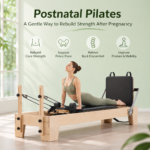
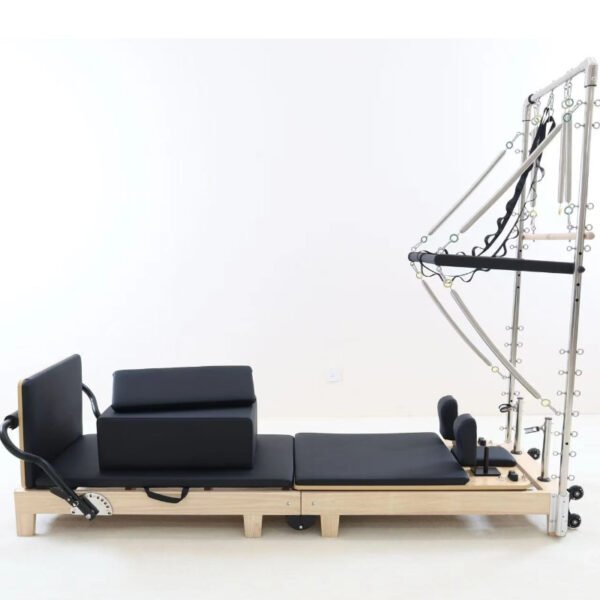
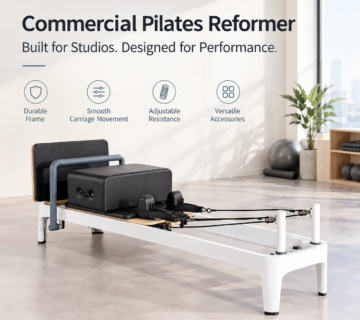
For women who prefer equipment-based training, a properly adjusted professional pilates reformer can provide adjustable spring resistance and support for controlled movement. However, equipment does not automatically make an exercise safer. Spring settings, exercise selection, and movement intensity should be adapted by an instructor who understands postpartum recovery.
5. Listen to Your Body and Progress Gradually
Postpartum recovery is rarely a straight line. Some days you may feel stronger, while other days fatigue, sleep disruption, or physical discomfort may affect your ability to exercise.
Start with manageable sessions and prioritize good movement quality over intensity. Stop exercising and seek medical advice if you experience significant pain, increased vaginal bleeding, wound problems, dizziness, chest pain, shortness of breath, or other concerning symptoms.
If you are breastfeeding, consider feeding your baby or expressing milk before exercise if breast fullness causes discomfort. Drink enough water and wear a supportive bra.
The NHS also recommends gradually returning to activity after childbirth and seeking professional advice before strenuous exercise, particularly following a complicated delivery or cesarean section.
Conclusion
Postnatal Pilates can be a useful part of postpartum recovery when exercises are selected according to an individual’s physical condition and healing progress. By combining breathing techniques, deep core activation, pelvic floor coordination, and gradual full-body strengthening, it can help new mothers rebuild strength and improve confidence in everyday movement.
Whether you choose mat Pilates, private sessions, or post natal pilates classes, the most important factors are appropriate instruction, individualized modifications, and a gradual return to exercise.
Remember that postpartum recovery is not a race. Give your body time to heal, seek professional guidance when needed, and focus on building a strong foundation for long-term health and wellbeing.
FAQs
Is postnatal Pilates suitable for beginners?
Yes. Postnatal Pilates can be adapted for beginners, including women who have never practiced Pilates before pregnancy. A suitable program starts with basic breathing, gentle core activation, mobility, and pelvic floor awareness before progressing to more challenging movements. Beginners should choose an instructor with postpartum training and obtain appropriate medical guidance before starting.
Can postnatal Pilates help with diastasis recti?
Postnatal Pilates may help women with diastasis recti by improving deep abdominal muscle activation, trunk stability, and movement coordination. However, it does not guarantee that the abdominal separation will close completely. The appropriate exercises depend on the severity of the separation and the individual’s symptoms. A pelvic health physical therapist can help assess the condition and develop a suitable exercise plan.
Is postnatal Pilates safe after a C-section?
Postnatal Pilates may be appropriate after a C-section, but the timing and exercise selection require additional care because cesarean delivery involves abdominal surgery. Gentle walking and medically recommended early movements may be introduced during recovery, while more demanding core exercises should wait until the incision has healed sufficiently and your healthcare provider has approved progression. Working with a qualified postpartum Pilates instructor or pelvic health physical therapist can help you return to exercise more gradually.


No comment