
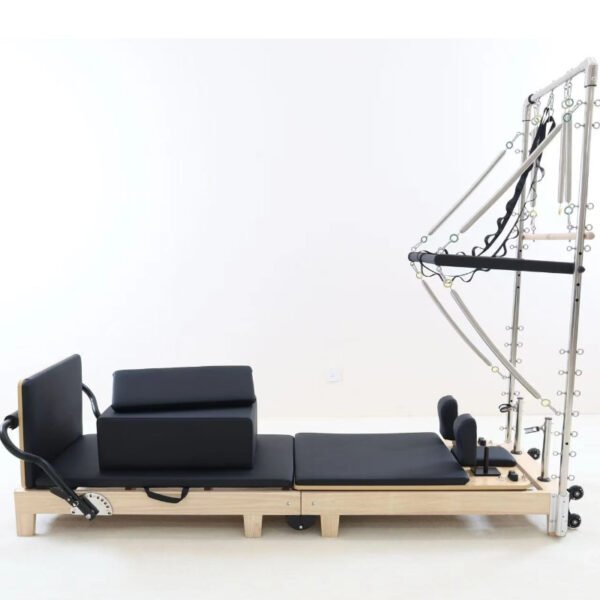
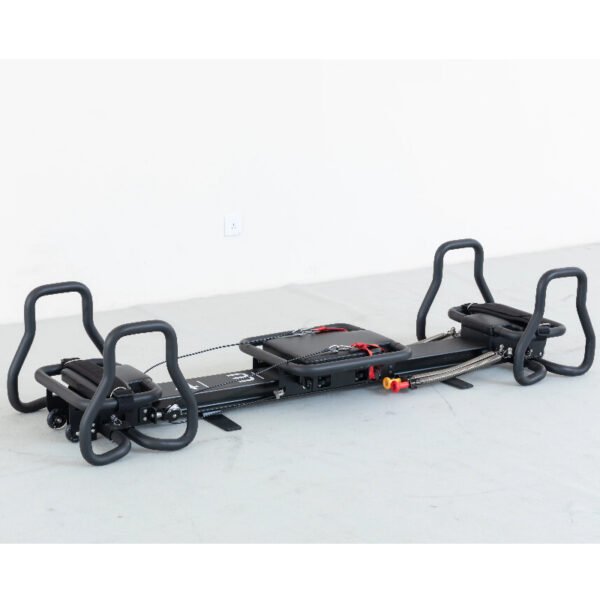


When investing in a commercial Pilates reformer, appearance and price are only part of the equation. For Pilates studio owners, fitness facility operators, and equipment distributors, the real value of a reformer lies in its construction quality, movement performance, durability, and ability to withstand repeated professional use.
Two reformers may look almost identical but perform very differently over time. Differences in frame materials, rail alignment, spring manufacturing, carriage bearings, and adjustment mechanisms can influence everything from workout consistency to maintenance costs.
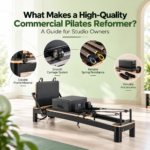
A high-quality professional Pilates reformer should deliver smooth movement, reliable resistance, structural stability, and practical versatility while remaining easy to maintain.
So, what actually separates a well-engineered commercial reformer from an ordinary exercise machine?
This guide examines the essential materials, mechanical systems, accessories, and manufacturing considerations that studio owners should evaluate before making a purchase.
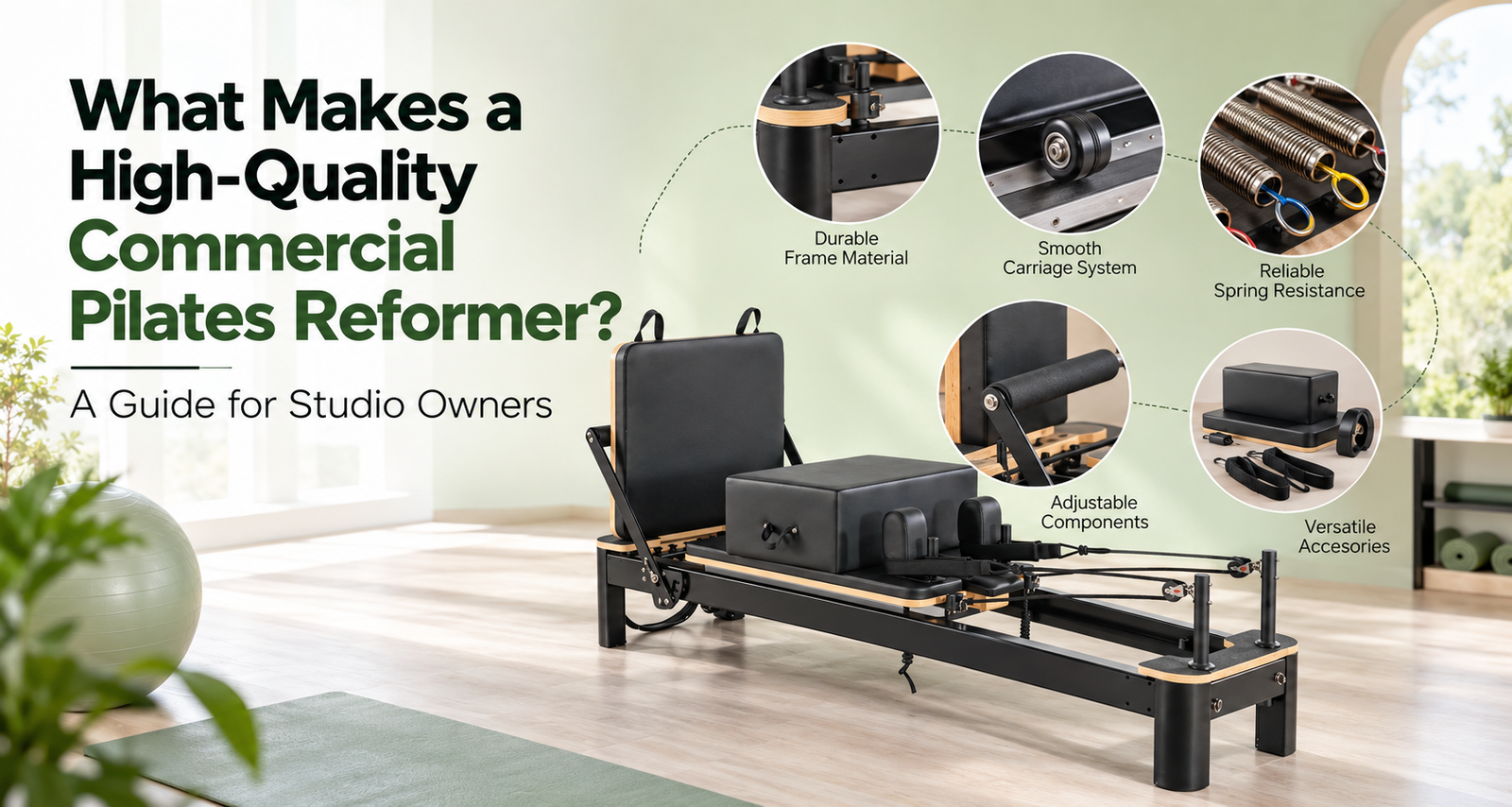
1. Frame Construction: The Foundation of a High-Quality Reformer
The frame is the structural foundation of every Pilates reformer. It supports the carriage, resistance system, footbar, and user throughout a wide range of exercises.
In a commercial studio, equipment may be used repeatedly throughout the day by people of different heights, weights, and experience levels. Frame stability and manufacturing precision are therefore essential.
Aluminum Alloy Frames: Lightweight Strength and Modern Design
Aluminum alloy is a popular material for modern commercial reformers because it combines structural efficiency, corrosion resistance, and a contemporary appearance.
Advantages include:
- High strength-to-weight ratio: A properly engineered aluminum frame can provide reliable support without excessive weight.
- Corrosion resistance: Aluminum is suitable for many indoor fitness environments.
- Precision manufacturing: Extruded aluminum profiles can support consistent dimensions and accurate assembly.
- Modern aesthetics: Clean, streamlined designs complement contemporary Pilates studios.
- Practical handling: Lower equipment weight can simplify positioning and installation.
However, not all aluminum reformers offer the same structural quality.
The alloy composition, profile thickness, internal reinforcement, and connection design all affect performance.
When comparing aluminum reformers, studio owners should request detailed frame specifications rather than relying solely on descriptions such as “heavy-duty” or “premium aluminum.”
Steel Frames: Rigidity and Structural Strength
Steel is commonly selected for equipment requiring robust structural support.
Properly engineered steel frames can provide excellent rigidity and durability, particularly in demanding commercial environments.
Important considerations include the quality of welded or mechanically fastened connections, surface finishing, corrosion protection, and overall structural design.
Powder-coated steel frames are often used to combine durability with an attractive appearance.
Wooden Frames: Traditional Aesthetics and Solid Construction
Wooden reformers remain popular among classical Pilates studios and premium wellness facilities.
Hardwoods such as maple and oak can provide substantial structural support while creating a warm, natural appearance.
However, wood quality, joint construction, surface treatment, and humidity management are important considerations.
Commercial Reformer Frame Material Comparison
| Материал рамы | Main Strengths | Key Considerations | Typical Studio Preference |
|---|---|---|---|
| Aluminum Alloy | Lightweight, corrosion-resistant, modern appearance | Profile design, joints, and alloy quality | Contemporary and multi-purpose studios |
| Steel | Strong, rigid, robust construction | Weight, coating, and corrosion protection | High-use fitness environments |
| Solid Wood | Traditional appearance, premium aesthetic | Moisture sensitivity and joinery quality | Classical and boutique Pilates studios |
Professional Insight: Frame material alone does not determine quality. A well-engineered aluminum reformer may perform better than a poorly constructed steel model, and vice versa. Structural design, component alignment, and manufacturing consistency matter just as much.
2. Carriage and Rail Systems: The Key to Smooth, Controlled Movement
One of the most noticeable differences between reformers is how smoothly the carriage moves.
The carriage is the sliding platform that supports the user during exercises. Its movement depends on the interaction between the rails, wheels, bearings, and frame.
For a commercial Pilates reformer, consistent carriage travel is essential for a controlled training experience.
Precision Rail Alignment
A high-quality rail system should guide the carriage smoothly along the reformer’s length.
Proper alignment helps minimize:
- Unnecessary friction
- Side-to-side carriage movement
- Uneven rolling resistance
- Excessive operating noise
- Premature wear of moving components
Precision during manufacturing and assembly is important because even small alignment issues can affect the carriage’s performance.
Carriage Wheels and Bearings
Wheels and bearings determine how the carriage interacts with the rail system.
Professional equipment may use precision bearings and durable wheel materials selected for the machine’s operating loads.
When evaluating the carriage system, consider:
- Bearing quality and sealing
- Wheel material and wear resistance
- Smoothness throughout the travel range
- Noise during movement
- Ease of component replacement
Sealed bearings can help protect internal components from dust and contamination, although maintenance requirements depend on the specific design.
Carriage Padding and Upholstery
The carriage should provide a comfortable, supportive surface without compromising stability.
For commercial studios, upholstery should be:
- Resistant to repeated use
- Easy to clean with approved products
- Firm enough to support controlled movement
- Securely attached to the carriage
- Replaceable when worn
High-density foam and durable upholstery materials are commonly used in professional equipment.
Studio Evaluation Tip: Before purchasing multiple reformers, test the carriage at different speeds and resistance levels. Listen for unusual sounds and check whether movement remains smooth across the full travel range.
3. Spring Resistance: Why Material Quality and Consistency Matter
The spring resistance system is one of the defining features of a Pilates reformer.
Springs create resistance as the carriage moves, allowing instructors to adjust exercise difficulty and accommodate different training objectives.
Because commercial reformers experience repeated loading and unloading, spring quality directly affects long-term equipment performance.
High-Quality Spring Materials
Professional reformer springs are commonly manufactured from specially selected spring steel wire.
Depending on the manufacturer and design, spring systems may use materials such as high-carbon steel or piano wire.
Important factors include:
- Wire diameter and material quality
- Spring geometry and manufacturing accuracy
- Heat treatment
- Resistance consistency
- Fatigue performance
- Corrosion protection
A spring’s quality should be evaluated through its specifications and testing rather than material names alone.
Resistance Levels and Training Versatility
Most professional Pilates reformers provide multiple spring resistance options.
These allow instructors to modify exercises for beginners, experienced practitioners, and different training goals.
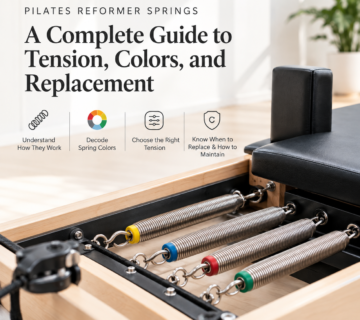
Some systems use color-coded springs to simplify resistance selection.
However, spring colors and resistance values are not universal across manufacturers.
For studios purchasing several reformers, standardized spring configurations can help create a consistent training experience.
Spring Durability and Maintenance
Springs are consumable mechanical components that require regular inspection.
Signs that a spring may need replacement include:
- Visible deformation
- Corrosion
- Damaged attachment hooks
- Changes in resistance behavior
- Unusual sounds or irregular movement
Replacement intervals should follow the manufacturer’s recommendations and reflect actual equipment use.
What Studio Owners Should Ask: Does the manufacturer provide documented spring specifications, maintenance guidance, and compatible replacement springs?
4. Adjustability and Ergonomic Design: Supporting Different Users
A professional Pilates reformer must accommodate users with different body proportions, mobility levels, and training experience.
This makes adjustability an important factor in equipment selection.
Adjustable Footbar
The footbar is used in many reformer exercises, including footwork and selected standing or supported movements.
A well-designed footbar should provide multiple secure positions while remaining convenient for instructors to adjust.
Look for:
- Stable locking mechanisms
- Appropriate height and position options
- Non-slip contact surfaces
- Durable construction
- Easy adjustment between exercises
Headrest and Shoulder Rests
Headrests and shoulder rests help support body positioning during selected exercises.
Comfortable padding, secure attachment, and appropriate dimensions contribute to the overall training experience.
Adjustable components can also help accommodate different exercise requirements.
Rope and Pulley System
The rope and pulley system supports numerous upper-body and lower-body movements.
A professional system should feature durable ropes, smoothly operating pulleys, secure attachment points, and practical length-adjustment mechanisms.
For group studios, convenient rope adjustment can help instructors manage transitions between exercises efficiently.
5. Accessories: Expanding the Functionality of Commercial Pilates Equipment
The versatility of a reformer depends not only on the machine itself but also on the accessories it supports.
For studio owners, compatible accessories can expand exercise programming without necessarily requiring additional large equipment.
Essential Accessories and Their Functions
| Accessory | Main Purpose | Применение в студии |
|---|---|---|
| Sitting Box | Provides an elevated support surface | Seated, prone, and other exercise variations |
| Jump Board | Creates a larger foot-contact platform | Dynamic conditioning exercises |
| Foot Straps and Loops | Connect users to resistance ropes | Upper-body and lower-body exercises |
| Platform Extender | Expands selected support surfaces | Additional exercise positions |
| Reformer Tower | Adds vertical spring resistance options | Expanded strength and mobility programming |
| Mat Conversion | Creates an additional exercise surface | Mat-based and combined training formats |
Sitting Box
A sitting box is a practical accessory for studios offering varied reformer classes.
It supports exercises involving spinal mobility, balance, and controlled strengthening.
Durable padding and convenient handling are important in busy commercial environments.
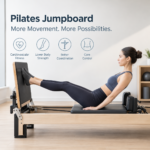
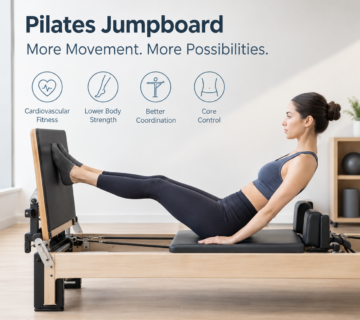
Jump Board
A jump board allows compatible reformers to support selected dynamic movements.
It is particularly useful for studios incorporating conditioning exercises into their Pilates programs.
The board must be compatible with the reformer’s attachment system and intended exercise loads.
Tower Attachments
A tower system introduces additional spring attachment points, expanding the range of available exercises.
For studios seeking more versatile equipment, a compatible reformer tower can provide additional training possibilities.
However, tower compatibility should always be confirmed with the manufacturer.
Purchasing Tip: When requesting a quotation, ask which accessories are included in the standard configuration and which are optional. This makes comparisons between suppliers more accurate.
6. Structural Stability, Safety, and Load Testing
A commercial grade Pilates reformer should be designed to provide reliable structural support throughout its intended operating range.
Safety depends on the combined performance of the frame, carriage, resistance system, adjustment mechanisms, and attachment hardware.
Weight Capacity and Load Distribution
Maximum user weight is an important specification, but it should not be the only factor considered.
During Pilates exercises, forces can vary according to movement type, body position, and resistance configuration.
Manufacturers should clearly identify rated capacities and any relevant usage restrictions.
Frame and Component Inspection
Before purchasing, examine:
- Frame stability and connection points
- Carriage end stops
- Footbar locking mechanisms
- Spring attachment hardware
- Rope and pulley connections
- Stability during permitted standing exercises
- Floor contact and leveling features
Manufacturing Quality Control
Quality control is particularly important for commercial Pilates equipment.
Buyers should ask whether the manufacturer conducts relevant inspections during production and before shipment.
Depending on the product, these may include dimensional inspections, functional movement checks, load testing, and component verification.
For bulk orders, consistent quality control helps reduce variation between individual machines.
7. Long-Term Durability: What Determines a Reformer’s Service Life?
For a commercial studio, equipment durability is a business consideration as well as a technical one.
A reformer that requires frequent repairs can interrupt classes, increase maintenance expenses, and affect the customer experience.
The most important factors influencing service life include construction quality, usage frequency, maintenance, environmental conditions, and replacement-part availability.
Components That Require Regular Attention
| Component | Potential Wear Issue | Recommended Approach |
|---|---|---|
| Resistance Springs | Fatigue, corrosion, deformation | Inspect regularly and replace according to manufacturer guidance |
| Carriage Wheels | Surface wear, uneven rolling | Check movement and replace worn components |
| Bearings | Noise, play, increased friction | Inspect and service or replace as specified |
| Ropes and Straps | Fraying, abrasion, stretching | Inspect and replace damaged parts |
| Upholstery | Compression, cracking, surface damage | Clean properly and replace when necessary |
| Footbar Mechanism | Loose or worn adjustment hardware | Verify secure locking and proper function |
| Frame Connections | Loose fasteners or structural movement | Inspect according to the maintenance schedule |
Maintenance-Friendly Design
A well-designed reformer should allow technicians or trained operators to access commonly serviced components without unnecessary difficulty.
For commercial buyers, replaceable springs, wheels, ropes, straps, and upholstery can help reduce long-term ownership costs.
The availability of replacement parts is often just as important as the original equipment’s durability.
8. How to Evaluate the Best Pilates Reformer for Studio Use
Finding the best Pilates reformer for studio use requires matching equipment specifications to the studio’s operating needs.
A boutique Pilates studio may prioritize appearance and versatility, while a high-traffic group training facility may place greater emphasis on adjustment speed and maintenance efficiency.
Match Equipment to Your Studio Type
| Studio Environment | Important Equipment Priorities |
|---|---|
| Boutique Pilates Studio | Premium appearance, smooth carriage, comfortable upholstery |
| Group Reformer Studio | Consistent resistance, quick adjustments, durability |
| Private Training Studio | Versatility, accessory compatibility, ergonomic design |
| Fitness Center | Robust construction, stability, easy maintenance |
| Multi-Location Studio Chain | Standardized specifications, spare parts, consistent supply |
| Wellness Facility | Comfort, adjustability, suitability for intended programs |
Consider Studio Layout and Equipment Dimensions
Equipment dimensions affect how many reformers can be installed and how comfortably instructors can move between them.
Before ordering, evaluate:
- Available floor area
- Equipment length and width
- Space between machines
- Instructor access
- Exercise movement clearance
- Accessory storage
- Delivery and installation requirements
Evaluate Total Cost, Not Just Purchase Price
A low purchase price does not necessarily mean lower long-term costs.
Consider equipment durability, maintenance frequency, spare parts, warranty coverage, shipping, and potential downtime.
For commercial buyers, the best investment is often the machine that balances purchase cost with reliable long-term performance.
9. Questions to Ask Before Purchasing Commercial Pilates Equipment
Before selecting a supplier, request clear answers to the following questions.
| Evaluation Category | Questions for the Supplier |
|---|---|
| Frame Construction | What materials, profiles, and connection methods are used? |
| Carriage System | What wheel and bearing systems are installed? |
| Spring Resistance | What spring materials and resistance configurations are available? |
| Load Rating | Is the maximum user weight documented? |
| Accessories | Which accessories are standard or optional? |
| Customization | Can colors, materials, logos, and configurations be customized? |
| Quality Control | What inspection procedures are performed? |
| Spare Parts | Are replacement components available? |
| Warranty | What is covered, and what conditions apply? |
| Bulk Orders | What are the production capacity and lead time? |
| Logistics | How is the equipment packaged and shipped? |
A professional manufacturer should be able to discuss these technical and commercial details before an order is placed.
10. Why Buying Directly From a Pilates Equipment Manufacturer Makes Sense
Once equipment specifications have been evaluated, the next decision is where to purchase.
For Pilates studio owners, distributors, and fitness businesses, buying directly from a manufacturer can offer several advantages.
Factory-Direct Pricing
Purchasing directly from a manufacturer may eliminate certain intermediary markups.
This can be especially beneficial for studios ordering multiple reformers or distributors purchasing equipment in larger quantities.
However, buyers should compare total landed costs, including transportation, import duties, taxes, and after-sales support.
OEM and ODM Customization
Working with a manufacturer may provide greater flexibility in product customization.
Depending on manufacturing capabilities, options can include:
- Frame colors and surface finishes
- Upholstery colors and materials
- Brand logos and private labeling
- Selected spring configurations
- Accessory combinations
- Packaging customization
- Engineering modifications, subject to feasibility
Customization is particularly valuable for studio chains and equipment brands seeking a consistent identity.
Direct Communication With the Production Team
Factory-direct purchasing can make it easier to discuss technical specifications, manufacturing requirements, and component compatibility.
For specialized orders, direct communication may also help clarify design changes and production expectations.
Consistent Supply for Business Expansion
Studio chains and equipment distributors often require consistent product specifications across multiple orders.
An established manufacturing partner can help support repeat purchasing, product standardization, and future expansion planning.
Replacement Parts and Technical Support
A manufacturer familiar with its own product construction may be well positioned to provide compatible replacement components and technical guidance.
Before ordering, confirm the supplier’s actual spare-part availability, warranty process, and support arrangements.
11. CoreFlow: A Professional Pilates Equipment Manufacturer for Studios and Distributors
At CoreFlow, we manufacture Pilates equipment for professional studios, fitness facilities, distributors, and international equipment brands.
Founded in 2018, CoreFlow focuses on combining practical equipment design with durable materials and manufacturing expertise.
Our product range includes Pilates reformers, tower reformers, Cadillac reformers, foldable reformers, and other Pilates training equipment.
We understand that commercial buyers need more than an attractive machine. They need equipment that supports consistent training experiences, practical maintenance, and long-term business development.
Quality-Focused Equipment Manufacturing
CoreFlow emphasizes material selection, structural design, and manufacturing consistency.
Our Pilates reformer product range includes models with aluminum alloy frame construction, spring resistance systems, and professional training configurations.
Specific materials, dimensions, accessories, and technical features vary by model.
OEM and ODM Manufacturing Services
CoreFlow offers OEM and ODM solutions for buyers seeking customized Pilates equipment.
Depending on the model and project requirements, available options may include frame finishes, upholstery colors, branding, selected components, and packaging.
These services are particularly useful for distributors, Pilates equipment brands, and studio chains.
Factory-Direct Supply
As a Pilates equipment manufacturer, CoreFlow provides factory-direct sourcing opportunities for professional buyers.
We work with customers to discuss equipment specifications, order quantities, customization requirements, and shipping arrangements.
Equipment Solutions for Different Business Needs
Whether you are opening a boutique Pilates studio, upgrading existing equipment, or developing a private-label product line, selecting the right equipment begins with understanding your specific requirements.
Explore our Pilates reformers for professional studios to discover available equipment options.
FAQS
What is the most important feature of a commercial Pilates reformer?
There is no single feature that determines overall quality. Frame stability, carriage performance, spring consistency, adjustment mechanisms, and serviceability all contribute to the equipment’s suitability for professional use.
Is an aluminum Pilates reformer suitable for commercial studios?
Yes. A properly engineered aluminum reformer can provide excellent structural performance for commercial use. Buyers should evaluate frame construction, load ratings, joint design, and overall manufacturing quality.
How can I tell if a Pilates reformer is professional grade?
Check the intended usage, documented specifications, carriage and spring performance, structural stability, warranty terms, and availability of replacement parts. The label “professional grade” alone is not sufficient evidence of quality.
What accessories should a commercial Pilates reformer include?
Common accessories include a sitting box, ropes, straps, and foot loops. Depending on studio programming, a jump board, tower attachment, or platform extender may also be useful. Compatibility and standard inclusions vary by model.
How often should commercial reformer springs be replaced?
Spring replacement depends on the manufacturer’s guidance, usage frequency, operating conditions, and observed wear. Springs should be inspected regularly and replaced when required by the maintenance schedule or their condition.
What should I look for when buying commercial Pilates equipment in bulk?
Evaluate product specifications, quality control, manufacturing consistency, customization options, warranty coverage, spare parts, lead times, and shipping arrangements. Requesting a sample or demonstration can help reduce purchasing uncertainty.
Can I order customized Pilates reformers directly from a manufacturer?
Yes. Manufacturers such as CoreFlow offer OEM and ODM services for eligible models and projects. Customization may include frame finishes, upholstery, branding, packaging, and selected configurations.
Conclusion: Quality Starts With Engineering and Manufacturing
A high-quality commercial Pilates reformer is the result of careful engineering, suitable materials, reliable components, and consistent manufacturing.
Frame construction, carriage alignment, spring performance, adjustability, and accessory compatibility all influence the equipment’s performance in professional studios.
For studio owners and commercial buyers, evaluating these details can help reduce purchasing risks and support long-term equipment reliability.
Equally important is choosing a manufacturing partner that understands commercial requirements and can provide suitable product specifications, customization options, and supply support.
Looking for professional Pilates reformers for your studio or equipment business?
CoreFlow provides factory-direct Pilates equipment solutions for studios, distributors, and fitness brands.
Visit CoreFlow to explore our products, or contact our team to discuss equipment specifications, customization options, wholesale quantities, and shipping requirements.
Request a Factory-Direct Quote From CoreFlow Today.

No comment