






If you are new to Pilates, one of the first questions you may have is: what equipment is needed for Pilates?
The answer depends largely on the type of Pilates you want to practice. Mat Pilates can be performed with little more than a comfortable exercise mat, while equipment-based Pilates may use machines such as a Pilates reformer, Cadillac pilates machine, Pilates chair, or ladder barrel.
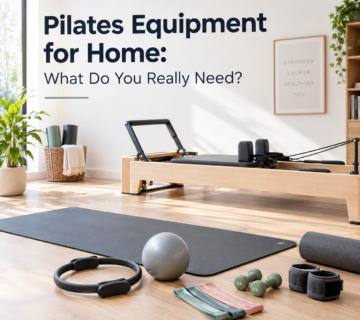
Small props—including resistance bands, Pilates rings, small balls, foam rollers, and light weights—can also be added to make certain exercises easier, more challenging, or more varied.
This flexibility is one reason Pilates works for such a wide range of people and training environments. Research published in PubMed has examined Pilates performed both on the mat and with specialized equipment, with studies reporting potential improvements in areas such as muscular endurance, flexibility, and balance. However, outcomes vary depending on the population, program, frequency, and type of exercise used.
So, do you need equipment for Pilates? Not necessarily. But the right equipment can expand the exercises you can perform and provide resistance, support, or feedback that is difficult to achieve with body weight alone.
What Equipment Is Needed for Pilates?
For most beginners, Pilates equipment can be divided into three practical categories:
Basic equipment for mat Pilates
Small props that add resistance or support
Large Pilates machines typically found in studios
A beginner practicing at home might only need a Pilates mat and perhaps a resistance band. Someone attending reformer classes will use a larger machine with a carriage, springs, footbar, ropes, and pulleys.
Professional studios generally require a broader range of equipment because instructors need to accommodate different body types, experience levels, exercise goals, and class formats.
Do You Need Equipment to Start Pilates?
No. You can start Pilates without specialized machines.
Mat Pilates uses body weight as the primary source of resistance, making it one of the easiest ways to begin. A supportive, non-slip mat is usually enough for exercises such as pelvic curls, bridges, roll-downs, leg circles, and abdominal work.
As your practice develops, small props can be introduced to provide additional resistance or stability challenges.
This is also useful for people who travel or exercise at home because small Pilates accessories are relatively easy to store and transport.
What Is the Difference Between Mat Pilates and Reformer Pilates?
The main difference is the equipment and how resistance is created.
Mat Pilates is performed primarily on the floor using body weight, with optional props such as bands or rings.
Reformer Pilates uses a machine with a moving carriage and adjustable springs. The springs can provide resistance or assistance depending on the exercise and setup.
A reformer can therefore create movement patterns that are difficult to reproduce on a mat. It can also give the user a physical reference point through the footbar, carriage, straps, and springs.
Neither approach needs to be considered universally better. The more useful question is which format matches your goals, experience, available space, and budget.
What Are the Essential Pilates Equipment and Props?
There are many types of Pilates equipment, but beginners do not need to purchase everything at once.
A practical starting setup usually includes a mat, followed by one or two small props if they fit your training goals.
| Equipment | Typical use | Best suited for |
| Pilates mat | Floor-based exercises and cushioning | Beginners, home users, studios |
| Resistance band | Added resistance or assistance | Home and mat Pilates |
| Pilates ring | Muscle engagement and resistance | Mat and studio workouts |
| Small Pilates ball | Support, balance, and positioning | Beginners and intermediate users |
| Foam roller | Mobility, stability, and exercise variation | Intermediate users |
| Light weights | Additional upper-body resistance | Mat Pilates |
| Reformer | Adjustable resistance and assisted movement | Studios and home users with space |
| Pilates chair | Strength, balance, and controlled resistance | Studios and advanced home setups |
| Cadillac | Supported and resistance-based exercises | Studios, instructors, and specialized training |
What Type of Pilates Mat Do You Need?
A Pilates mat is usually thicker and more cushioned than a standard yoga mat.
That difference matters because many Pilates movements are performed while lying on the back, stomach, or side. A little additional cushioning can make longer floor sessions more comfortable.
When choosing a mat, look for:
Adequate thickness and cushioning
A stable, non-slip surface
Enough length and width for your body
Materials that are easy to clean
A surface that does not interfere with controlled movement
For a home beginner, a good mat is often a more sensible first purchase than immediately investing in large Pilates machines.
Do You Need a Pilates Ring, Resistance Bands, or Small Ball?
These small props are not essential, but they can make mat Pilates more versatile.
A Pilates ring, also called a magic circle, provides resistance when pressed between the hands, thighs, or ankles. It can help users become more aware of alignment and muscle engagement.
Resistance bands provide adjustable external resistance. A light band may be useful for beginners, while stronger bands can increase the challenge as strength improves.
A small Pilates ball can be used as either support or an instability challenge. For example, placing a small ball behind the pelvis during certain movements can change the exercise’s range and difficulty.
For someone working at home, these props are attractive because they take up very little space.
Is a Foam Roller or Light Weights Useful for Pilates?
A foam roller can add another dimension to a Pilates routine.
Instead of simply lying on the floor, you can use the roller to introduce instability, encourage controlled movement, or modify familiar exercises. It may also be incorporated into mobility-focused routines.
Light weights can increase the resistance placed on the arms and shoulders during mat exercises. For beginners, relatively light loads are generally more practical because Pilates emphasizes controlled movement rather than simply moving as much weight as possible.
The goal is to choose equipment that supports good technique rather than adding resistance for its own sake.
What Large Pilates Equipment Is Used in a Studio?
When people search for types of Pilates machines, they are usually referring to the larger apparatus used in professional Pilates studios.
These machines are different from conventional gym equipment. They are designed around controlled movement, springs, body positioning, and adjustable resistance.
What Is a Pilates Reformer Used For?
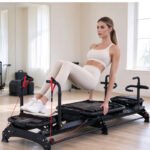
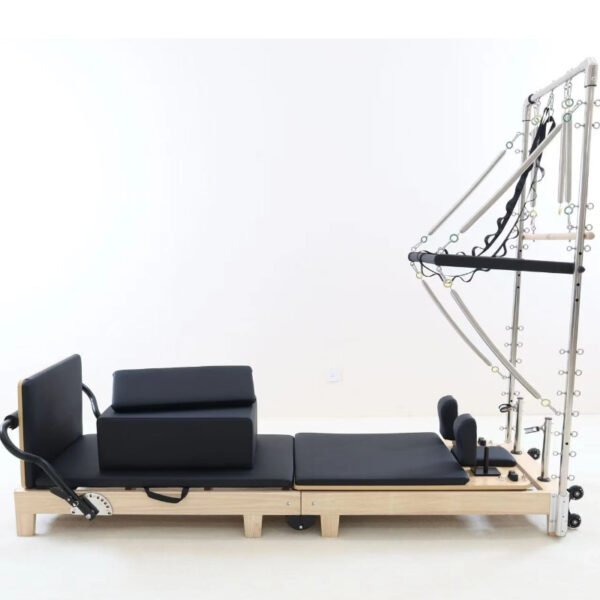
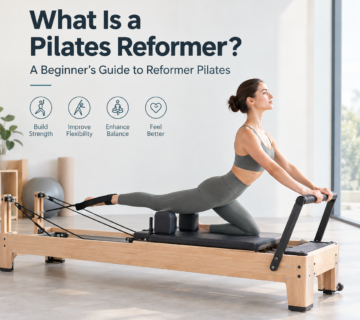
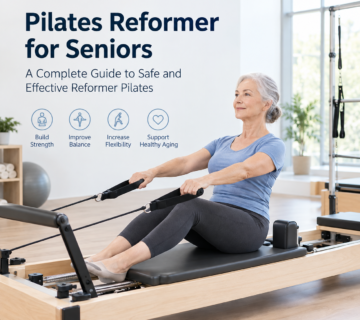
The Pilates reformer is probably the most recognizable piece of Pilates equipment.
A typical reformer includes:
A moving carriage
Springs for resistance
A footbar
Ropes or straps
Pulleys
Shoulder rests
A frame and adjustable components
The carriage moves along the frame while springs control the amount of resistance. Depending on the exercise, the springs may make a movement more challenging or provide assistance.
For example, a beginner might use the footbar while lying on the carriage to perform controlled leg presses. More experienced users can perform kneeling, standing, seated, or upper-body exercises using the straps.
Because a reformer can support many movement patterns, it is commonly used in commercial Pilates studios, private training, fitness facilities, and some home gyms.
If you are comparing different commercial and home models, you can explore CoreFlow’s range of Pilates reformer machines to see how different frame designs and configurations are used.
Do You Need a Pilates Chair or Wunda Chair?
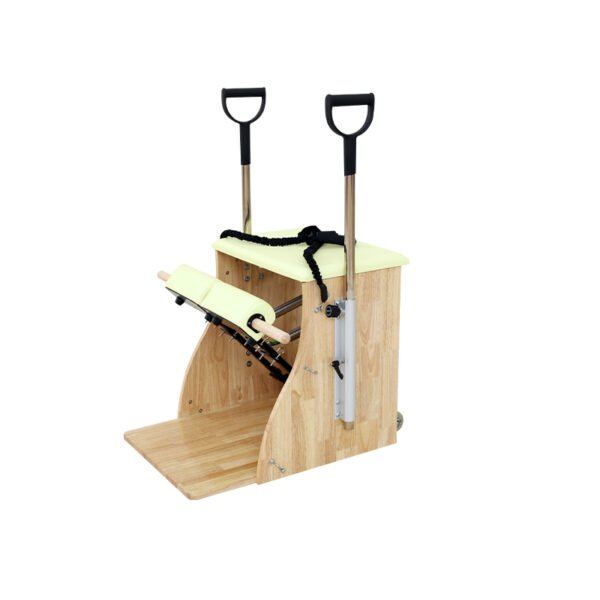
A Pilates chair, often called a Wunda Chair, is much more compact than a reformer.
It usually consists of a padded platform and a pedal connected to springs. The user can perform seated, standing, kneeling, or supported movements.
The chair is particularly useful when a studio wants to add strength, balance, unilateral movement, and resistance exercises without using as much floor space as a reformer.
What Are Pilates Barrels and Spine Correctors Used For?
Pilates barrels include equipment such as the Ladder Barrel and Spine Corrector.
Their curved surfaces can support exercises involving spinal flexion, extension, lateral movement, and mobility. They can also be used for abdominal and posture-focused exercises.
For a studio, barrels can complement reformer-based training by providing movement options that feel quite different from exercises performed on a moving carriage.
When Do You Need a Cadillac or Trapeze Table?
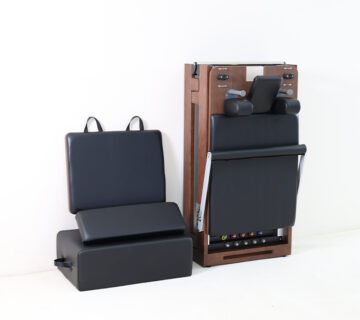
A Pilates Cadillac, also known as a trapeze table, is one of the largest and most versatile pieces of Pilates apparatus.
It combines a stable table with a frame, springs, bars, and straps. This allows instructors to create supported, assisted, or resistance-based exercises in different body positions.
Cadillacs are particularly relevant to professional studios, private sessions, movement training, and settings where instructors want a broad range of exercise modifications.
Because the equipment is large and requires proper setup, it is usually more appropriate for a dedicated studio or training environment than a small home workout area.
How Do You Choose the Right Pilates Equipment for Your Needs?
The best equipment depends less on the number of products you own and more on how you plan to use them.
Consider four questions:
Are you practicing at home or in a studio?
Are you a beginner or an experienced practitioner?
What types of exercises do you want to perform?
How much space and budget do you have?
A home user with limited space may get plenty of value from a mat, resistance bands, a Pilates ring, and a small ball.
A dedicated home gym may have enough room for a reformer.
A commercial studio will usually need a combination of large apparatus and small props to create a broader training environment.
What Pilates Equipment Is Best for Beginners?
For most beginners, there is no need to start with an extensive collection.
A practical setup is:
A supportive Pilates mat
A light resistance band
A Pilates ring
A small Pilates ball
This combination allows you to perform a wide range of mat-based exercises while learning basic Pilates principles such as control, breathing, concentration, and precision.
Once you are comfortable with mat Pilates, you can decide whether reformer or apparatus-based classes better fit your goals.
What Equipment Do You Need for Pilates at Home?
For a basic home setup, start small.
A Pilates mat should generally be the first purchase. Add resistance bands or a Pilates ring if you want more exercise variety.
If you have additional space, a foam roller, small ball, or light weights can expand your routine.
A home Pilates reformer becomes more practical when you already enjoy equipment-based Pilates and have sufficient room for safe movement around the machine.
Before buying one, measure the available space rather than relying only on the equipment’s listed dimensions. You also need enough clearance to get on and off the machine and perform movements safely.
What Equipment Does a Pilates Studio Need?
A professional studio typically needs a wider selection.
A basic studio setup may include:
Pilates reformers
Pilates mats
Pilates rings
Resistance bands
Small balls
Foam rollers
Pilates chairs
Barrels or spine correctors
Cadillac or trapeze tables
The exact mix depends on the studio’s business model.
For example, a reformer-focused boutique studio may prioritize several reformers and small props, while a private training or rehabilitation-oriented studio may place greater emphasis on Cadillacs, chairs, barrels, and other versatile apparatus.
A studio should also consider equipment durability, adjustability, maintenance, instructor workflow, client comfort, and available floor space—not simply the initial purchase price.
For studios, distributors, gyms, and other commercial buyers, CoreFlow offers a broader range of Pilates equipment designed for different training and studio configurations.
A Practical Pilates Equipment Setup by Scenario
Instead of asking only “what equipment do I need for Pilates?”, it can be more useful to think about the environment in which the equipment will be used.
Scenario 1: Beginner at Home
Start with:
Mat + resistance band + Pilates ring
This gives you a relatively inexpensive and space-efficient foundation.
Scenario 2: Regular Home Practitioner
Consider:
Mat + small props + foam roller + light weights
If you have sufficient space and prefer equipment-based workouts, a reformer can become the next step.
Scenario 3: Boutique Reformer Studio
A studio may prioritize:
Multiple reformers + small props + mats
The number of reformers depends on available space, class size, instructor workflow, and business model.
Scenario 4: Private or Comprehensive Pilates Studio
A more comprehensive setup could include:
Reformers + Cadillac + Pilates chairs + barrels + mats + small props
This gives instructors more options for adapting sessions and creating different movement experiences.
What Does the Research Say About Pilates?
It is worth separating evidence about Pilates as an exercise method from claims about individual pieces of equipment.
Research does not suggest that simply owning more equipment automatically produces better results.
A systematic review and meta-analysis of older adults found that Pilates was associated with improvements in balance, strength, flexibility, and functional performance compared with control groups, although the researchers noted that the certainty of evidence varied by outcome.
Another systematic review comparing Pilates with other exercise modalities found that Pilates can improve strength from pre- to post-intervention, but did not find strong evidence that Pilates is consistently superior to other forms of exercise for strength, balance, or flexibility.
This distinction is important.
The equipment is a tool. The quality of the movement program, appropriate resistance, consistency, instruction, and individual needs also matter.
For people with specific injuries, medical conditions, or significant movement limitations, it is sensible to seek advice from an appropriately qualified healthcare or movement professional before beginning a new program.
For general physical activity guidance, the U.S. Department of Health and Human Services provides evidence-based recommendations through the Physical Activity Guidelines for Americans.
How Much Pilates Equipment Do You Actually Need?
For most individuals, the answer is surprisingly simple.
You do not need a room full of Pilates machines to begin.
If your goal is basic mat Pilates at home, a quality mat may be enough. Adding a resistance band, Pilates ring, or small ball can provide additional exercise options without taking up much space.
If you want to experience equipment-based Pilates, a reformer offers a much broader range of resistance-based movements.
For a professional studio, the calculation changes. Equipment selection should be based on class format, client profile, available space, expected utilization, maintenance requirements, and long-term business plans.
The goal should not be to buy every type of Pilates equipment available. Instead, choose equipment that genuinely supports the way you plan to teach or practice.
Conclusion
So, what equipment is needed for Pilates?
For beginners, very little is required. A supportive Pilates mat can provide the foundation for a complete mat-based routine. Resistance bands, Pilates rings, small balls, foam rollers, and light weights can then be added according to your goals.
For equipment-based Pilates, the options become broader. Reformers, Pilates chairs, barrels, and Cadillacs each provide different ways to introduce resistance, support, balance challenges, and movement variations.
The most important consideration is not how much equipment you own, but whether the equipment matches your experience, goals, available space, and training environment.
For home users, starting with a few versatile pieces is usually practical. For Pilates studios, a carefully planned combination of large apparatus and small props can create a more flexible training environment.
In other words, you don’t necessarily need more equipment—you need the right equipment for the way you practice Pilates.
FAQs
Can you do Pilates without equipment?
Yes. Mat Pilates can be performed primarily with body weight and a comfortable exercise mat. Small props are optional and can be added when you want additional resistance, support, or exercise variety.
What is the most important piece of Pilates equipment?
For basic mat Pilates, a supportive mat is usually the most practical starting point. For equipment-based Pilates, the reformer is one of the most versatile machines and can support a wide range of exercises.
Do beginners need a Pilates reformer?
No. Beginners can start with mat Pilates. A reformer can be introduced later through an appropriately instructed class or home setup if the user has sufficient space and understands how to use the equipment safely.
What are the main types of Pilates equipment?
The main categories include mats, small props such as resistance bands and Pilates rings, and larger apparatus such as reformers, Pilates chairs, barrels, and Cadillacs.
Is Pilates equipment worth buying for home use?
It can be, depending on how regularly you practice, your available space, and your preferred style of Pilates. Small props are relatively easy to store, while a reformer requires considerably more space and a larger investment.
What equipment does a Pilates studio need?
A studio may need reformers, mats, small props, chairs, barrels, and Cadillac or trapeze tables. The ideal combination depends on class size, training style, client needs, floor space, and business model.

No comment