






Pilates has evolved from a niche rehabilitation method into a widely practiced fitness system used in gyms, physiotherapy clinics, and home workouts across the United States and Europe. According to the American Council on Exercise, Pilates training can significantly improve core stability, posture control, and muscular balance when practiced consistently.
One of the main reasons Pilates is so adaptable is the wide range of equipment available. From simple mat-based tools to advanced studio machines, the Types of Pilates Equipment determine how the training feels, the resistance level, and the user experience.
This guide breaks down a complete pilates equipment list, explains how each machine works in real-life scenarios, and helps both beginners and studio owners choose the right pilates exercise tools for their needs. It also includes practical insights for sourcing pilates reformer wholesale solutions for commercial studios.
What Are the Main Types of Pilates Equipment?
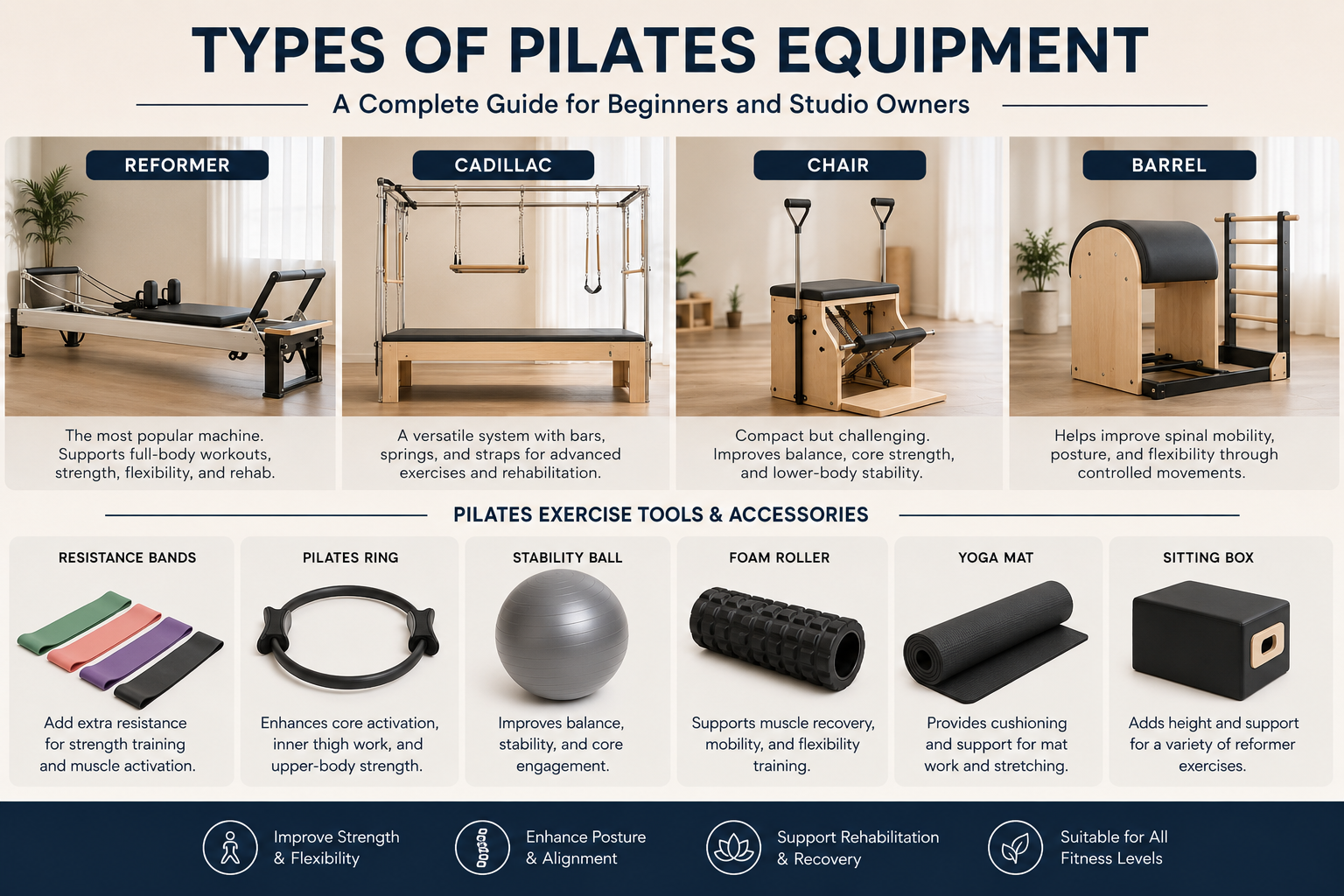
In general, pilates equipment list can be divided into four categories:
- Large studio machines (Reformer, Cadillac, Chair, Barrel)
- Mat-based and small pilates exercise tools
- Rehabilitation-focused equipment
- Home-use compact systems
Each category serves a different training purpose—from mobility and flexibility to strength and clinical rehabilitation.
Below is a simplified comparison:
| Category | Equipment Examples | Main Purpose | Best For |
|---|---|---|---|
| Large machines | Reformer, Cadillac, Chair | Full-body resistance training | Studios & advanced users |
| Support tools | Rings, bands, balls | Stability & activation | Beginners & home users |
| Mobility tools | Barrels, spine corrector | Spine alignment & flexibility | Rehab & posture training |
| Hybrid systems | Foldable reformers | Space-saving full workouts | Home gyms |
This structure helps users understand how each piece fits into a complete Pilates ecosystem.
Pilates Reformer: The Foundation of Modern Pilates Training
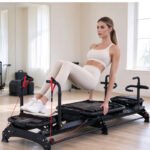
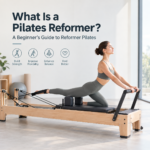
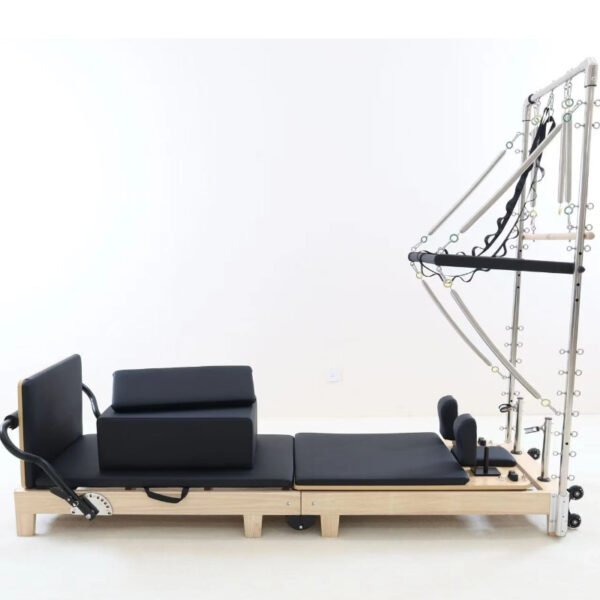
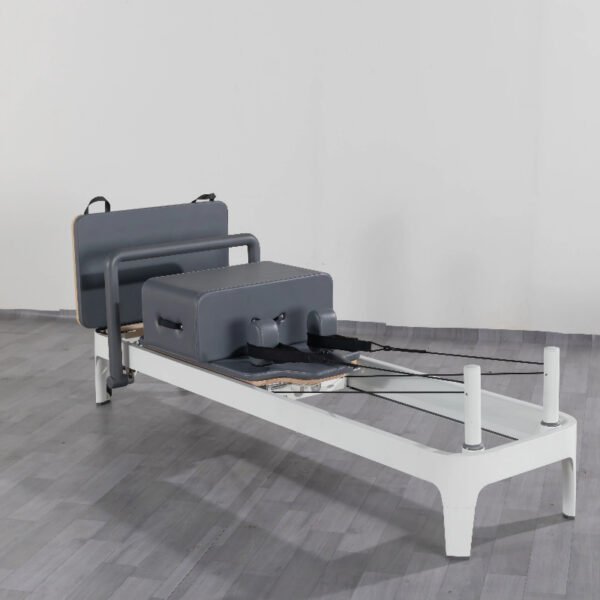
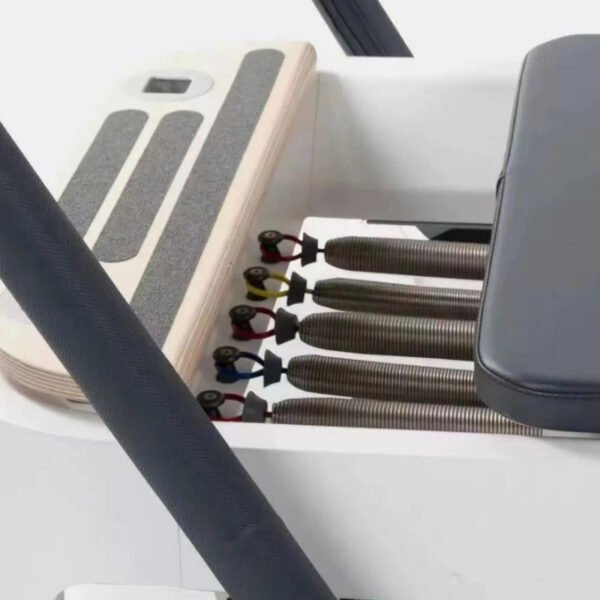
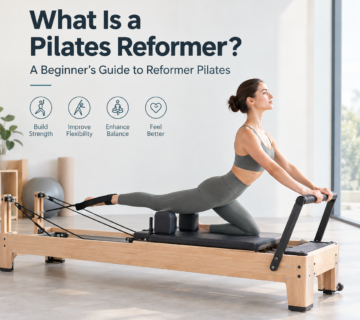
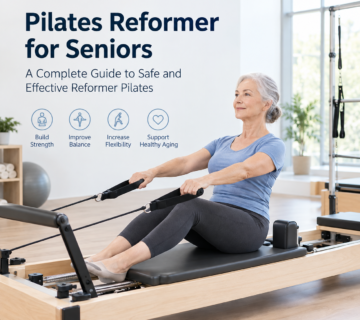
The Pilates Reformer is the most recognized piece in any pilates equipment list. It uses a sliding carriage system with adjustable springs to create controlled resistance.
In practical terms, the reformer allows users to perform exercises in lying, sitting, kneeling, and standing positions. This versatility is one reason it is widely used in both fitness studios and rehabilitation settings.
A typical session on a reformer improves:
- Core activation
- Postural alignment
- Joint mobility
- Muscle coordination
Many physiotherapists also use reformers in recovery programs because spring-based resistance tends to be smoother than traditional weight training.
Modern studios often purchase pilates reformer wholesale packages to maintain consistency across group classes. Brands like CoreFlow focus on durable frame design and ergonomic carriage systems suitable for high-frequency studio use.
Pilates Cadillac, Chair, and Barrel: Why They Matter in a Complete System
While reformers are the most popular, they do not represent the full Types of Pilates Equipment. A complete studio typically includes cadillacs, chairs, and barrels.
Pilates Cadillac
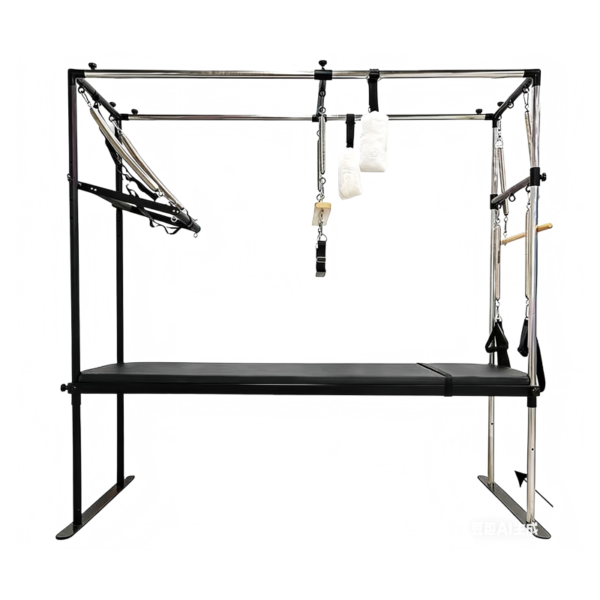
The Pilates Cadillac is a large, bed-like frame with bars, straps, and springs. It supports both rehabilitation and advanced athletic training.
Common uses include:
- Assisted stretching
- Spinal decompression
- Advanced strength movements
It is frequently used in physiotherapy environments and clinical Pilates programs.
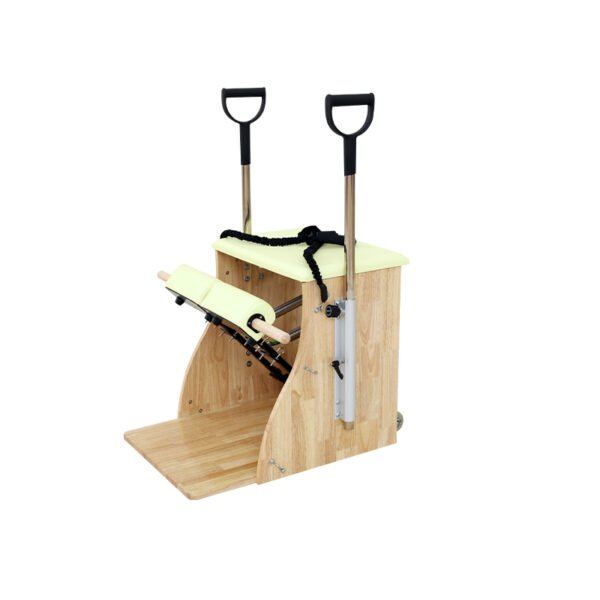
Pilates Chair
The Pilates Chair is compact but highly challenging. It focuses on unilateral strength, balance, and deep core activation.
It is especially useful for:
- Small studio spaces
- Athletic conditioning
- Advanced users seeking intensity
Pilates Barrel
Barrels (such as ladder barrels and spine correctors) are designed for spinal mobility and posture correction. They support controlled extension and flexion movements, helping users improve spinal alignment safely.
These tools are often recommended in posture-focused training programs supported by Pilates instructors and rehabilitation specialists.
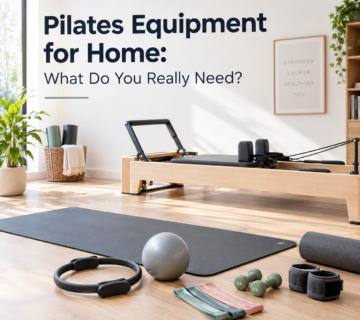
Small Pilates Exercise Tools for Home and Beginner Training
Not every user needs large machines. Many pilates exercise tools are designed for accessibility and home use.
Common examples include:
- Resistance bands
- Pilates rings
- Small stability balls
- Foam rollers
-
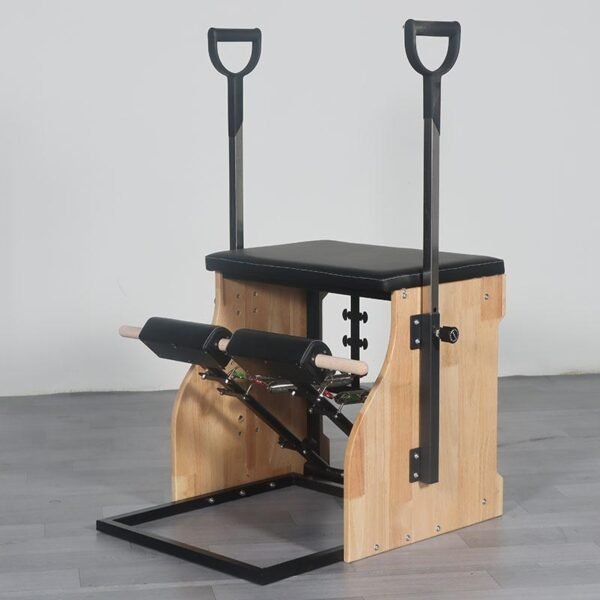
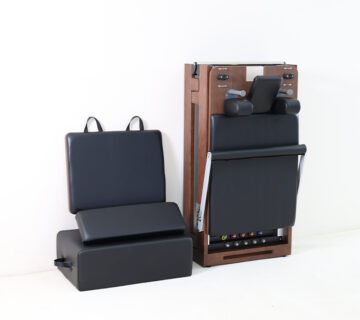
Pilates Chair – Premium Oak Wunda Chair
-
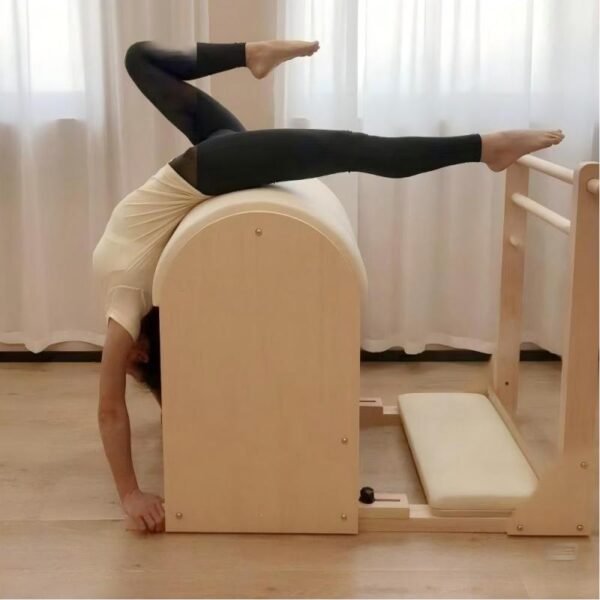
Pilates Maple Wood Ladder Barrel – Apparatus for Studios & home
These tools are widely used in introductory Pilates classes because they help users learn movement control before progressing to reformer-based training.
For example, beginners in home Pilates programs often start with a mat and resistance band routine before transitioning to equipment-based training.
This gradual progression reduces injury risk and improves long-term adherence.
Home Use vs Studio Equipment: How to Choose the Right Setup
Choosing between home and studio equipment depends on space, budget, and training goals.
Home Use Setup
Best options:
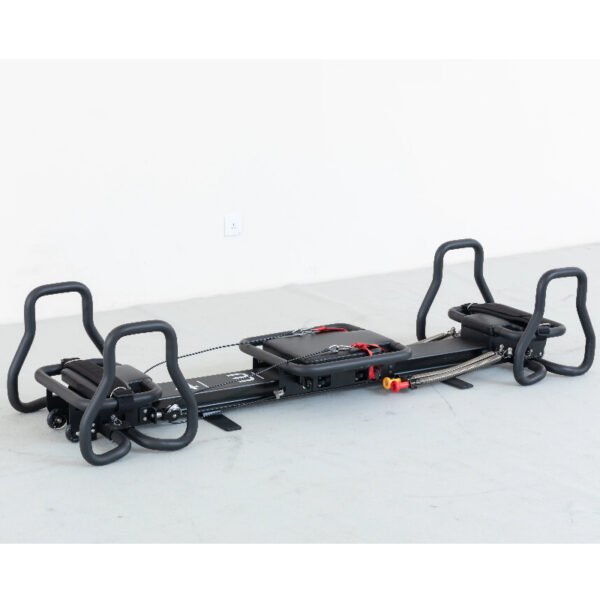
- Foldable reformers
- Resistance bands
- Compact chairs
- Mats and rings
Advantages:
- Space-saving
- Lower investment
- Flexible usage
Studio Setup
Professional studios typically include a full pilates equipment list:
- Reformers (multiple units)
- Cadillacs
- Chairs
- Barrels
- Accessories for group classes
Advantages:
- Higher training variety
- Suitable for group instruction
- Better client progression paths
A growing number of studios now purchase pilates reformer wholesale packages to reduce cost per unit while maintaining equipment consistency across classes.
How to Evaluate Pilates Equipment Quality
Not all Pilates machines are built the same. When evaluating Types of Pilates Equipment, consider:
- Frame material (wood vs aluminum)
- Spring resistance quality
- Carriage smoothness
- Upholstery durability
- Adjustability options
Instructors often emphasize that smoother carriage movement directly affects training quality and safety.
For studio owners, long-term durability is especially important since equipment may be used for multiple sessions daily.
Real-World Use Cases
Case 1: Home User (Beginner Fitness)
A user in Seattle starts with a foldable reformer and resistance bands. Within 8 weeks, they report improved posture and reduced lower back stiffness after consistent 3x weekly sessions.
Case 2: Boutique Studio
A small studio installs 6 reformers and 1 Cadillac. Group classes rotate between equipment, allowing clients to experience different resistance styles.
Case 3: Rehabilitation Clinic
A physiotherapy clinic uses Cadillac systems for post-injury recovery, focusing on controlled movement patterns and assisted stretching.
These examples show how flexible the pilates equipment list can be across different environments.
Industry Insight: Why Pilates Equipment Demand Is Growing
Global interest in Pilates has increased significantly in recent years, driven by:
- Low-impact fitness trends
- Posture correction awareness
- Rehabilitation-focused training
- Home fitness adoption
According to fitness industry reports, Pilates participation has grown steadily in both boutique studios and online training programs across North America and Europe.
This trend has also increased demand for pilates reformer wholesale supply chains, particularly for commercial studio expansion.
Conclusion
Understanding the Types of Pilates Equipment is essential for anyone planning to start Pilates training or open a professional studio. From reformers and cadillacs to barrels and small pilates exercise tools, each category plays a distinct role in strength, flexibility, and rehabilitation training.
Whether you are building a home setup or designing a full studio, choosing the right pilates equipment list ensures better training results and long-term usability.
Manufacturers like CoreFlow continue to support this growing industry by providing scalable solutions for both home users and commercial studios, including pilates reformer wholesale options designed for professional environments.
FAQs
What is the most important Pilates equipment?
The Pilates Reformer is generally considered the foundation of most training systems due to its versatility and full-body engagement.
Can Pilates be done without equipment?
Yes, mat-based Pilates is widely practiced and often used as a starting point for beginners.
Is Pilates equipment suitable for beginners?
Most pilates exercise tools and reformers can be adjusted for beginner-level resistance and controlled progression.

No comment