






Pilates has become one of the world’s most popular low-impact fitness methods, attracting everyone from beginners and office workers to elite athletes and rehabilitation patients. Whether you’ve seen a Pilates class at your local fitness studio or noticed celebrities practicing on a reformer machine, you may be wondering: what is Pilates, and why has it become so popular?
Unlike many high-intensity workout programs, Pilates focuses on quality of movement rather than quantity. Every exercise is designed to improve strength, flexibility, posture, balance, and body awareness while placing minimal stress on the joints. This unique combination makes Pilates suitable for people of almost every age and fitness level.
According to the American College of Sports Medicine (ACSM), low-impact exercise programs that emphasize muscular control, flexibility, and functional movement can contribute to improved physical performance and long-term musculoskeletal health. Pilates aligns closely with these recommendations, making it an excellent option for individuals seeking sustainable fitness rather than short-term results.
Today, Pilates is practiced in more than 100 countries and has evolved into two primary forms: traditional mat Pilates and equipment-based reformer Pilates. Modern Pilates studios also incorporate specialized equipment, including reformers, towers, chairs, and barrels, allowing practitioners to customize workouts for rehabilitation, athletic performance, or general wellness.
In this comprehensive guide, you’ll learn:
What Pilates is and how it works
The history behind the Pilates method
What Pilates is good for
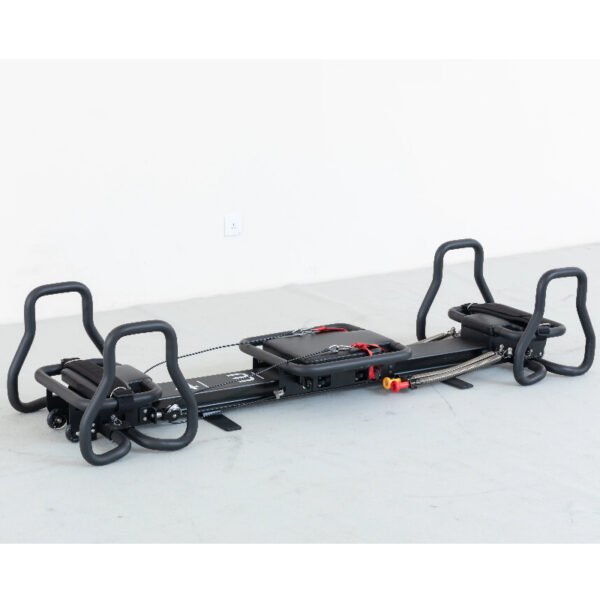
What reformer Pilates is
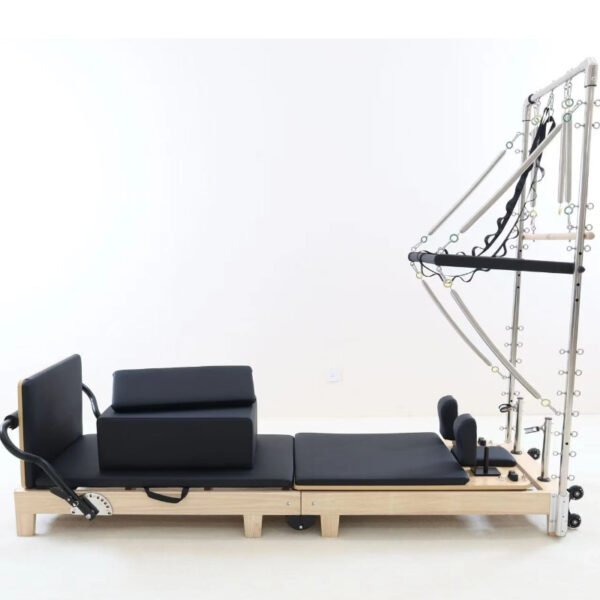
What a reformer in Pilates actually does
The differences between mat and reformer Pilates
Who should practice Pilates
How beginners can get started safely
Whether you’re considering your first Pilates class or thinking about investing in a home or commercial reformer, this guide will help you make informed decisions.
What Is Pilates?
Pilates is a low-impact exercise system that combines controlled movement, breathing, strength training, flexibility, and body awareness to improve overall physical function. It was developed by Joseph Pilates during the early 20th century and was originally known as Contrology, reflecting his belief that the mind should consciously control every movement of the body.
Unlike traditional strength training that often isolates individual muscles, Pilates focuses on integrated movement patterns. Every exercise recruits multiple muscle groups simultaneously while emphasizing proper alignment and controlled breathing.
At its core, Pilates strengthens the body’s “powerhouse,” a term Joseph Pilates used to describe the muscles surrounding the abdomen, lower back, hips, and pelvic floor. Today, these muscles are commonly referred to as the core.
Because movements are performed slowly and deliberately, Pilates improves:
Core stability
Posture
Joint mobility
Balance
Flexibility
Muscular endurance
Coordination
One reason Pilates has become so widely recommended is its adaptability. Exercises can be modified for complete beginners, older adults, professional athletes, and individuals recovering from injury.
Unlike workouts that rely on heavy weights or explosive movements, Pilates emphasizes precision over intensity, making it accessible without sacrificing effectiveness.
The History of Pilates
Understanding the origins of Pilates helps explain why it remains relevant more than a century after its creation.
Joseph Pilates was born in Germany in 1883. As a child, he suffered from asthma, rickets, and rheumatic fever, motivating him to study anatomy, martial arts, gymnastics, yoga, boxing, and various movement disciplines.
During World War I, Joseph Pilates was interned in England, where he worked with injured soldiers. Unable to access conventional exercise equipment, he began attaching springs to hospital beds, allowing patients to strengthen muscles while remaining supported.
These spring-based rehabilitation devices eventually evolved into what we now recognize as the modern Pilates reformer.
After the war, Joseph Pilates moved to New York City with his wife Clara and opened a studio near several dance companies. Professional dancers quickly embraced his method because it helped them recover from injuries while improving strength and movement quality.
Over time, athletes, performers, physical therapists, and fitness professionals adopted Pilates, transforming it into one of the world’s most respected movement systems.
Today, while the equipment has become more advanced, Joseph Pilates’ original philosophy remains unchanged:
“Physical fitness is the first requisite of happiness.”
His emphasis on mindful movement, efficient breathing, and balanced muscular development continues to define modern Pilates instruction.
The Six Principles of Pilates
Although Pilates has evolved over the decades, its foundation still rests on six core principles. These principles distinguish Pilates from many other forms of exercise and help practitioners maximize both safety and effectiveness.
| Principle | Why It Matters |
| Concentration | Focus completely on each movement to improve body awareness and technique. |
| Control | Every movement is performed with intention rather than momentum. |
| Centering | Engage the core muscles to stabilize the body throughout every exercise. |
| Precision | Proper technique is more important than performing many repetitions. |
| Breath | Coordinated breathing supports movement efficiency and core activation. |
| Flow | Exercises transition smoothly to create balanced, continuous movement. |
These principles encourage quality over quantity. Instead of rushing through repetitions, Pilates teaches practitioners to move deliberately while maintaining proper alignment.
For beginners, learning these principles early often leads to faster improvements and reduces the risk of compensatory movement patterns.
How Does Pilates Work?
Pilates works by training the body to move more efficiently.
Rather than focusing only on visible muscles, Pilates activates deep stabilizing muscles that support the spine, pelvis, and joints during everyday movement.
Many people spend hours sitting at desks, driving, or looking at screens. Over time, these habits can contribute to:
Weak core muscles
Rounded shoulders
Tight hip flexors
Limited spinal mobility
Poor posture
Pilates addresses these imbalances by strengthening underused muscles while improving mobility in areas that have become stiff.
During a typical Pilates session, exercises often combine:
Core engagement
Controlled breathing
Coordinated limb movement
Spinal articulation
Joint stabilization
This integrated approach helps improve movement patterns that transfer into daily life.
For example:
An office worker experiencing lower back discomfort may benefit from Pilates exercises that strengthen deep abdominal muscles while improving thoracic mobility.
A runner may use Pilates to improve hip stability and reduce repetitive stress injuries.
A golfer may improve rotational control through enhanced core strength.
Because Pilates emphasizes functional movement rather than isolated muscle training, many people notice improvements beyond the studio—including better posture while sitting, improved balance when walking, and greater ease performing everyday activities.
Research published in peer-reviewed rehabilitation journals has shown that Pilates-based exercise programs may contribute to improvements in chronic low back pain, core endurance, flexibility, and functional movement when practiced consistently under appropriate instruction.
What Is Pilates Good For?
One of the most common questions beginners ask is, “What is Pilates good for?” The answer depends on your personal goals, but Pilates is widely recognized for improving core strength, posture, flexibility, balance, and overall movement quality.
Unlike many workout programs that focus primarily on burning calories or building large muscles, Pilates trains the body to move efficiently. By strengthening deep stabilizing muscles and improving body awareness, it supports better performance in everyday activities as well as other forms of exercise.
Let’s explore the most significant benefits in greater detail.
1. Builds a Stronger Core
When people think of Pilates, they often think of abdominal exercises. While Pilates certainly strengthens the abs, its concept of the core goes much further.
The Pilates core includes:
Transverse abdominis
Rectus abdominis
Obliques
Pelvic floor muscles
Diaphragm
Multifidus
Lower back muscles
Glute muscles
Together, these muscles stabilize the spine and pelvis during movement.
A stronger core can help:
Improve posture
Increase lifting efficiency
Reduce unnecessary strain on the lower back
Enhance athletic performance
Improve balance during everyday activities
Unlike traditional crunches, Pilates teaches the core to function as a stabilizing system throughout the entire body.
2. Improves Posture
Modern lifestyles often involve long hours sitting at desks, working on laptops, or looking down at smartphones.
These habits commonly lead to:
Rounded shoulders
Forward head posture
Tight chest muscles
Weak upper back muscles
Poor spinal alignment
Pilates places strong emphasis on spinal positioning and muscular balance.
Instead of simply strengthening one muscle group, Pilates encourages opposing muscles to work together, helping restore more natural alignment.
Many beginners notice improvements in how they stand, sit, and walk after several weeks of consistent practice.
Improved posture may also reduce unnecessary muscle tension that develops from poor movement habits.
3. Increases Flexibility Without Overstretching
Flexibility isn’t simply about touching your toes.
Healthy flexibility means your joints can move comfortably through their full range of motion while remaining stable.
Pilates combines controlled stretching with strength training, helping muscles become both stronger and longer.
Unlike aggressive stretching routines, Pilates emphasizes active flexibility—developing strength while lengthening muscles.
This approach may help:
Improve hip mobility
Increase shoulder mobility
Reduce muscle stiffness
Improve spinal mobility
Support healthy movement patterns
Because flexibility develops alongside strength, many practitioners experience improved mobility without feeling unstable.
4. Supports Better Balance and Coordination
Balance naturally declines with age, but it can also be affected by sedentary lifestyles.
Pilates challenges stability in multiple positions by requiring the body to control movement from the center outward.
Many exercises involve:
Single-leg stability
Controlled weight shifts
Rotational movement
Coordinated upper and lower body actions
These movement patterns improve communication between the brain and muscles.
Better balance may benefit:
Older adults
Recreational athletes
Dancers
Runners
Anyone looking to reduce fall risk
5. Helps Reduce Back Discomfort
Lower back discomfort is one of the most common reasons people begin practicing Pilates.
Weak core muscles and poor posture often increase stress on the lumbar spine.
Pilates doesn’t simply strengthen the back—it teaches the entire core to support spinal movement more effectively.
Several clinical studies suggest that appropriately supervised Pilates programs may improve function and reduce symptoms in people with chronic non-specific low back pain.
However, anyone experiencing persistent pain should first consult a qualified healthcare professional before beginning an exercise program.
6. Enhances Athletic Performance
Many professional athletes incorporate Pilates into their training programs.
Sports such as:
Tennis
Golf
Running
Swimming
Soccer
Basketball
all require efficient movement rather than brute strength alone.
Pilates can improve:
Core stability
Hip mobility
Rotational control
Joint stability
Movement efficiency
Body awareness
These improvements may translate into better performance while reducing unnecessary movement that contributes to fatigue.
7. Supports Mental Well-Being
Pilates is often described as mindful movement because every exercise requires concentration and controlled breathing.
Unlike fast-paced workouts, Pilates encourages practitioners to focus on:
Breathing rhythm
Body positioning
Smooth movement
Muscle control
Many people report feeling mentally refreshed after a Pilates session.
Although Pilates should not be viewed as a treatment for anxiety or depression, regular physical activity combined with mindful breathing may contribute to improved mood and reduced everyday stress.
8. Encourages Long-Term Healthy Movement
Perhaps the greatest benefit of Pilates is that it teaches movement skills you continue using outside the studio.
Rather than training only for a workout session, Pilates improves how your body functions throughout daily life.
You may notice benefits while:
Carrying groceries
Climbing stairs
Sitting at your desk
Playing with children
Traveling
Participating in other sports
Over time, these small improvements can have a meaningful impact on overall quality of life.
What Does Pilates Do for Your Body?
If you’re wondering “What does Pilates do for your body?”, the answer goes beyond building strength.
Pilates improves how your entire body functions by enhancing coordination between muscles, joints, and the nervous system.
Regular practice may help your body:
| Area | Potential Benefits |
| Core | Increased stability and strength |
| Spine | Better alignment and mobility |
| Muscles | Improved tone and endurance |
| Joints | Healthier movement patterns |
| Flexibility | Increased range of motion |
| Balance | Better coordination and stability |
| Breathing | Improved breathing awareness |
| Posture | More efficient body alignment |
Unlike some exercise programs that focus primarily on appearance, Pilates emphasizes functional movement that supports everyday activities.
Many practitioners also notice secondary benefits, including:
Better body awareness
More efficient movement
Improved confidence in physical activities
Reduced muscular tension after long periods of sitting
Results vary depending on consistency, fitness level, and individual goals, but most beginners begin noticing improvements in movement quality before dramatic visual changes.
Who Should Try Pilates?
One of Pilates’ greatest strengths is its adaptability.
Because exercises can be modified for different abilities, Pilates is suitable for a wide variety of people.
It may be particularly beneficial for:
Beginners
Pilates introduces controlled movement without requiring advanced fitness levels.
Office Workers
Long hours of sitting often contribute to poor posture and tight hips. Pilates can help restore mobility and strengthen the muscles that support healthy alignment.
Older Adults
Low-impact exercises make Pilates an attractive option for maintaining strength, flexibility, and balance with less stress on the joints.
Athletes
Many athletes use Pilates as cross-training to improve core stability, movement efficiency, and recovery.
New Mothers
After receiving medical clearance, some women choose postpartum Pilates programs designed to rebuild core stability and pelvic floor strength.
Rehabilitation Patients
Physical therapists sometimes incorporate Pilates-based exercises into rehabilitation programs for certain musculoskeletal conditions under professional supervision.
Who Should Consult a Healthcare Professional Before Starting Pilates?
Although Pilates is generally considered safe for most healthy adults, there are situations where professional guidance is important.
Consult your physician or physical therapist before beginning Pilates if you have:
Recent surgery
Acute back or neck injuries
Severe osteoporosis
Significant joint instability
Uncontrolled cardiovascular conditions
High-risk pregnancy
Persistent pain during movement
Working with a certified Pilates instructor can also help ensure exercises are modified appropriately for your individual needs.
What Is Reformer Pilates?
As Pilates has grown in popularity, reformer Pilates has become one of the fastest-growing fitness trends worldwide. While mat Pilates remains an excellent introduction to the method, reformer Pilates adds specialized equipment that expands the variety, precision, and effectiveness of each workout.
So, what is reformer Pilates?
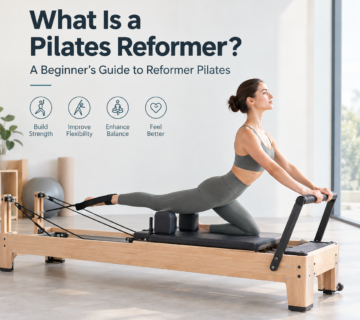
Reformer Pilates is a form of Pilates performed on a specially designed machine called a Pilates reformer. Instead of relying solely on body weight, the reformer uses adjustable spring resistance to provide both assistance and challenge throughout each exercise.
Unlike traditional weight machines that move in fixed paths, a reformer allows the body to move naturally while maintaining proper alignment. The adjustable resistance makes it suitable for complete beginners, experienced athletes, older adults, and individuals participating in rehabilitation programs.
One of the greatest advantages of reformer Pilates is its versatility. A single machine can be used to perform hundreds of exercises, targeting nearly every major muscle group while improving coordination, flexibility, balance, and posture.
Because the resistance comes from springs rather than heavy weights, movements remain smooth and controlled, reducing unnecessary impact on the joints.
Today, reformer Pilates is widely used in:
Boutique Pilates studios
Commercial fitness centers
Physical therapy clinics
Professional sports training facilities
Home gyms
Many instructors also prefer reformers because they allow clients to progress gradually by simply adjusting spring resistance rather than dramatically increasing workout intensity.
What Is a Reformer in Pilates?
Another common question among beginners is:
“What is a reformer in Pilates?”
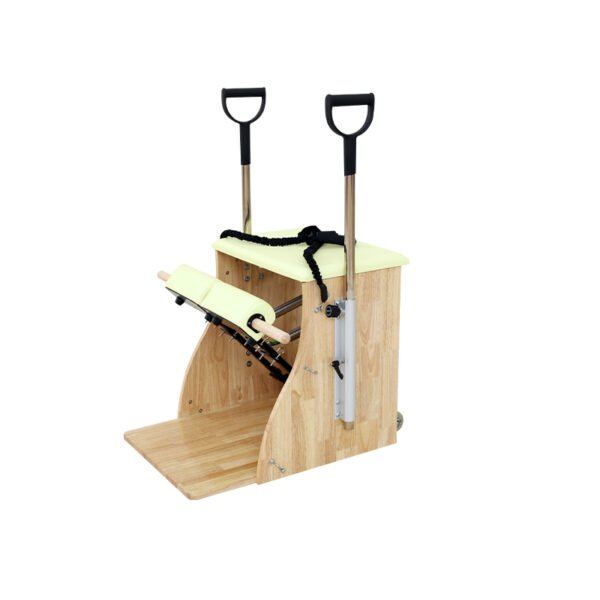
A Pilates reformer is a specialized exercise machine designed to improve strength, flexibility, posture, balance, and body control through controlled resistance.
Although modern reformers vary in appearance, most share the same essential components and movement principles.
Unlike conventional gym equipment that isolates individual muscles, the reformer encourages full-body movement patterns, allowing multiple muscle groups to work together throughout each exercise.
The reformer’s adjustable springs create resistance in both directions of movement.
This means muscles work during both the pushing and returning phases of an exercise, improving muscular control rather than relying on momentum.
The machine also supports proper alignment, making many movements easier to learn than on a mat while simultaneously allowing advanced users to perform far more challenging exercises.
-
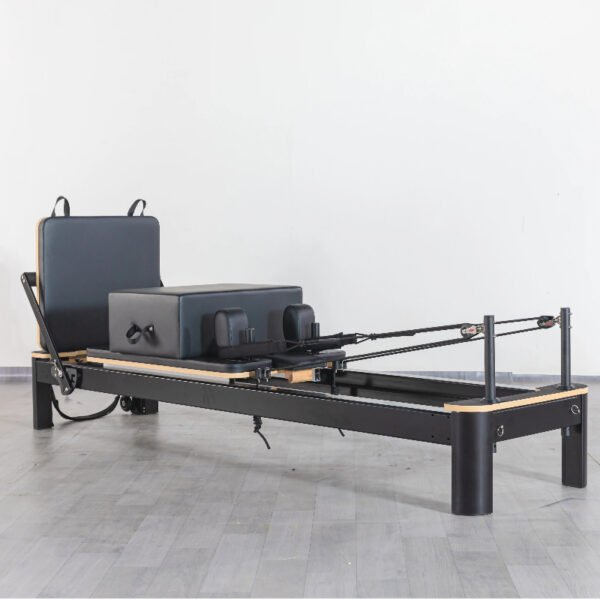
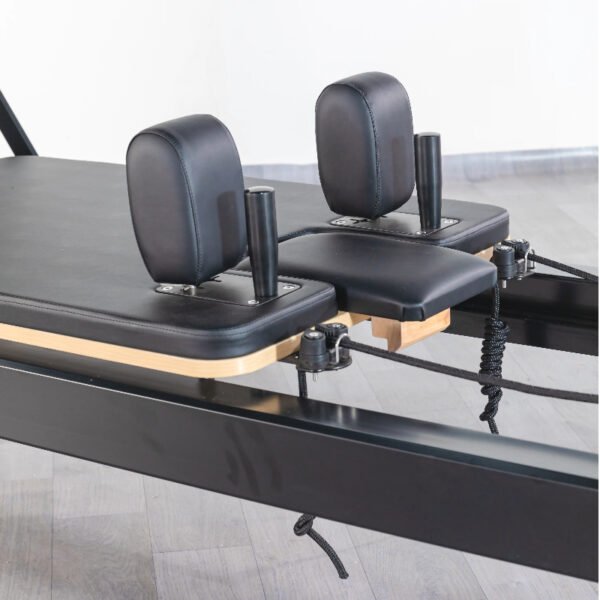
Aluminum Pilates Reformer Machine – Y04 | Pilates Reformer Wholesale
-
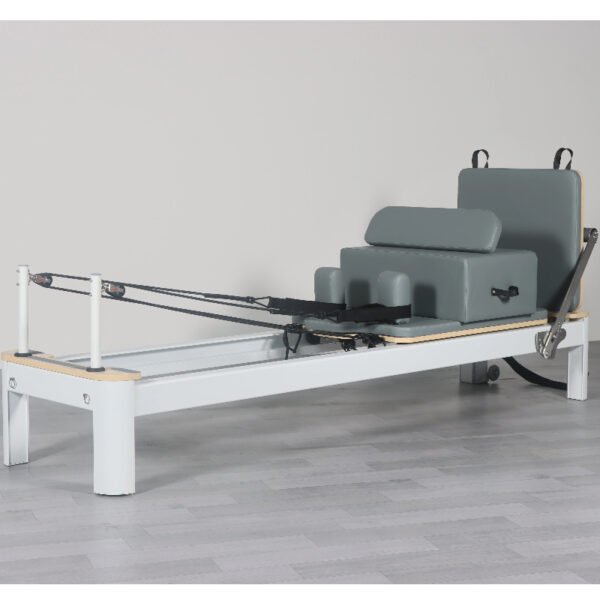
Aluminum Pilates Reformer Y04-01
Main Parts of a Pilates Reformer
Understanding the reformer’s components helps beginners appreciate how the equipment works.
| Component | Function |
| Carriage | Sliding platform where most exercises are performed |
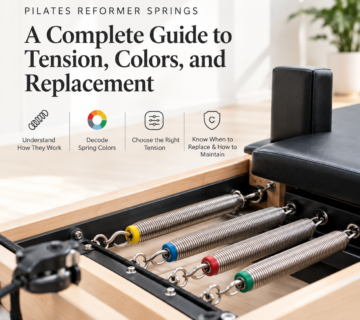
| Springs | Provide adjustable resistance for different fitness levels |
| Footbar | Used for pushing, standing, and leg exercises |
| Shoulder Blocks | Help stabilize the upper body during movement |
| Ropes and Straps | Connect hands and feet to resistance for upper- and lower-body exercises |
| Headrest | Supports proper neck alignment |
| Pulleys | Allow smooth multidirectional movement |
| Standing Platform | Provides stability during standing exercises |
Many commercial reformers also include optional accessories such as:
Jump boards
Sitting boxes
Tower attachments
Foot straps
Platform extenders
These accessories significantly increase exercise variety and make the reformer suitable for users with different training goals.
How Does a Pilates Reformer Work?
The pilates reformer works through a system of adjustable springs, rather than gravity alone.
As you push or pull the carriage, the springs create smooth, consistent resistance.
This design offers several advantages:
Adjustable Resistance
Different spring combinations allow workouts to be customized for beginners, seniors, athletes, or rehabilitation clients.
Full Range of Motion
The sliding carriage encourages natural movement while promoting joint mobility.
Continuous Muscle Engagement
Because resistance exists throughout the movement, muscles remain active during both extension and return phases.
Better Body Awareness
The moving carriage provides immediate feedback if posture or alignment begins to shift, helping users improve movement quality.
Why Is Reformer Pilates So Popular?
Over the past decade, reformer Pilates has experienced remarkable global growth.
Several factors contribute to its popularity.
1. Suitable for Almost Every Fitness Level
Beginners appreciate the machine’s support, while experienced practitioners can increase spring resistance to create more demanding workouts.
2. Low-Impact Training
Unlike running or jumping exercises, reformer Pilates places relatively little stress on the knees, hips, and ankles.
3. Highly Versatile
A single reformer supports hundreds of exercises targeting:
Legs
Arms
Back
Core
Shoulders
Glutes
4. Progressive Learning
Exercises become increasingly challenging without requiring complicated equipment changes.
5. Efficient Full-Body Workouts
Most reformer sessions engage multiple muscle groups simultaneously, making workouts both time-efficient and highly functional.
Mat Pilates vs. Reformer Pilates
Many beginners wonder whether they should start with mat Pilates or invest in a reformer.
The answer depends on your goals, experience, available space, and budget.
Both methods follow the same Pilates principles but provide different training experiences.
| Feature | Mat Pilates | Reformer Pilates |
| Equipment | Exercise mat | Pilates reformer machine |
| Resistance | Body weight | Adjustable spring resistance |
| Beginner Friendly | Yes | Yes |
| Exercise Variety | Moderate | Extensive |
| Muscle Support | Limited | High |
| Core Challenge | High | High |
| Flexibility Training | Excellent | Excellent |
| Strength Progression | Body weight only | Adjustable resistance |
| Home Use | Very convenient | Requires equipment |
| Studio Training | Common | Most popular option |
Which Is Better?
The good news is that neither method is objectively “better.”
Instead, they complement each other.
Mat Pilates may be ideal if you:
Are completely new to Pilates
Prefer exercising at home
Have a limited budget
Want to learn the fundamentals
Reformer Pilates may be ideal if you:
Want more exercise variety
Prefer guided studio sessions
Need adjustable resistance
Are recovering from certain injuries under professional supervision
Want to progress beyond beginner-level training
Many experienced practitioners regularly combine both methods to enjoy the benefits of each.
How to Choose the Right Pilates Reformer
If you’ve decided that reformer Pilates fits your goals, selecting the right machine is an important investment.
Not every reformer is designed for the same environment or user.
For Home Users
Home users often prioritize:
Foldable designs for space-saving storage
Quiet operation
Smooth carriage movement
Adjustable spring resistance
Easy assembly
Comfortable padding
A foldable reformer can be an excellent solution for apartments or multi-purpose rooms where space is limited.
For Pilates Studios
Commercial studios typically require equipment that can withstand frequent daily use.
Important considerations include:
Commercial-grade aluminum or hardwood frames
High-quality spring systems
Durable upholstery
Adjustable footbars and ropes
Smooth carriage bearings
Easy maintenance
Long-term warranty support
Investing in professional-grade equipment helps deliver a consistent experience for clients while reducing long-term maintenance costs.
Choosing a Trusted Manufacturer
When evaluating Pilates reformers, it’s also worth considering the manufacturer behind the equipment.
Look for suppliers that offer:
Commercial-quality construction
International safety certifications
OEM/ODM customization options
Reliable after-sales support
Warranty coverage
Replacement parts availability
For studios, distributors, and fitness businesses, partnering with an experienced manufacturer can provide better long-term value than focusing solely on the initial purchase price.
As a professional Pilates equipment manufacturer, CoreFlow offers a wide range of commercial and home Pilates reformers, including foldable reformers, reformers with towers, wood reformers, and Aluminum Pilates Reformer designed to meet the needs of studios, gyms, distributors, and home users worldwide.
How Beginners Can Start Pilates
One of the biggest misconceptions about Pilates is that you need to be flexible or fit before you begin. In reality, Pilates is designed to meet you where you are. Exercises can be modified for different ages, abilities, and fitness levels, making it an accessible option for almost everyone.
If you’re new to Pilates, these practical steps will help you build a strong foundation.
1. Start with the Basics
Before attempting advanced exercises, focus on learning the fundamental Pilates principles:
Neutral spine alignment
Core engagement
Proper breathing
Controlled movement
Smooth transitions
Mastering these basics will make more challenging exercises safer and more effective.
2. Choose the Right Type of Pilates
For most beginners, there are two excellent starting points:
Mat Pilates: Ideal if you want to learn the fundamentals with minimal equipment.
Reformer Pilates: Great if you prefer guided instruction, adjustable resistance, and additional support during movements.
Many beginners find reformer Pilates easier because the machine provides feedback and assistance while encouraging proper alignment.
3. Practice Consistently
Consistency matters more than workout length.
A good beginner schedule is:
2–3 sessions per week
30–60 minutes per session
As your strength and confidence improve, you can gradually increase frequency or incorporate both mat and reformer sessions into your routine.
4. Focus on Technique, Not Speed
Unlike high-intensity workouts, Pilates rewards precision.
Instead of rushing through repetitions:
Move slowly.
Breathe naturally.
Maintain proper posture.
Engage your core throughout each movement.
Performing fewer repetitions with good technique is more beneficial than doing many repetitions with poor form.
5. Learn from a Qualified Instructor
If possible, begin with a certified Pilates instructor who can:
Correct your posture
Modify exercises based on your abilities
Explain breathing techniques
Help prevent compensatory movement patterns
Even a few professionally guided sessions can significantly improve your long-term progress.
Common Beginner Mistakes to Avoid
Like any new fitness program, Pilates has a learning curve. Avoiding these common mistakes can help you enjoy better results while reducing the risk of discomfort.
Holding Your Breath
Breathing is a fundamental part of every Pilates exercise.
Proper breathing helps:
Stabilize the core
Improve movement efficiency
Reduce unnecessary muscle tension
If you notice yourself holding your breath, slow down and refocus on your breathing rhythm.
Using Momentum Instead of Control
Pilates is about controlled movement—not speed.
Swinging your legs or using momentum reduces muscle engagement and makes exercises less effective.
Think of every repetition as smooth and deliberate.
Ignoring Core Engagement
Many beginners mistakenly believe “core” means tightening only the abdominal muscles.
In Pilates, core engagement involves coordinated activation of the abdomen, pelvic floor, diaphragm, and lower back muscles.
Learning this connection takes practice but is one of the method’s greatest strengths.
Comparing Yourself to Others
Pilates is highly individualized.
Every practitioner progresses at a different pace depending on age, mobility, previous training, and personal goals.
Focus on improving your own movement quality rather than matching someone else’s performance.
Skipping Recovery
Rest is part of progress.
Allow your muscles time to recover between sessions, especially during your first few weeks.
How Long Does It Take to See Results?
Results vary depending on consistency, fitness level, nutrition, and overall lifestyle.
However, many beginners report noticing improvements in:
Within 2–4 Weeks
Better posture
Increased body awareness
Improved flexibility
Greater confidence performing exercises
Within 6–8 Weeks
Improved core strength
Better balance
Increased muscular endurance
Smoother movement patterns
After Several Months
With regular practice, many people experience:
Better overall physical conditioning
Improved posture throughout daily life
Enhanced movement efficiency
Increased flexibility
Greater functional strength
Visible body composition changes depend on many factors, including diet and total physical activity, but consistent Pilates can contribute to improved muscle tone and overall fitness.
As Joseph Pilates famously said:
“In 10 sessions you’ll feel the difference, in 20 you’ll see the difference, and in 30 you’ll have a whole new body.”
While individual experiences vary, this quote reflects the importance of consistency rather than quick fixes.
Conclusion
So, what is Pilates?
Pilates is much more than a fitness trend. It is a comprehensive movement system that combines strength, flexibility, balance, posture, breathing, and mindful control into one low-impact workout.
Whether your goal is to improve core strength, reduce the effects of long hours at a desk, enhance athletic performance, or simply move more comfortably in everyday life, Pilates offers a sustainable approach that can adapt to your individual needs.
For beginners, mat Pilates provides an excellent introduction to the method, while reformer Pilates offers additional versatility through adjustable resistance and equipment-assisted movement. Both approaches follow the same principles and can complement each other as your practice evolves.
If you’re planning to build a home gym or operate a professional Pilates studio, investing in a high-quality reformer can elevate your training experience. Choosing durable, well-designed equipment ensures smooth performance, long-term reliability, and a safer workout environment.
Ultimately, the best Pilates program is the one you can practice consistently. By focusing on proper technique, gradual progression, and regular movement, you’ll be well on your way to enjoying the long-term physical and mental benefits that have made Pilates a trusted exercise method for more than a century.
FAQS
1. What is Pilates good for?
Pilates helps improve core strength, posture, flexibility, balance, coordination, and body awareness. It can also support better movement quality in everyday activities and complement other forms of exercise.
2. What is reformer Pilates?
Reformer Pilates is performed on a specialized machine that uses adjustable springs to provide resistance and support. It allows for a greater variety of exercises than mat Pilates and is suitable for beginners and advanced practitioners alike.
3. What is a reformer in Pilates?
A Pilates reformer is a piece of equipment with a sliding carriage, springs, ropes, and a footbar. It creates controlled resistance to help users perform hundreds of full-body exercises safely and effectively.
4. What does Pilates do for your body?
Pilates strengthens the core, improves posture, increases flexibility, enhances balance, promotes better body awareness, and supports healthier movement patterns throughout daily life.
5. Is Pilates suitable for beginners?
Yes. Pilates is widely considered beginner-friendly because exercises can be modified for different fitness levels and physical abilities.
6. How often should I do Pilates?
Most beginners benefit from 2–3 sessions per week, while more experienced practitioners may choose to practice 4–5 times weekly depending on their goals.
7. Can Pilates help with weight loss?
Pilates supports weight management by building lean muscle, improving overall fitness, and increasing daily movement efficiency. For significant weight loss, it is most effective when combined with a balanced diet and regular cardiovascular exercise.
8. Is Pilates better than yoga?
Neither is inherently better. Yoga emphasizes flexibility, meditation, and static poses, while Pilates focuses more on core strength, controlled movement, posture, and functional fitness.
9. Do I need a reformer to practice Pilates?
No. Many effective Pilates exercises require only an exercise mat. A reformer expands exercise variety and provides adjustable resistance but is not essential for getting started.
10. Is mat Pilates as effective as reformer Pilates?
Yes. Both forms follow the same principles and can deliver excellent results. Reformer Pilates offers more resistance options and exercise variety, while mat Pilates is affordable, accessible, and highly effective for developing core strength.
11. Can older adults do Pilates?
In many cases, yes. Because Pilates is low impact and highly adaptable, it is a popular choice for older adults. Individuals with medical conditions should consult their healthcare provider before beginning a new exercise program.
12. Can Pilates improve posture?
Yes. Pilates emphasizes spinal alignment, core stability, and balanced muscle development, all of which contribute to healthier posture over time.
13. Is Pilates considered strength training?
Pilates develops muscular strength and endurance using body weight or spring resistance. While it differs from traditional weightlifting, it is widely recognized as an effective form of functional strength training.
14. How long does it take to see results from Pilates?
Many people notice improved posture, flexibility, and body awareness within a few weeks. More significant improvements in strength and movement quality often become noticeable after 6–8 weeks of consistent practice.
15. What should I look for when buying a Pilates reformer?
Consider the intended use, frame material, spring quality, carriage smoothness, adjustability, available accessories, warranty, and after-sales support. Home users may prefer foldable models, while studios generally benefit from commercial-grade reformers designed for frequent use.

No comment