






Before purchasing a Pilates reformer, one of the most important factors to consider is space. While many buyers focus on features, resistance systems, and pricing, understanding pilates reformer dimensions is essential for creating a safe, comfortable, and effective workout environment.
Whether you’re setting up a home Pilates studio, converting a spare room into a fitness space, or planning a commercial Pilates facility, the size of the reformer and the surrounding clearance area can significantly impact your training experience.
A Pilates reformer requires more room than its physical footprint alone. Exercises often involve full-body extensions, arm movements, leg reaches, and transitions around the machine. Without adequate space, movements can feel restricted and safety may be compromised.
In this guide, we’ll explore standard Pilates reformer dimensions, room layout recommendations, space requirements for home and commercial settings, and practical tips to help you choose the right reformer for your available space.
What Are Standard Pilates Reformer Dimensions?
When researching Pilates equipment, many buyers are surprised to discover that dimensions vary between manufacturers and model types. However, most reformers follow relatively consistent sizing standards.
Typical Pilates Reformer Measurements
| Measurement | Standard Range |
|---|---|
| Length | 86–98 inches (220–250 cm) |
| Width | 24–30 inches (60–75 cm) |
| Height | 10–16 inches (25–40 cm) |
| Weight | 110–190 lbs (50–85 kg) |
Most commercial reformers found in professional studios fall within these dimensions. Home reformers may be slightly shorter or feature foldable designs to accommodate smaller living spaces.
While the dimensions above represent the machine itself, users should remember that the actual workout area extends beyond the frame.
Why Pilates Reformer Dimensions Matter
Choosing the wrong size reformer can create several challenges:
- Limited exercise range of motion
- Difficulty mounting and dismounting the machine
- Reduced comfort for taller users
- Insufficient space for accessories
- Poor room flow in commercial studios
Understanding both machine dimensions and workout space requirements helps ensure a better long-term investment.
How Much Space Do You Need Around a Pilates Reformer?
One of the most common misconceptions is that a reformer only requires floor space equal to its dimensions.
In reality, the machine footprint is only part of the equation.
During exercises such as Long Stretch, Elephant, Long Spine Massage, and Standing Splits, users extend beyond the frame. Instructors may also need room to assist clients.
Recommended Clearance Around a Reformer
| Area Around Machine | Recommended Clearance |
|---|---|
| Head End | 3 ft (90 cm) |
| Foot End | 3 ft (90 cm) |
| Left Side | 2–3 ft (60–90 cm) |
| Right Side | 2–3 ft (60–90 cm) |
For most users, this clearance provides sufficient room for safe movement and exercise transitions.
Minimum Recommended Workout Area
A standard reformer measuring approximately 95 inches long generally requires a workout area of:
8–10 ft wide × 12–14 ft long
This allows users to perform the majority of beginner, intermediate, and advanced reformer exercises comfortably.
What Is the Minimum Room Size for a Home Pilates Reformer?
Home users often ask:
“Can a Pilates reformer fit in a spare bedroom?”
In many cases, the answer is yes.
A room measuring approximately 10 ft × 12 ft (3 m × 3.7 m) can comfortably accommodate a standard home reformer.
Real-World Example
A homeowner converts a guest bedroom into a Pilates space.
The room measures:
- 10 ft wide
- 12 ft long
After installing a standard aluminum pilates reformer:
- 3 ft clearance remains at the foot end
- 3 ft clearance remains at the head end
- Approximately 2.5 ft remains on each side
This setup provides enough room for most Pilates exercises while still leaving space for a small storage cabinet and accessories.
Best Home Reformer Placement
For optimal space utilization:
- Position the reformer parallel to the longest wall
- Leave open space at both ends
- Avoid blocking doors and closets
- Ensure easy access from both sides
- Keep flooring level and stable
Pilates Reformer Dimensions by Equipment Type
Not all reformers are built the same. Different models are designed for different environments and training goals.
Comparison of Common Reformer Types
| Reformer Type | Length | Width | Best For |
|---|---|---|---|
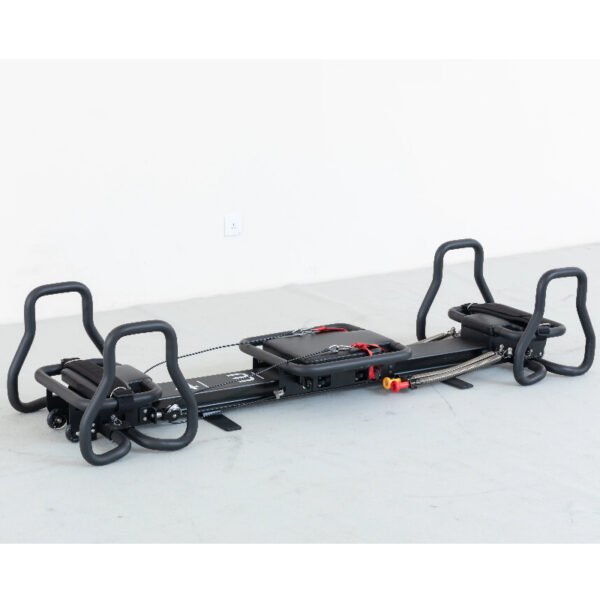
| Foldable Reformer | 80–90 in | 24 in | Apartments and small rooms |
| Home Reformer | 86–95 in | 24–28 in | Residential use |
| Studio Reformer | 92–98 in | 27–30 in | Professional studios |
| Reformer with Tower | 92–98 in | 27–30 in | Advanced training and rehabilitation |
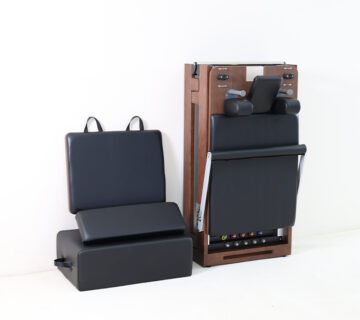
Foldable models are particularly popular among home users with limited floor space because they can be stored vertically when not in use.
Commercial reformers prioritize durability, stability, and carriage travel over compactness.
How Does User Height Affect Pilates Reformer Space Requirements?
User height is an often-overlooked factor when planning a Pilates room.
Taller individuals naturally require additional movement space during exercises involving full-body extension.
Users Under 6 Feet Tall
Most standard reformers provide sufficient space without modification.
Users Between 6’0″ and 6’3″
Additional clearance at the foot end may improve comfort during exercises such as:
- Long Stretch
- Elephant
- Running
- Standing Splits
Users Above 6’3″
Extra-long reformers or enhanced room clearance may be beneficial, particularly in professional studios.
Longer carriage travel can provide a more comfortable experience during advanced exercises.
How Do Accessories Impact Space Requirements?
Many Pilates enthusiasts eventually add accessories to expand exercise variety.
However, accessories can change both the dimensions and functional footprint of the equipment.
Jump Boards
Jump boards extend the working area at the front of the reformer and require additional clearance for jumping exercises.
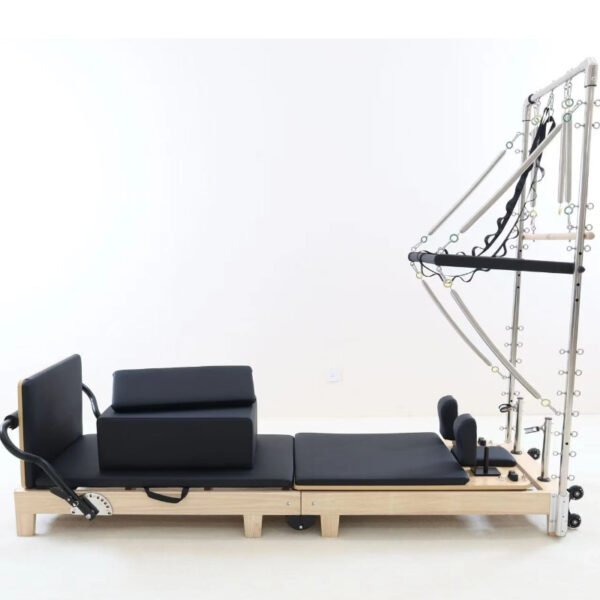
Towers
A Pilates tower significantly increases vertical space requirements.
Although the machine footprint remains similar, the tower frame extends upward and may affect ceiling clearance.
Boxes
Sitting boxes do not significantly increase floor space requirements but should be stored nearby when not in use.
Platform Extenders
These accessories increase the functional exercise zone and may require additional side clearance.
What Ceiling Height Is Recommended?
Floor space is not the only consideration.
Ceiling height can become important, especially when using towers or performing standing exercises.
Recommended Ceiling Heights
| Equipment Type | Recommended Ceiling Height |
|---|---|
| Standard Reformer | 7.5 ft (2.3 m) minimum |
| Reformer with Tower | 8.5–9 ft (2.6–2.7 m) minimum |
| Commercial Studio | 9–10 ft (2.7–3 m) ideal |
Higher ceilings can improve comfort and create a more open training environment.
Home Pilates Studio vs Commercial Studio Space Requirements
Space planning differs significantly between home users and studio owners.
Home Studio Considerations
Most home users prioritize:
- Space efficiency
- Storage options
- Multi-purpose room functionality
- Foldable equipment
Commercial Studio Considerations
Studio owners must consider:
- Instructor access
- Client traffic flow
- Emergency pathways
- Multiple reformer layouts
- Accessibility standards
Comparison
| Home Setup | Commercial Studio |
|---|---|
| One user | Multiple users |
| Flexible layout | Fixed layout |
| Storage-focused | Workflow-focused |
| Compact equipment preferred | Full-size equipment preferred |
| Budget-conscious | Capacity-conscious |
Commercial environments generally require significantly more space per reformer than home installations.
Tips for Maximizing Space in Small Rooms
Not everyone has a dedicated Pilates studio.
Fortunately, several strategies can help maximize available space.
Choose a Foldable Reformer
Foldable models can reduce permanent floor occupation and are ideal for apartments.
Use Vertical Storage
Wall-mounted racks can store:
- Rings
- Resistance bands
- Mats
- Boxes
Keep One Side Open
Maintaining at least one unobstructed side improves access and exercise flexibility.
Utilize Natural Light
A brighter room often feels larger and more comfortable during workouts.
Avoid Clutter
Keep surrounding areas free of furniture and unnecessary obstacles.
Common Mistakes When Measuring Space
Many buyers underestimate how much room a reformer truly needs.
Mistake #1: Measuring Only the Machine
Workout space is always larger than machine dimensions.
Mistake #2: Forgetting Accessories
Jump boards and towers can alter space requirements significantly.
Mistake #3: Ignoring Ceiling Height
Particularly important for tower-equipped systems.
Mistake #4: Blocking Doors or Closets
Daily convenience should be considered alongside workout functionality.
Mistake #5: Not Considering Future Needs
Many users eventually upgrade accessories or expand their training routines.
Planning ahead can prevent costly rearrangements later.
How CoreFlow Reformers Help Optimize Space
At CoreFlow, reformers are designed to balance professional-level performance with practical space efficiency.
Rather than creating unnecessarily large equipment footprints, CoreFlow focuses on maximizing carriage travel, stability, and exercise versatility within dimensions suitable for both home and commercial environments.
For studio owners, this allows more efficient equipment layouts without compromising client comfort. For home users, it means enjoying commercial-quality Pilates training while making the most of available floor space.
Pilates Reformer Space Planning Checklist
Before purchasing a reformer, use the following checklist:
✓ Measure room length
✓ Measure room width
✓ Check ceiling height
✓ Consider user height
✓ Account for accessories
✓ Leave clearance around the machine
✓ Verify doorway dimensions for delivery
✓ Plan storage for accessories
✓ Consider future upgrades
✓ Create a dedicated workout zone
Completing these steps can help avoid common installation issues and improve overall satisfaction with your purchase.
Conclusion
Understanding pilates reformer dimensions is one of the most important steps when choosing the right equipment for your home or studio.
While most reformers measure between 86 and 98 inches long, the actual space required is considerably larger due to exercise movements, safety clearances, and accessory considerations. Factors such as user height, ceiling height, room layout, and intended use should all be evaluated before making a purchase.
Whether you’re designing a compact home gym or building a professional Pilates studio, careful planning can help you create a comfortable, functional, and safe training environment.
By selecting a thoughtfully engineered reformer and allowing adequate space around it, you’ll be better positioned to enjoy the full benefits of Pilates training for years to come.
FAQs
What are standard Pilates reformer dimensions?
Most Pilates reformers measure between 86–98 inches long, 24–30 inches wide, and 10–16 inches high.
How much space do I need for a Pilates reformer at home?
Most users should plan for a room measuring at least 10 ft × 12 ft to comfortably accommodate a standard reformer and movement clearance.
Can a Pilates reformer fit in a spare bedroom?
Yes. Many spare bedrooms provide enough space for a home reformer, especially when furniture is minimized.
How much clearance should I leave around a reformer?
A minimum of 2–3 ft around the sides and approximately 3 ft at both ends is generally recommended.
What ceiling height is required for a reformer with a tower?
Most tower-equipped systems work best with ceilings between 8.5 and 9 ft high.
Are foldable Pilates reformers smaller than studio reformers?
Yes. Foldable models are typically shorter and designed specifically for space-conscious home users.
Does user height affect space requirements?
Yes. Taller users often benefit from additional clearance and longer carriage travel.
How much does a commercial Pilates reformer weigh?
Commercial reformers typically weigh between 110 and 190 pounds depending on construction materials and accessories.
Can I place a Pilates reformer against a wall?
While possible, leaving clearance around the machine generally improves accessibility and exercise freedom.
What should I measure before buying a Pilates reformer?
Measure room length, width, ceiling height, doorway dimensions, and available clearance space before making a purchase.

No comment