






A few years ago, one of our studio clients told us a story that we’ve heard many times since.
She had been practicing reformer Pilates consistently for almost a year. Her core strength had improved, her posture was better, and she felt confident walking into her first Lagree class.
Forty minutes later, that confidence looked a little different.
“I thought it would be similar to Pilates,” she said afterward. “But my legs were shaking halfway through class.”
Experiences like this explain why one question continues to come up among fitness enthusiasts, Pilates instructors, and studio owners alike: Is Lagree harder than Pilates?
For most people, the answer is yes. However, that doesn’t mean Lagree is automatically the better workout. The two methods were designed with different goals in mind, and understanding those differences can help you choose the training style that best fits your body, fitness level, and long-term objectives.
As a Pilates equipment manufacturer working with studios across North America, we’ve seen facilities successfully offer both traditional Pilates and Lagree-inspired training. While the workouts may look similar from a distance, they create very different experiences once you step onto the machine.
In this guide, we’ll explore the real reasons Lagree often feels more challenging, examine the difference between Lagree and Pilates, compare equipment, and help you decide which method is right for you.
Why So Many Pilates Users Are Surprised by Their First Lagree Class
One of the biggest misconceptions in the fitness industry is that Lagree is simply a harder version of Pilates.
In reality, they’re separate training systems.
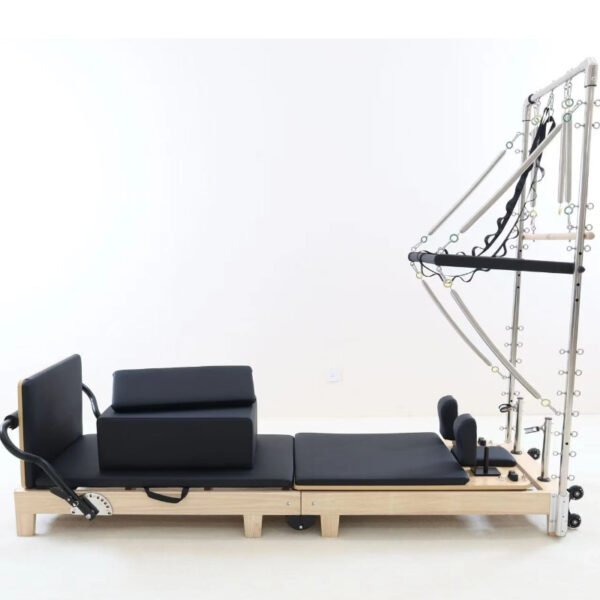
The confusion usually comes from the equipment. Both workouts use spring-loaded machines with moving carriages, and many exercises appear similar at first glance. But once the workout begins, the experience changes dramatically.
Traditional Pilates encourages controlled movement, proper alignment, breathing, and body awareness. While it can certainly be challenging, the focus is often on movement quality rather than maximum muscular fatigue.
Lagree takes a different approach.
Instead of moving through exercises with moments of recovery, participants are encouraged to maintain nearly constant tension throughout the workout. Muscles stay engaged longer, fatigue builds faster, and even simple movements can feel surprisingly intense.
That is often the moment when people realize that Pilates and Lagree are not interchangeable.
What Is Pilates?
Pilates was developed by Joseph Pilates in the early twentieth century and has become one of the most respected exercise methods in the world.
The system focuses on:
- Core strength
- Postural alignment
- Flexibility
- Balance
- Controlled movement
- Mind-body connection
Today, Pilates is widely used by athletes, office workers, older adults, and rehabilitation patients because of its low-impact nature and adaptability.
Many physical therapists and movement specialists incorporate Pilates principles into recovery programs because the exercises can be modified for different fitness levels while helping improve overall movement quality.
A typical reformer Pilates session may include:
- Core-focused exercises
- Hip and shoulder stabilization work
- Controlled spinal movement
- Stretching sequences
- Breathing coordination
The goal isn’t simply to exhaust the muscles. Instead, Pilates aims to create balanced strength and efficient movement patterns throughout the body.
-
CoreFlow Y07-2 Pilates Reformer Machine for Studio & Gym
-
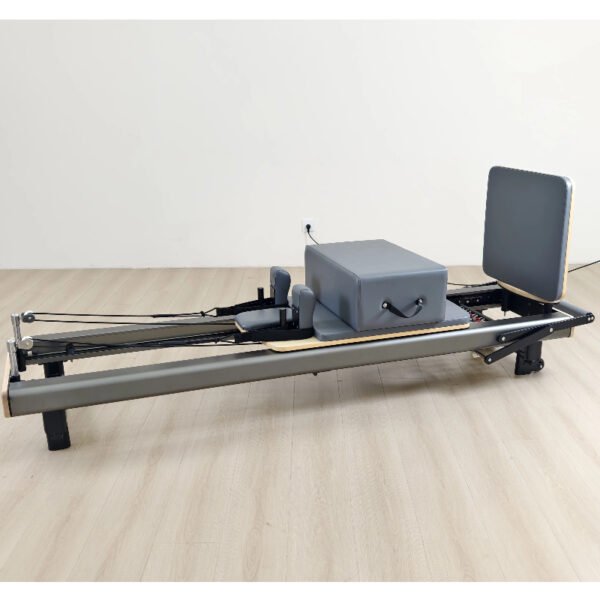
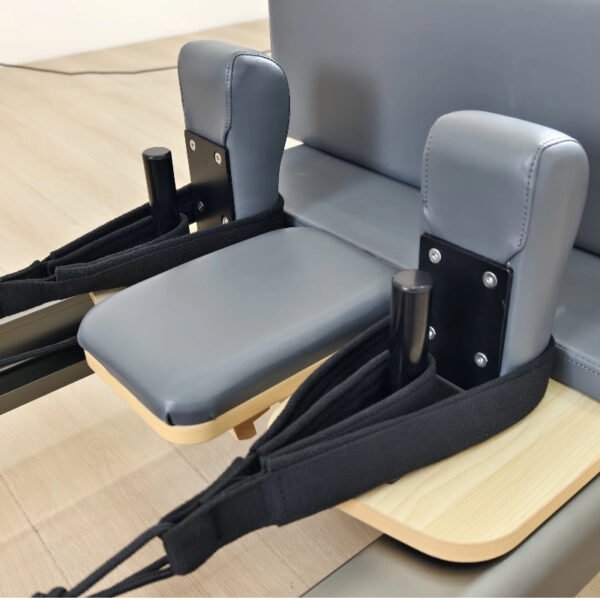
Pilates Reformer | Aluminum Studio Reformer
What Is the Lagree Method?
The Lagree Method was developed by fitness innovator Sebastien Lagree in the early 2000s.
Although many people associate it with Pilates, Lagree is actually its own training methodology.
Lagree combines elements of:
- Strength training
- Muscular endurance training
- Core conditioning
- Cardiovascular challenge
- High-intensity fitness
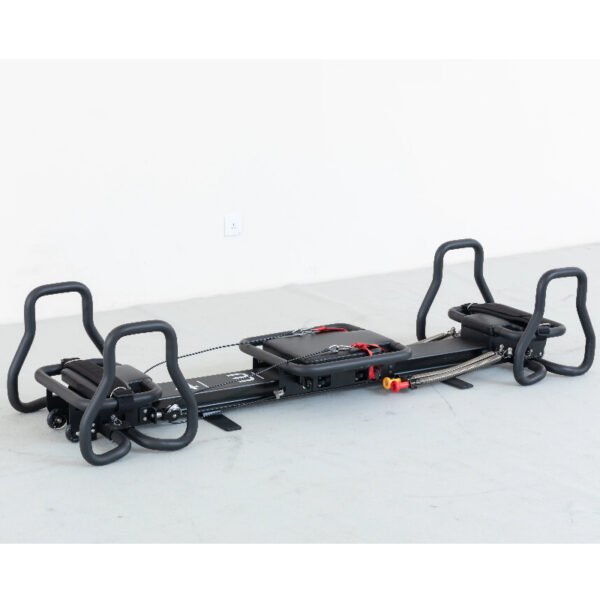
Unlike traditional Pilates equipment, Lagree classes are performed on a specialized Lagree Pilates machine, commonly known as a Megaformer.
The machine is specifically designed to create continuous resistance and keep muscles under tension for extended periods.
This unique training style is one of the primary reasons participants often describe Lagree as significantly more demanding than Pilates.
-
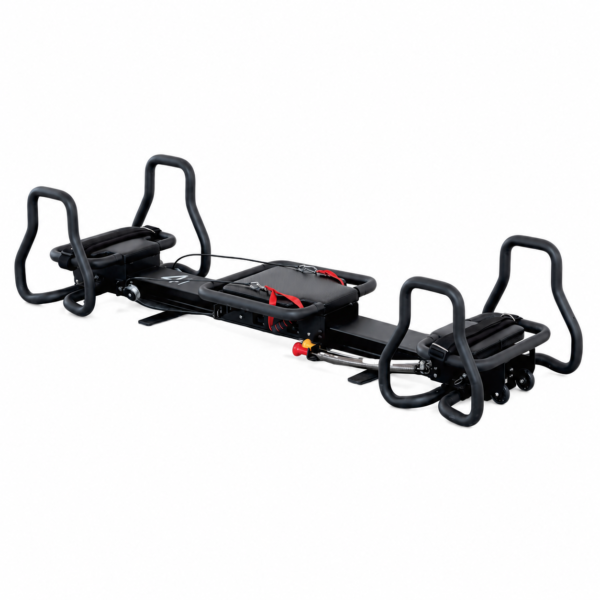
Lagree Pilates Machine | Aluminum Alloy Lagree Micro for Studio & Home
-
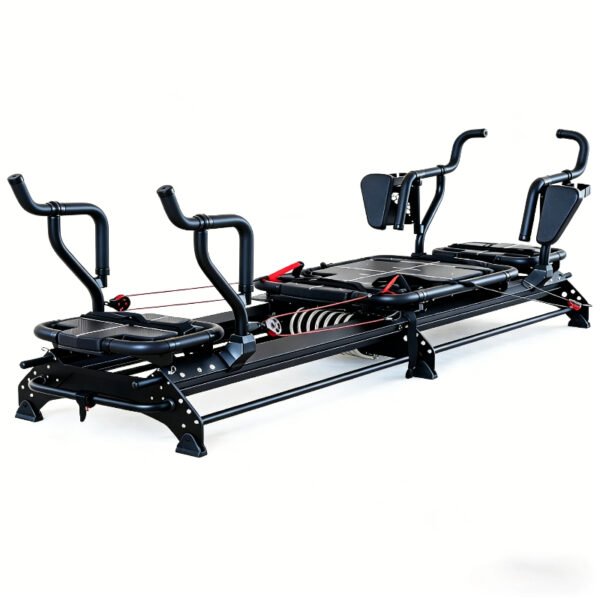
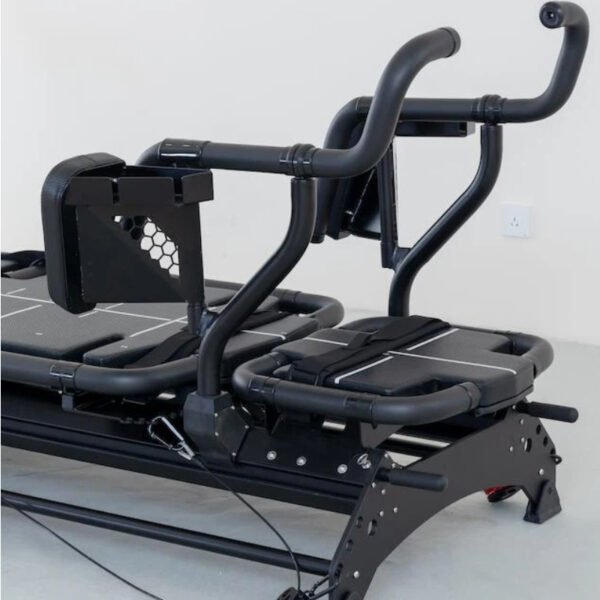
Lagree Megaformer M3K+ | Aluminum Pilates Reformer
Is Lagree Harder Than Pilates? The Short Answer
For most healthy adults, yes.
But understanding why requires looking beyond the exercises themselves.
The challenge of Lagree doesn’t come from explosive movements, heavy weights, or high-impact jumping. Instead, it comes from something much less obvious: time under tension.
Imagine holding a squat.
Most people can lower into a squat and return to standing fairly comfortably.
Now imagine lowering into that squat over ten seconds, holding the position, and then taking another ten seconds to stand back up while resistance is constantly pulling against you.
That’s much closer to the Lagree experience.
The muscles remain active the entire time, which creates a level of fatigue that many first-time participants don’t expect.
What Actually Makes Lagree Feel Harder?
1. Constant Muscle Tension
In traditional Pilates, muscles alternate between contraction and recovery.
In Lagree, recovery periods are limited.
The continuous engagement means muscles rarely get a chance to relax fully during a set.
This sustained effort often leads to muscle shaking, which many newcomers experience during their first class.
2. Slower Movement Speed
One of the most challenging aspects of Lagree is how slowly movements are performed.
Moving slowly eliminates momentum and forces muscles to do all the work.
Even simple exercises become considerably more demanding when performed under continuous resistance.
3. Multiple Muscle Groups Working Together
Lagree frequently challenges several muscle groups simultaneously.
For example, a single exercise may require:
- Core stabilization
- Leg strength
- Shoulder endurance
- Balance control
This full-body demand contributes to the workout’s reputation for intensity.
4. Minimal Rest Between Exercises
Traditional Pilates often includes brief transitions and recovery moments.
Lagree classes are intentionally designed to keep participants working almost continuously, increasing both muscular and cardiovascular demand.
Lagree vs Pilates: A Side-by-Side Comparison
| Feature | Pilates | Lagree |
|---|---|---|
| Primary Goal | Movement quality and core strength | Strength, endurance, and conditioning |
| Impact Level | Low | Low |
| Intensity | Moderate | Moderate to High |
| Recovery Between Exercises | Frequent | Minimal |
| Focus | Alignment and control | Continuous muscle fatigue |
| Suitable for Beginners | Very beginner-friendly | Beginner-friendly with guidance |
| Equipment | Reformer, Cadillac, Chair | Megaformer and related machines |
When discussing Lagree vs Pilates, it’s important to remember that intensity is only one part of the equation. A harder workout isn’t always the better workout.
The best choice depends on what you’re trying to achieve.
Understanding the Difference Between Lagree and Pilates
The difference between Lagree and Pilates becomes clearer when you examine their intended outcomes.
Pilates was designed to improve how the body moves.
Lagree was designed to challenge how long muscles can perform under resistance.
Pilates often emphasizes:
- Precision
- Alignment
- Mobility
- Stability
Lagree often emphasizes:
- Endurance
- Strength
- Fatigue resistance
- Calorie expenditure
Both methods strengthen the core, improve balance, and develop body awareness. The distinction lies in the training emphasis.
Lagree vs Reformer Pilates: Why the Equipment Matters
Another area of confusion involves Lagree vs reformer Pilates.
From a distance, the machines may appear similar.
However, they were built for different purposes.
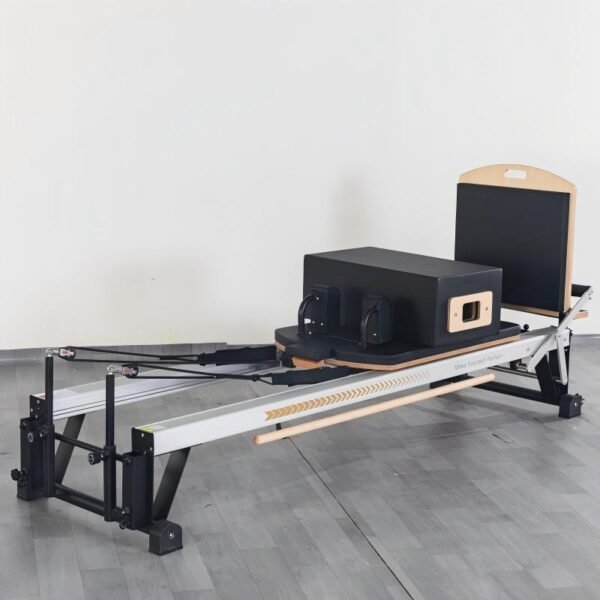
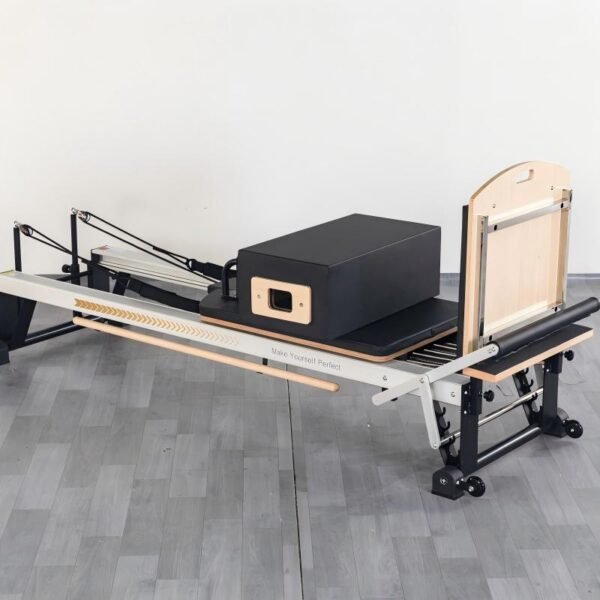
Traditional reformers are designed to support controlled movement patterns and progressive skill development. The spring resistance can be adjusted for rehabilitation, beginner training, or advanced Pilates exercises.
A Lagree Pilates machine, on the other hand, is engineered specifically for continuous tension and high-intensity muscular work.
Equipment Comparison
| Feature | Pilates Reformer | Lagree Machine |
|---|---|---|
| Main Purpose | Movement training | Strength and endurance |
| Exercise Style | Controlled and flowing | Slow and intense |
| Resistance Feel | Variable | Continuous |
| Learning Curve | Moderate | Slightly steeper |
| Workout Focus | Alignment and mobility | Muscle fatigue and conditioning |
For studio owners evaluating equipment investments, understanding Lagree vs reformer Pilates is essential because the client experience differs significantly.
Which Burns More Calories?
Many people researching Pilates vs Lagree are primarily interested in weight loss.
While calorie burn varies based on age, body composition, workout intensity, and fitness level, Lagree generally produces higher energy expenditure during a session.
The reason is simple.
More muscles are working simultaneously for longer periods of time.
Several fitness studies have shown that workouts involving greater muscular recruitment and longer periods of sustained effort typically require more energy than lower-intensity movement sessions.
That said, long-term weight management depends on many factors, including nutrition, consistency, sleep quality, and overall activity levels.
No single workout method guarantees fat loss.
Which Builds Lean Muscle Faster?
If your goal is visible muscle definition, Lagree may produce faster results.
The extended time under tension challenges muscle fibers in a way that encourages adaptation and endurance development.
Many regular participants report improvements in:
- Leg definition
- Core strength
- Glute development
- Shoulder stability
However, Pilates shouldn’t be overlooked.
Many experienced Pilates practitioners develop impressive strength, particularly in the deep core muscles that support posture and functional movement.
The difference is often the speed at which results become noticeable rather than the effectiveness of the training itself.
When Pilates May Be the Better Choice
Despite the popularity of Lagree, Pilates remains the better option for many people.
Pilates may be ideal if you:
- Are completely new to exercise
- Want to improve posture
- Need low-impact movement
- Are recovering from injury
- Want to increase flexibility
- Prefer a slower learning curve
In our experience working with Pilates studios, many instructors recommend establishing a solid foundation through Pilates before transitioning into higher-intensity programs.
When Lagree May Not Be the Best Option
Fitness trends sometimes create the impression that harder is always better.
That’s not necessarily true.
Lagree may not be the ideal starting point for individuals who:
- Have significant mobility limitations
- Are recovering from surgery
- Experience chronic joint discomfort
- Prefer lower-intensity exercise
- Are primarily seeking flexibility improvements
Choosing the right workout isn’t about selecting the hardest option. It’s about finding the method that aligns with your goals and physical condition.
Why Many Fitness Professionals Recommend Both
Increasingly, studios are discovering that clients don’t have to choose one or the other.
Many successful training programs combine Pilates and Lagree throughout the week.
Pilates helps improve movement quality, mobility, and body awareness.
Lagree provides a challenging strength and endurance stimulus.
Together, they can create a balanced fitness routine that supports both performance and long-term health.
For this reason, the debate of Pilates vs Lagree doesn’t always need a winner. The two methods often complement each other remarkably well.
Final Thoughts
So, is Lagree harder than Pilates?
For most people, yes.
The combination of slow movement, constant tension, minimal recovery, and full-body muscle engagement makes Lagree one of the most challenging low-impact workouts available today.
However, difficulty alone shouldn’t determine your choice.
When comparing Lagree vs Pilates, the better option depends on your individual goals. If you value posture, mobility, and foundational strength, Pilates remains an outstanding choice. If you’re looking for a more intense challenge focused on muscular endurance and conditioning, Lagree may be a better fit.
The good news is that both methods can play an important role in a well-rounded fitness journey, and many exercisers find that combining them delivers the best overall results.
FAQs
Is Lagree actually a form of Pilates?
No. Although Lagree was inspired by Pilates equipment concepts, it is a separate fitness methodology with different training goals and programming principles.
Is Lagree harder than reformer Pilates?
For most participants, yes. The constant tension and reduced recovery periods typically make Lagree more demanding than traditional reformer Pilates.
Can beginners do Lagree?
Yes. Many studios offer beginner-friendly classes. However, newcomers should expect a learning curve and a higher level of muscular fatigue than they may experience in Pilates.
Which is better for weight loss: Lagree or Pilates?
Lagree generally burns more calories during a session, but sustainable weight loss depends on overall lifestyle habits rather than a single workout method.
Should I choose Lagree or Pilates?
If you’re seeking posture improvement, flexibility, and foundational strength, Pilates is often the better starting point. If you’re looking for a greater physical challenge and enhanced muscular endurance, Lagree may be more suitable.

No comment